One small bite of a chili pepper can make your eyes water, your face turn red and your mouth feel as though it is on fire. Yet, despite these uncomfortable sensations, millions of people around the world deliberately seek out spicy food.
From Mexican salsas to Indian curries and Korean street food, chili peppers have become an essential ingredient in numerous culinary traditions. But what exactly makes them spicy, and why do humans react so strongly to them?
The answer lies in a fascinating combination of chemistry, biology and human behaviour.
Capsaicin: the secret behind the heat
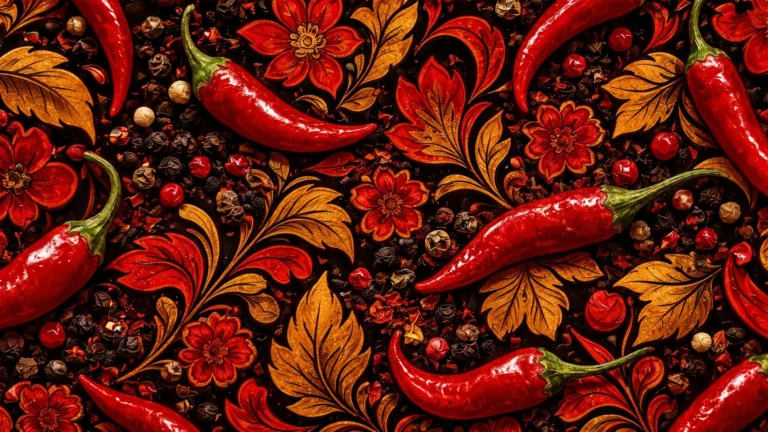
The burning sensation produced by chili peppers is primarily caused by a naturally occurring chemical compound called capsaicin.
Capsaicin belongs to a group of substances known as capsaicinoids. These compounds are responsible for the pungency of hot peppers, although their concentration varies considerably between varieties.
Contrary to popular belief, most capsaicin is not produced inside the seeds. Instead, it is concentrated in the pale internal tissue to which the seeds are attached. The seeds may nevertheless become coated with capsaicin through contact with this tissue.
Removing the internal membrane can therefore reduce the intensity of a chili pepper, although it will not necessarily eliminate its spiciness completely.
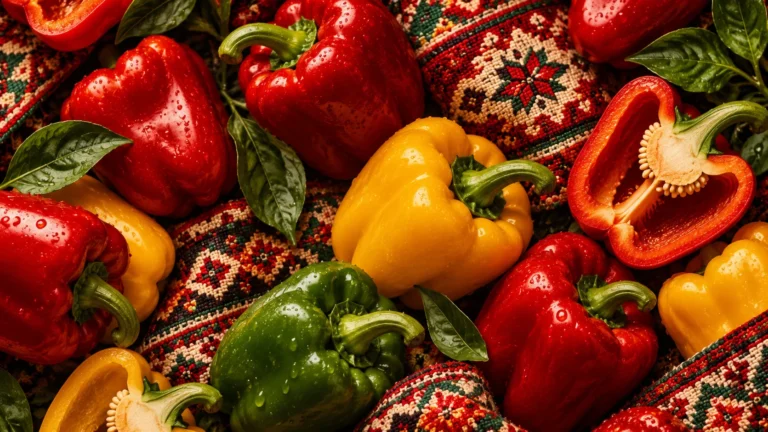
Sweet bell peppers, by contrast, produce negligible amounts of capsaicin, explaining why they can be eaten without experiencing the characteristic burning sensation.
Why does your mouth feel like it is burning?
When you eat a chili pepper, capsaicin activates a receptor known as TRPV1. This receptor is found on certain sensory nerve cells and normally responds to potentially harmful temperatures and other stimuli.
Capsaicin triggers these receptors even when the food itself is not physically hot. Your nervous system consequently sends signals to your brain that are associated with heat and pain.
This explains why eating a cold chili pepper can still make your mouth feel as though it is burning.
Your body may respond by sweating, producing more saliva or causing your eyes and nose to water. These reactions are part of its response to the irritating stimulus.
Spiciness is therefore not technically a basic taste like sweetness, bitterness or saltiness. Instead, it is primarily a chemical sensation detected by the nervous system.
Measuring spiciness: the Scoville scale
In 1912, American pharmacist Wilbur Scoville developed a method for comparing the pungency of different peppers.
His original technique involved diluting pepper extracts until a group of tasters could no longer detect their heat. Today, laboratories can measure capsaicinoid concentrations using more objective analytical techniques.
The results are commonly expressed in Scoville Heat Units, abbreviated as SHU.
Some familiar examples include:
-
Bell pepper: 0 SHU.
-
Poblano pepper: approximately 1,000–1,500 SHU.
-
Jalapeño: approximately 2,500–8,000 SHU.
-
Cayenne pepper: approximately 30,000–50,000 SHU.
-
Habanero: approximately 100,000–350,000 SHU.
-
Ghost pepper: approximately 855,000–1,041,000 SHU.
These figures are approximate because growing conditions, genetics and maturity can influence the intensity of individual peppers.
For most home cooks, moderately spicy varieties provide plenty of heat without overwhelming the other ingredients in a meal.