Black pepper is probably one of the most familiar ingredients in any kitchen. Whether sprinkled over scrambled eggs, added to pasta or used to season meat, it is difficult to imagine everyday cooking without it. Yet, despite its ordinary appearance, black pepper has an extraordinary history. It was once considered a luxury, played an important role in international trade and even influenced European exploration. Beyond its culinary applications, this small spice has several fascinating botanical and chemical characteristics that make it much more interesting than it might initially appear.
Here are eight interesting facts about black pepper that reveal why it has remained one of the world’s most important spices for thousands of years.
1. Black Pepper Was Once Worth Its Weight in Gold
Today, black pepper is inexpensive and readily available in virtually every supermarket. Historically, however, it was an extremely valuable commodity. Originating in southern India, particularly the Malabar Coast, pepper was transported across long-distance trading networks to Europe and other parts of Asia.
During antiquity and the Middle Ages, its high value made it a symbol of wealth and prestige. The Romans imported considerable quantities of pepper from India, and the Roman writer Pliny the Elder even complained about the enormous amounts of money leaving the Roman Empire to purchase eastern spices. According to historical accounts, pepper was also included in the ransom demanded when the Visigothic king Alaric threatened Rome in 408 AD.
Its commercial importance eventually contributed to the development of European maritime exploration. Finding more direct trading routes to Asian spice-producing regions became an important motivation behind several fifteenth-century voyages.
2. Black Pepper Is Actually a Fruit
One of the most surprising facts about black pepper is that it is technically a fruit rather than a seed or root. It comes from the tropical climbing plant Piper nigrum, which belongs to the Piperaceae botanical family.
The peppercorns grow in clusters along long, hanging stems. Each individual peppercorn is a small fruit known botanically as a drupe. The plant is native to the humid tropical forests of southern India, where it grows by climbing supporting trees or other structures.
Under suitable conditions, the perennial vine can remain productive for many years. Its small fruits are harvested at different stages of maturity depending on the type of pepper being produced.
3. Black, White and Green Pepper Come From the Same Plant
Although supermarkets often display black, white and green peppercorns as separate products, they are actually obtained from the same plant. The differences arise mainly from harvesting times and processing techniques.
Black pepper is produced from mature but still green fruits that are subsequently dried, causing their outer skins to darken and wrinkle. Green peppercorns are harvested earlier and processed in ways that preserve their original colour, often through drying, freezing or preservation in brine.
White pepper, on the other hand, is produced from fully ripened fruits. Their outer layers are removed before the remaining seeds are dried.
The resulting products differ not only in appearance but also in flavour. Black pepper generally has a stronger, more complex aroma, while white pepper tends to have a more earthy and sometimes fermented character.
4. Pepper Helped Shape International Trade and Exploration
The history of black pepper is closely connected to the development of international commerce. For centuries, it was transported from India through networks involving Indian, Arab, Persian and European merchants.
Venice became particularly influential in the European spice trade because of its commercial connections with eastern Mediterranean trading centres. Controlling access to valuable spices such as pepper helped strengthen the city’s economic position.
The desire to obtain spices more directly also encouraged European explorers to search for maritime routes to Asia. Portuguese navigator Vasco da Gama eventually reached the Indian port of Calicut in 1498 by sailing around the southern tip of Africa.
This voyage established a direct maritime connection between Europe and the Indian pepper trade, changing the organisation of international commerce.
5. Black Pepper Is Used in More Than Just Cooking
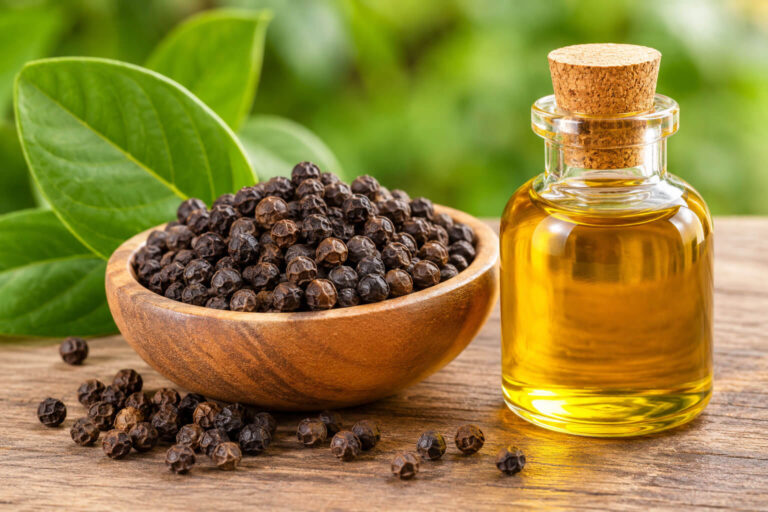
Although its culinary applications are the most familiar, black pepper is also used in several other industries. Its extracts and essential oil are incorporated into food manufacturing, cosmetics, perfumery and certain personal-care products.
Black pepper essential oil is particularly valued for its warm, spicy aroma. It can be found in some fragrance compositions and aromatherapy products. Its aromatic profile makes it suitable for blending with woody, citrus and herbal scents.
Black pepper extracts are also used in the food industry to provide concentrated flavour. These products are not necessarily identical to the essential oil: different extraction methods produce different chemical compositions and applications.
Conclusion
Black pepper is much more than an everyday kitchen seasoning. Its fascinating history, botanical characteristics and chemical composition reveal why it has remained so important across different cultures and centuries. From influencing international trade and European exploration to becoming a familiar ingredient in modern food production, black pepper has played a surprisingly significant role in human history.
Although its popularity is largely based on its culinary versatility, its active compounds continue to attract scientific interest. The next time you reach for a pepper grinder, you might remember that this seemingly ordinary spice was once among the most valuable commodities in the world.