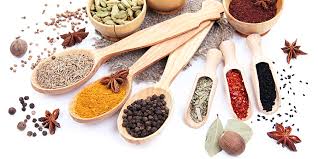
For thousands of years, spices have shaped civilizations, connected continents, fueled exploration, and transformed the way humans cook, heal, and trade. What we now take for granted in small glass jars once held the power to redirect economies, spark wars, and inspire some of the most ambitious voyages in human history. The journey of spices—from sacred rituals to global commerce to everyday kitchens—reveals an extraordinary story about humanity’s desire for flavor, discovery, and connection.
The Journey of Spices: From Sacred Rituals to Global Commerce
The journey of spices begins long before written records. Archaeologists have discovered traces of spices in prehistoric cooking pots, suggesting that early humans were already experimenting with seeds, roots, and bark to enhance their food. However, the first documented uses appear in ancient Egypt, around 3000 BCE. Egyptians treasured spices like cumin, coriander, cinnamon, and anise not only for culinary purposes but also for medicine, perfumes, and embalming rituals.
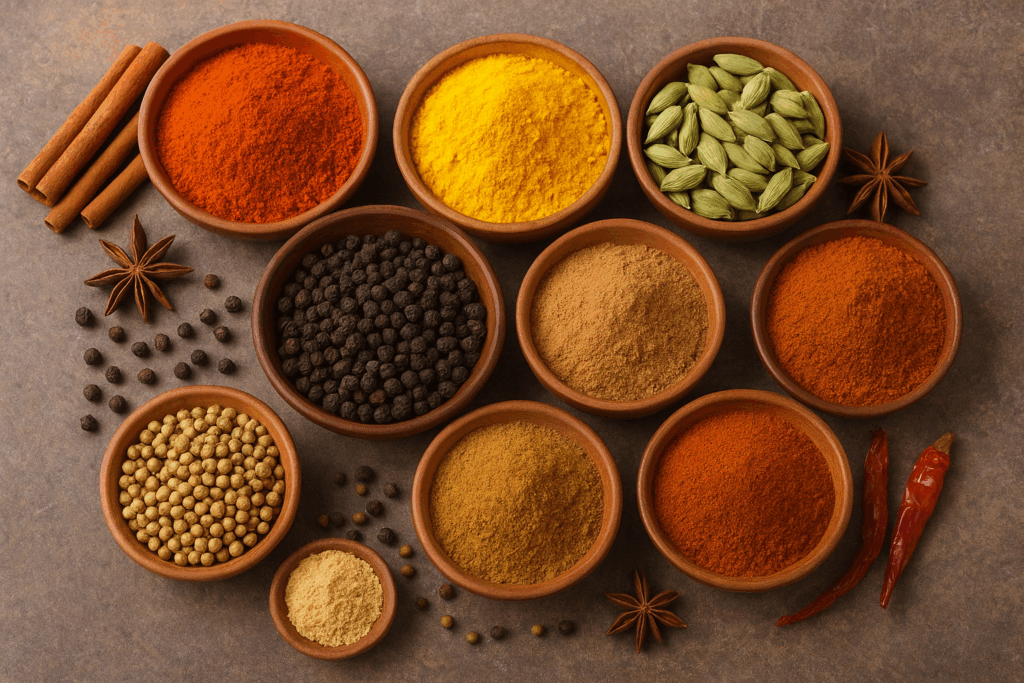
Meanwhile, in ancient India, pepper, turmeric, and cardamom were being cultivated in organized agricultural systems. These spices would become central to Ayurvedic medicine, cuisine, and ceremonial life. In China, ginger and cassia were prized for their warming properties, and by 2000 BCE, they appeared in medical texts that described their uses for digestion, vitality, and longevity. This marks the early stages of the journey of spices across continents and cultures.
The Emergence of the Spice Routes
As civilizations grew more interconnected, the first major trade networks formed, linking Asia, Africa, and Europe. These routes became known collectively as the Spice Routes—a vast system of land and maritime paths stretching from Indonesia to the Mediterranean. Arab traders were among the earliest to dominate spice distribution, guarding their sources and enhancing the value of spices through carefully crafted myths.
By the first century CE, the Roman appetite for pepper was insatiable. Peppercorns became a luxury commodity so prized that they were sometimes used as rent payment or dowry. When Rome fell, Europe lost direct access to many eastern goods, and spices became even more precious, stored under lock and key by the elite.
Spices as Symbols of Wealth, Power, and Preservation
During the Middle Ages, spices became status symbols in Europe. A lavish banquet might use saffron, nutmeg, cloves, ginger, and pepper to demonstrate a host’s wealth. Because refrigeration did not exist, spices also played a practical role: masking the taste of stale or preserved meats and helping to prevent spoilage.
Cities like Venice and Genoa grew rich as intermediaries between the Middle East and Europe. Their merchant fleets controlled the spice trade for centuries, keeping prices high and limiting access.
The Age of Exploration: When Spices Redrew the World Map
By the 15th century, European powers were desperate to bypass middlemen and reach spice-producing lands directly. This desire ignited the Age of Exploration. Portuguese explorer Vasco da Gama reached India in 1498, opening a direct maritime route that broke Arab and Venetian dominance. Soon after, the Dutch and British fought for control of the Indonesian “Spice Islands,” where nutmeg, mace, and cloves grew exclusively.
The Dutch East India Company (VOC) and British East India Company—often considered early models of multinational corporations—were born from the spice trade. Their fierce competition shaped global politics, colonization, and modern economics. Entire islands were conquered, populations displaced, and landscapes transformed in pursuit of these highly valuable crops. This phase represents a dramatic chapter in the journey of spices, where flavor literally changed the course of history.
Spices in the Modern World: From Luxury to Global Staple
Today, spices are accessible worldwide at a fraction of their historical price. Modern supply chains, agricultural science, and globalization have democratized access to spices, making it possible for people everywhere to enjoy flavors that were once reserved for the elite.
India remains the world’s leading producer and exporter of spices such as turmeric, chili, pepper, and cardamom. Vietnam has become a major pepper producer, while Indonesia, Sri Lanka, and Ethiopia maintain strong spice industries. The global spice market now supports millions of farmers and workers.
Modern sustainability efforts are shaping the next phase of the journey of spices, ensuring these ingredients can continue to thrive for generations.
A Tiny Ingredient With a Monumental Legacy
The story of spices is ultimately a story of humanity itself: our desire for exploration, connection, healing, and pleasure. Spices traveled across deserts, mountains, and oceans; shaped empires; inspired explorers; and bridged cultures. Today, we sprinkle them casually onto meals—but behind every pinch lies a history of adventure, ambition, and global transformation.
Even now, spices continue to evolve alongside changing culinary traditions. They push chefs and home cooks to experiment, innovate, and rediscover forgotten flavors. And as global cuisines keep blending, spices will remain at the heart of how we express creativity through food.
Their journey of spices is far from over, and each spice we use carries a story that connects our kitchens to centuries of human history and cultural exchange.

Leave a Reply