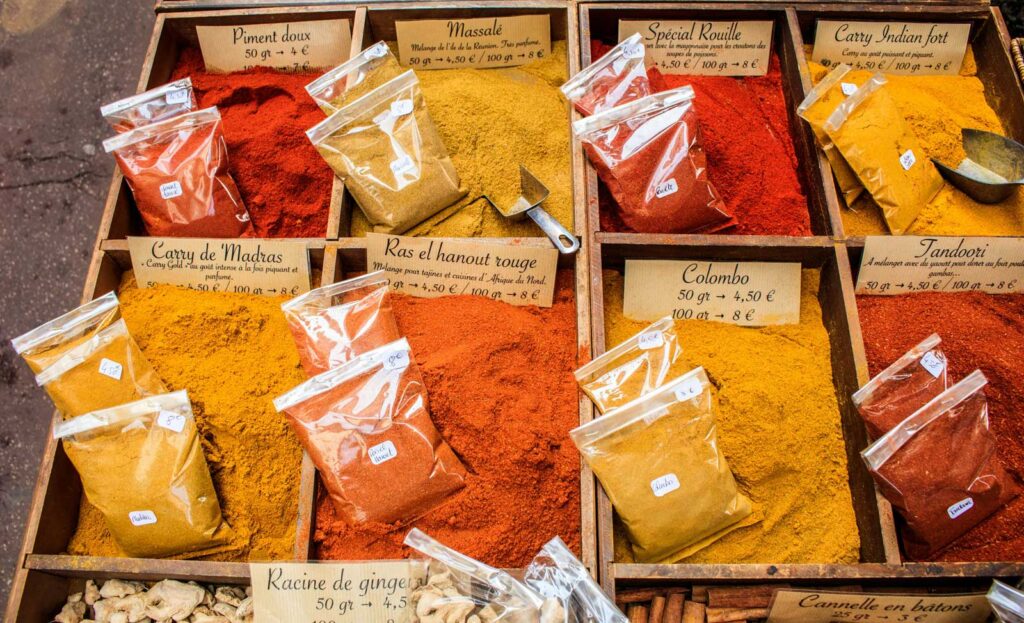
In the vibrant world of North African gastronomy, few spice blends evoke as much mystery, tradition, and culinary artistry as Ras el Hanout. Literally translating from Arabic as “head of the shop,” Ras el Hanout represents the finest selection of spices a merchant has to offer—a curated symphony of flavors designed to elevate dishes into extraordinary culinary experiences. More than just a seasoning, it embodies the history, culture, and sophistication of Moroccan cooking, where every pinch tells a story of trade, heritage, and the art of balance.
Origins and Philosophy
Ras el Hanout’s roots are deeply intertwined with Morocco’s historic position as a crossroads of trade and culture. For centuries, Moroccan spice markets—souks—have been bustling centers where merchants showcased a dazzling array of imported and local spices. Creating Ras el Hanout was considered a mark of mastery: a spice merchant would blend the finest spices in precise proportions, often keeping the exact recipe a closely guarded family secret. No two Ras el Hanout blends are exactly alike; each reflects the personality of the seller, the region, and even the season.
The philosophy behind Ras el Hanout is not merely culinary—it is holistic. Moroccan cooking emphasizes balance and harmony in flavor, aroma, and texture. The blend often includes spices with complementary properties, such as warming spices that aid digestion, aromatic herbs that enliven the senses, and subtle floral or citrus notes that enhance depth without overpowering the palate. In this way, Ras el Hanout exemplifies Moroccan cuisine’s ability to transform humble ingredients into dishes of remarkable complexity.
Typical Ingredients
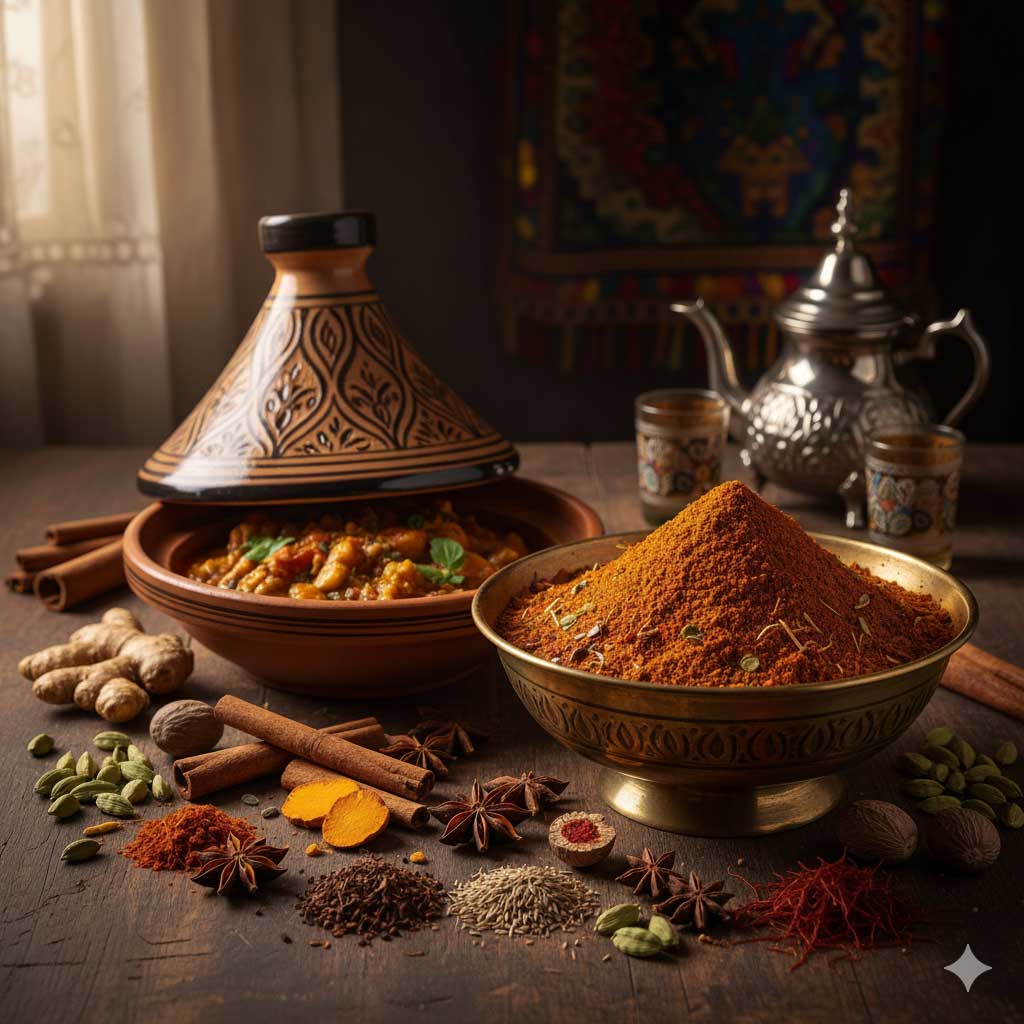
Unlike more standardized spice mixes, Ras el Hanout is highly variable, sometimes incorporating upwards of 20 or 30 different spices. While there is no single definitive formula, several core ingredients are commonly found:
- Cinnamon: Adds warmth and subtle sweetness, often used in both savory and sweet dishes.
- Cumin: Earthy and slightly bitter, cumin provides a foundational depth to the blend.
- Coriander: Bright and citrusy, coriander balances the heavier, warmer spices.
- Paprika: Sweet or smoked, paprika contributes color and a gentle smokiness.
- Cloves and Cardamom: Intense and aromatic, they provide an exotic richness.
- Turmeric: Imparts a golden hue and mild bitterness, rounding out the blend.
- Ginger and Nutmeg: Add warmth and a touch of spiciness, enhancing complexity.
- Mace and Allspice: Sometimes included for their subtle floral and peppery notes.
Some versions may also incorporate dried rosebuds, lavender, or grains of paradise, depending on regional preferences and the spice master’s discretion. The hallmark of Ras el Hanout is the careful layering of flavors so that each spice contributes to a harmonious whole rather than competing for attention.
Culinary Applications
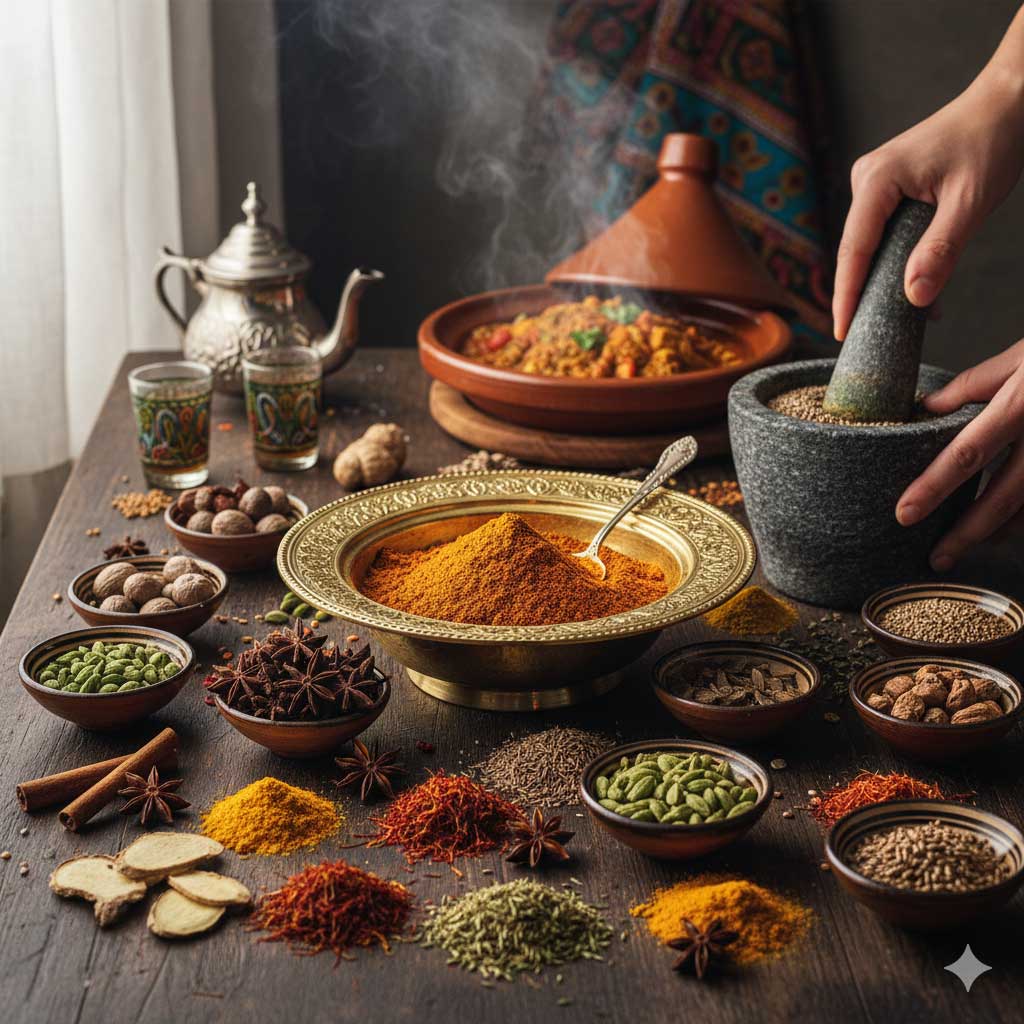
Ras el Hanout is the cornerstone of Moroccan cuisine, celebrated for its versatility and depth. It appears in a wide range of dishes, from the iconic tagine—slow-cooked stews with meat, vegetables, and dried fruits—to couscous, soups, grilled meats, and even marinades. Its role is to elevate, not dominate, allowing the natural flavors of the ingredients to shine while infusing them with aromatic complexity.
In meat dishes, Ras el Hanout is often combined with olive oil and preserved lemon to marinate chicken, lamb, or beef. The slow cooking process allows the spices to penetrate the protein, producing tender, flavorful results. For vegetarian preparations, the blend enhances roasted vegetables, lentils, and chickpeas, bringing warmth and depth to otherwise simple ingredients. Even in desserts, such as spiced pastries or honey-scented almond cakes, a touch of Ras el Hanout adds an unexpected layer of sophistication.
Beyond its functional role, Ras el Hanout embodies Moroccan hospitality. Offering food seasoned with this blend is a gesture of care and respect, reflecting the host’s attention to detail and the desire to create a memorable dining experience.
Cultural Significance
Ras el Hanout is inseparable from Morocco’s cultural identity. Spice merchants, or tajin sellers, often create personalized blends that are passed down through generations, making each jar of Ras el Hanout a reflection of lineage and expertise. The blend is also linked to ceremonial and festive occasions, where its aromatic qualities enhance the sensory experience of shared meals.
Moroccan markets provide more than ingredients—they offer a glimpse into the philosophy of flavor. The ritual of selecting, blending, and tasting spices reflects a culture that values sensory appreciation, patience, and skill. Ras el Hanout, in essence, represents the pinnacle of this tradition: a single blend that captures the diversity and richness of Moroccan culinary heritage.
Tips for Home Cooks
To fully appreciate Ras el Hanout, freshness is crucial. Whole spices ground just before use release essential oils and maximize flavor. Pre-mixed blends can lose potency over time, so experimenting with creating your own version at home can be rewarding. Toasting individual spices lightly before grinding enhances aroma and creates a more vibrant blend.
When using Ras el Hanout, balance is key. A little goes a long way, as the blend’s complexity can easily overwhelm a dish if overused. It is most effective when incorporated early in cooking, allowing the flavors to meld with other ingredients, though it can also be sprinkled at the end for a fresh aromatic boost.
Pairing Ras el Hanout with complementary ingredients such as saffron, preserved lemons, olives, or dried fruits can elevate its impact. Its versatility extends to international fusion cuisine, where chefs have experimented with it in roasted vegetables, braised meats, and even chocolate desserts.
Modern Interpretations
Today, Ras el Hanout continues to inspire both traditional and contemporary kitchens. Chefs worldwide experiment with its intricate flavors, blending it with global ingredients while honoring its North African roots. Gourmet adaptations may include rare spices, bespoke blends, or creative presentations that highlight its aromatic depth.
Despite modernization, the essence of Ras el Hanout remains unchanged: a celebration of complexity, tradition, and the artistry of spice. It stands as a testament to Moroccan ingenuity, where simple ingredients are transformed into culinary poetry through knowledge, intuition, and care.
Moroccan Ras el Hanout is more than a spice blend—it is the essence of North African cuisine distilled into a fragrant, harmonious mixture. Its allure lies not only in its flavor but in its story: the centuries of trade, the wisdom of spice masters, and the cultural philosophy that views food as an art form and a conduit for community and celebration.
From bustling souks in Marrakech to modern kitchens around the world, Ras el Hanout continues to captivate chefs and food lovers alike. It exemplifies the complexity and richness of Moroccan culinary traditions, offering a sensory journey that is at once historical, cultural, and deeply personal.
In every fragrant pinch, Ras el Hanout tells a story of trade routes, skilled artisans, and a culture that honors the transformative power of spices. To cook with it is to engage with centuries of tradition, to taste the soul of Morocco, and to understand that the true artistry of cuisine lies not only in the ingredients themselves but in the delicate balance that transforms them into something extraordinary.


Leave a Reply to allegra pradelli Cancel reply