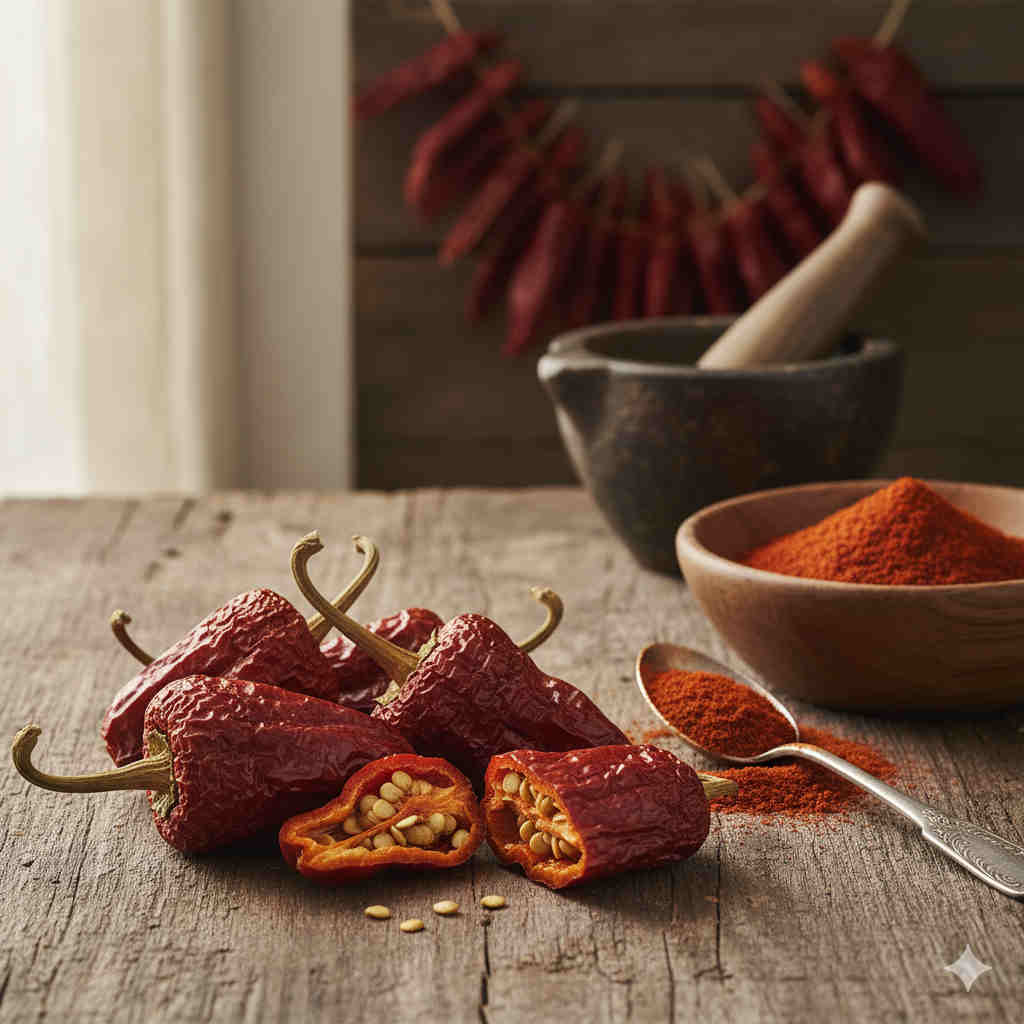
Category: Spice Culture & Curiosities

  • Ñora Pepper: The Sweet Mediterranean Jewel of Spanish Cuisine

    Ñora Pepper Spice

    A Small Pepper With a Big Culinary Legacy

    In the world of Spanish spices, some ingredients are quiet heroes—less globally famous than saffron or smoked paprika, yet essential to regional culinary identity. The ñora pepper is one such gem. Small, round, and deep red, ñoras are sun-dried peppers traditionally grown in the Mediterranean regions of Murcia, Alicante, and parts of Valencia. Despite their modest appearance, they carry a rich, fruity sweetness and an aroma that instantly evokes the warmth of Spain’s southeastern coast.

    In Spanish cooking, particularly in Levantine cuisine, ñora peppers are the foundation of many iconic dishes—rice preparations, stews, and especially sauces such as the famous romesco. They are beloved not for spiciness (since ñoras contain almost no heat), but for their sweetness, depth, and umami quality. This article explores the unique taste of ñora peppers, their culinary uses, their rich cultural history, and why they remain a key staple in Mediterranean kitchens.


    Flavor Profile: Sweet, Fruity, Aromatic, and Completely Mild

    The flavor of ñora peppers is distinct and unmistakable. Unlike fiery Spanish peppers such as pimentón picante, the ñora is all charm and sweetness.

    Key Characteristics of Ñora Peppers

    • Naturally sweet, with a fruity intensity reminiscent of sun-dried tomatoes
    • Completely mild, containing virtually no capsaicin
    • Soft, smoky undertones, not from smoking but from sun-drying
    • Umami-rich, adding depth without overpowering other ingredients
    • Aroma of dried fruit, with a slightly caramelized fragrance

    Because of their complexity and lack of heat, ñoras are favored by cooks who want gentle sweetness and richness without spiciness. This makes them incredibly versatile in stews and sauces, acting as a harmonious flavor base that ties ingredients together.


    How to Use Ñora Peppers: A Mediterranean Essential
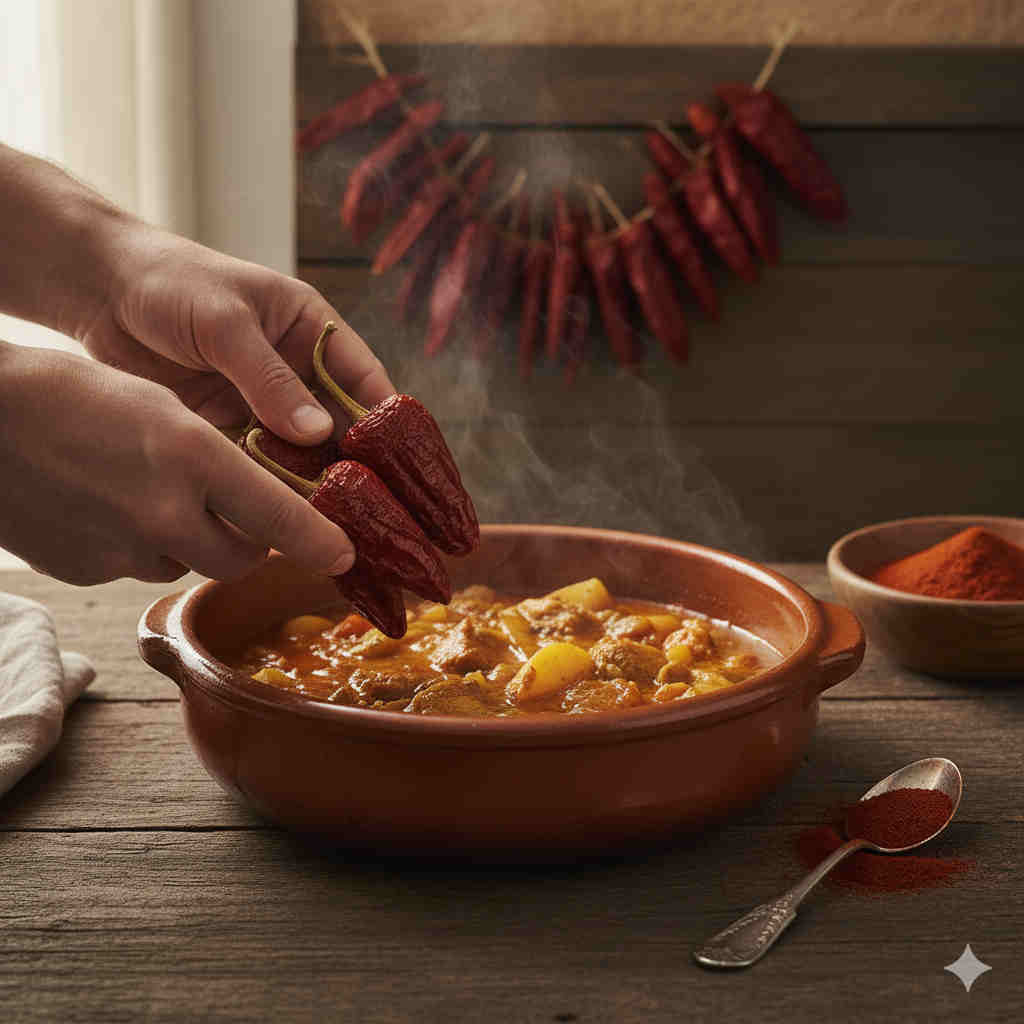
    Ñora Pepper Recipes

    Unlike powdered spices, ñora peppers are usually sold whole and dried. Because their skin is tough, they are rarely used directly in dishes without preparation. Instead, they are rehydrated and the pulp is extracted.

    1. Rehydrating Ñora Peppers: Step-by-Step

    To prepare ñoras properly:

    1. Remove the stem and shake out the seeds.
    2. Soak the peppers in warm water for 15–20 minutes.
    3. Once soft, split them open.
    4. Scrape out the soft, aromatic flesh with a spoon.

    This pulp—deep red and highly fragrant—is the true treasure of the ñora.

    2. Ñoras in Rice Dishes (Arroces)

    In southeastern Spain, ñora pepper pulp is a foundational element in many rice dishes, particularly:

    • Arroz a banda
    • Arroz con costra
    • Fideuà
    • Traditional Alicante-style paellas

    The pepper contributes sweetness, color, and a savory backbone that enhances seafood, meats, and vegetables.

    3. Romesco Sauce: A Spanish Icon Powered by Ñoras

    Perhaps the most famous use of ñoras is in romesco sauce, a Catalan classic. Traditionally eaten with:

    • Grilled calçots (sweet onions)
    • Roasted vegetables
    • Fish and seafood
    • Grilled meats

    Romesco blends ñora pulp with almonds, garlic, olive oil, tomatoes, and vinegar. The result is a thick, smoky-sweet sauce that is one of the most beloved condiments in Spanish cuisine. Without ñora peppers, authentic romesco loses its characteristic depth and Mediterranean sweetness.

    4. Stews, Soups, and Fish Preparations

    Ñoras are widely used in slow-cooked dishes, such as:

    • Fish stews
    • Vegetable guisos
    • Meat-based casseroles
    • Brothy seafood soups

    They add richness, roundness, and subtle fruitiness that elevates even simple recipes.

    5. Homemade Sofritos and Seasoning Bases

    Ñora pulp is often added to Spanish sofrito—Spain’s version of a flavor base similar to French mirepoix or Italian soffritto. A classic sofrito of onions, garlic, tomatoes, and ñora pulp forms the backbone of countless Mediterranean dishes.


    The History and Cultural Significance of Ñora Peppers
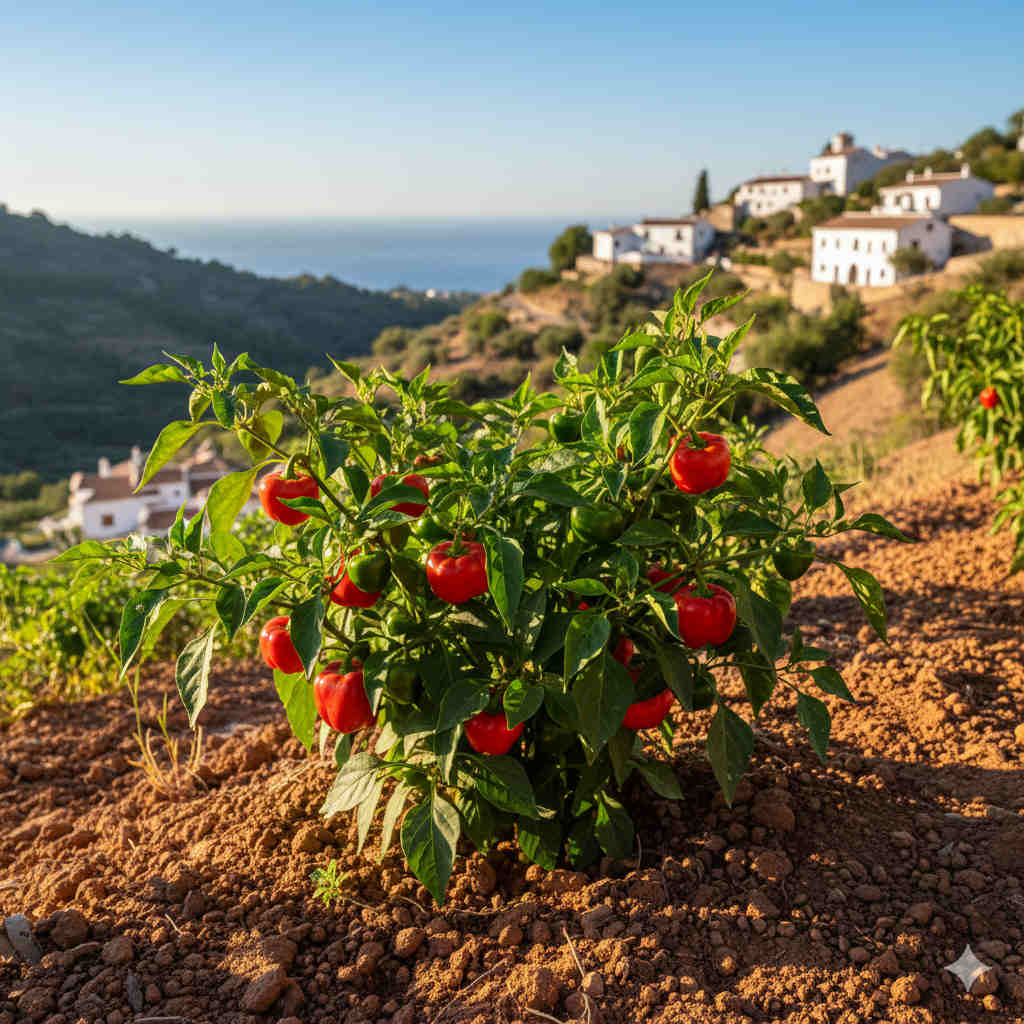
    Ñora Pepper Plant

    The ñora pepper has deep roots in Spanish agriculture and cuisine. Originally introduced from the Americas in the 16th century—like most peppers—it adapted exceptionally well to the warm, sunny climate of southeastern Spain.

    1. The Origin of the Name “Ñora”

    The name ñora is believed to come from the small Murcian coastal village of La Ñora, where the pepper was widely cultivated and used in traditional cooking. Over time, the pepper took on the name of the region that made it famous.

    2. A Tradition of Sun-Drying

    Unlike smoked paprika, which is dried over wood fires, ñoras are dried naturally under the Mediterranean sun. This slow dehydration method concentrates their sugars and enhances their fruity aroma. Sun-drying has been a traditional preservation method in the region for centuries.

    3. A Cultural Symbol of Murcia and Valencia

    Today, the ñora pepper is not just an ingredient—it is a point of cultural pride. Many regional dishes simply cannot be recreated without it. In Murcia, for example, ñoras are used to make pimentón murciano, a paprika that is sweeter and more tomato-like than smoked paprika.

    The pepper also plays a role in local festivals, markets, and artisanal traditions, where dried ñoras are often sold in decorative strings.


    Why Ñora Peppers Matter in Modern Cooking

    In contemporary cuisine, chefs increasingly value ingredients with distinct terroir and cultural identity. Ñora peppers offer:

    • Authenticity in Mediterranean and Spanish dishes
    • Natural sweetness without sugar
    • Rich umami, ideal for vegetarian and vegan cooking
    • Visual appeal, thanks to their deep red color
    • Versatility, blending beautifully with seafood, meats, vegetables, and grains

    As global interest in Spanish cuisine grows, ñoras are becoming more widely available in gourmet stores and online spice shops.


    Conclusion: A Sweet, Fruity Treasure Worth Knowing

    The ñora pepper may be small, but its impact on Spanish cuisine is enormous. From the bold romesco sauces of Catalonia to the fragrant rice dishes of Alicante and Murcia, ñoras bring sweetness, depth, and Mediterranean identity to every recipe they touch. Their mild, fruity flavor makes them accessible to all palates, while their rich history adds cultural significance to every bite.

    For cooks looking to explore the authentic tastes of Spain—or for anyone searching for a versatile, naturally sweet pepper to elevate their dishes—the ñora is a spice cabinet essential.

    Other Spanish Typical Spices:


    – Smoked Paprika

    Saffron

    Spanish Oregano

    Spanish Cumin

  • The origins of curry: a journey through time, trade, and indian tradition

    https://en.wikipedia.org/wiki/Curry

    indian

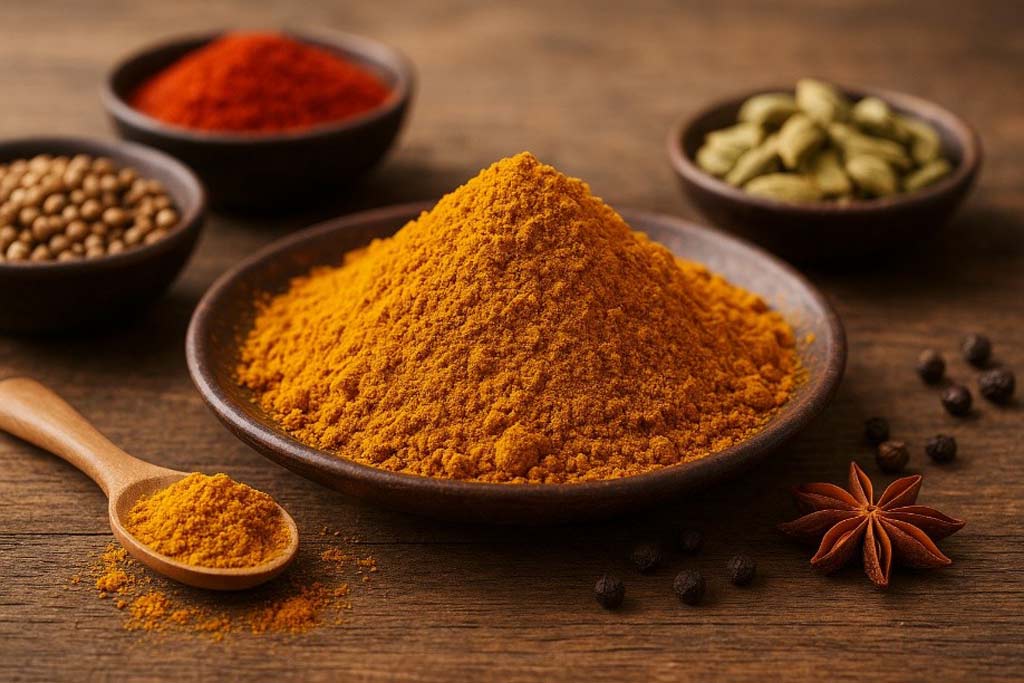
    Few flavors in global cuisine are as instantly recognizable as curry. Aromatic, warm, and endlessly adaptable, curry is not a single spice but a rich, evolving blend with roots that reach deep into Indian and South Asian history. While today “curry powder” is found in home pantries and supermarket shelves around the world, its origins lie in ancient culinary traditions, dynamic trade networks, and centuries of cultural exchange. Understanding how curry came to be requires looking not only at its ingredients, but also at the civilizations that shaped (and were shaped by) this iconic blend.

    Ancient beginnings: the first spice blends

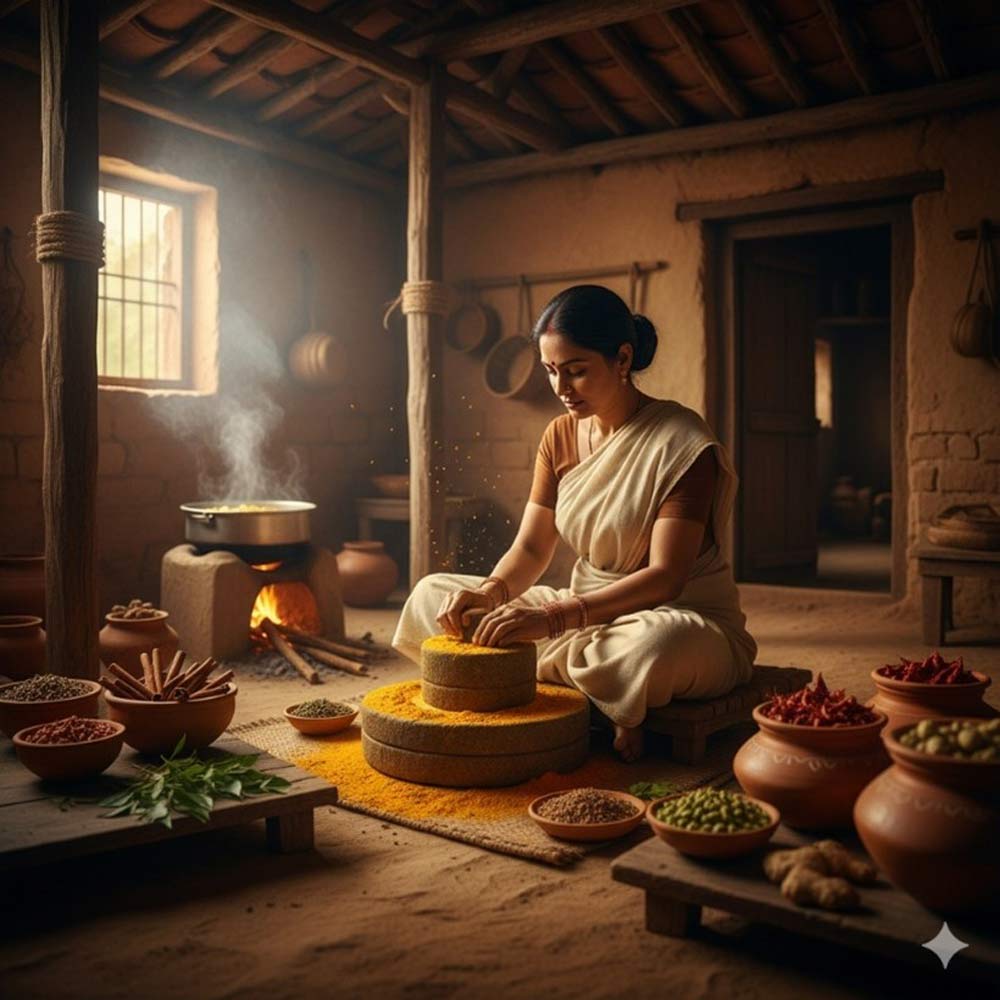
    The origins of curry date back thousands of years. Archaeological evidence from the Indus Valley Civilization (around 2500–1500 BCE) reveals that early South Asian cooks used combinations of spices such as turmeric, ginger, and garlic in their daily meals. Grinding stones discovered at sites like Harappa contain residues of these ingredients, suggesting that the ancestors of what we now call curry were already part of local culinary practices.

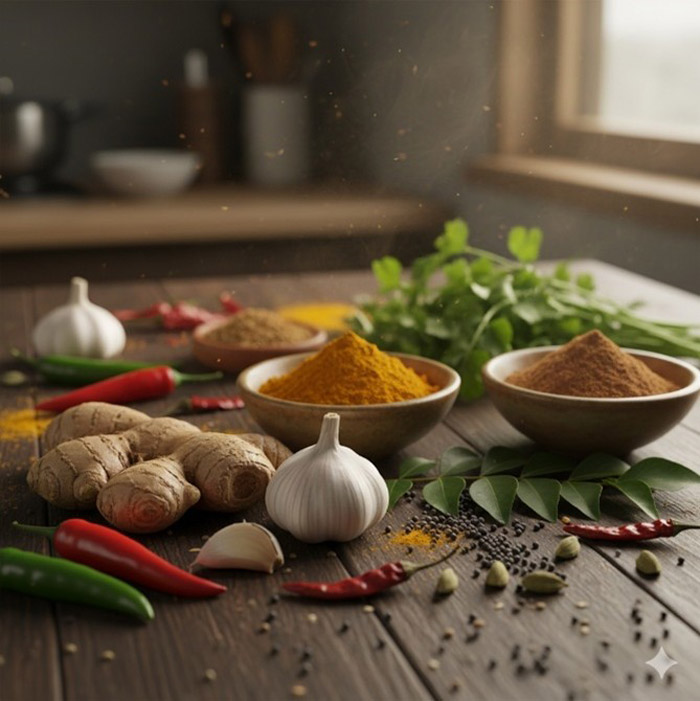
    These early blends were not standardized “recipes” but rather flexible mixtures built around fresh and dried spices. Turmeric provided earthy flavor and vibrant yellow color; cumin offered warmth; coriander added citrusy brightness. Over time, these combinations evolved regionally as cooks adapted them to climate, geography, and cultural preferences.

    Curry as a cultural practice

    In South Asia, curry is more than a spice mixture: it is a culinary philosophy. Traditional Indian cooking does not rely on pre-mixed curry powder; instead, families assemble masalas (spice blends) from scratch, adjusting flavor, heat, and aroma to the dish at hand. These masalas differ from region to region and even from household to household.

    For example:

    • North Indian garam masala emphasizes warm spices like cinnamon, black cardamom, and cloves.
    • South Indian sambar powder relies heavily on lentils, fenugreek, chili, and curry leaves.
    • Bengali panch phoron uses whole seeds: fenugreek, fennel, cumin, black mustard, and nigella, fried in oil to release their fragrance.

    These variations reflect the complexity of India’s cultural and ecological landscape. As dynasties rose and fell, as traders arrived and departed, new ingredients flowed into the culinary repertoire, enriching the blends we now identify as curry.

    The influence of trade: a blend on the move

    By the 1st century CE, the Indian subcontinent had become a critical hub in global trade. Merchants from Arabia, Persia, Southeast Asia, and the Roman Empire traveled through the Indian Ocean in search of spices: pepper, cinnamon, cardamom, turmeric, and more. Many of these voyages passed through coastal regions where spice blends were a staple of everyday cooking.

    As traders encountered South Asian masalas, they brought back their aromatic principles to their own cuisines. The idea of flavoring stews with warm, fragrant spices spread through the Middle East and eventually into North Africa and Europe. However, the specific form known today as “curry powder” did not yet exist: it would emerge much later, shaped by colonial contact and Western reinterpretation.

    Colonial reinvention: the birth of curry powder

    The modern concept of curry powder is largely a British invention. When the British East India Company established political and commercial control in India in the 18th and 19th centuries, British officers, administrators, and merchants grew fond of Indian cuisine. Wanting to recreate these dishes back home, they searched for a convenient way to approximate the complex masalas used in Indian households.

    Indian cooks prepared spice mixtures fresh, grinding ingredients daily based on experience rather than fixed quantities. This approach conflicted with the British desire for standardized, shelf-stable blends. In response, British traders began creating and exporting pre-mixed curry powders—typically containing turmeric, coriander, cumin, fenugreek, ginger, and chili.

    These early curry powders were not authentic representations of any single Indian masala. Instead, they were designed to capture the “essence” of Indian flavor as understood by European palates. Nevertheless, they became immensely popular, spreading rapidly throughout the British Empire and influencing cuisines in the Caribbean, East Africa, Southeast Asia, and even Japan.

    Curry across cultures: adaptation and evolution

    As curry powder traveled the world, it became a canvas for regional creativity.

    • In Japan, curry arrived in the late 19th century via the British Royal Navy. Japanese curry evolved into a mild, sweet, and thick stew often served with rice or breaded pork cutlets.
    • In the Caribbean, enslaved and indentured Indian laborers introduced their spice traditions. Over generations, curry fused with local ingredients, producing dishes like Jamaican curry goat and Trinidadian curry chicken.
    • In East Africa, Indian merchants brought curry spices to coastal cities such as Mombasa and Zanzibar, giving rise to Swahili curries infused with coconut milk and local herbs.

    This global diffusion demonstrates the extraordinary adaptability of curry as a culinary idea. Rather than remaining tied to a single tradition, curry adjusts to local tastes while preserving echoes of its South Asian origins.

    A living tradition

    Today, curry remains both a deeply traditional and constantly evolving element of global cuisine. While the Western concept of curry powder persists, many chefs and home cooks are returning to authentic masala preparation: dry-roasting spices, grinding fresh blends, and appreciating the artistry involved.

    Meanwhile, curry continues to inspire new interpretations: vegan curries, fusion curries, spice-infused cocktails, and even desserts. Yet at its core, curry remains rooted in ancient practices of spice blending, storytelling, and community.

    Conclusion: more than a spice blend

    The origins of curry reveal a history shaped by geography, trade, empire, and migration. What began as a regional spice tradition evolved into a global culinary phenomenon. Whether prepared as a simple home-cooked dal or a complex restaurant dish, curry embodies centuries of innovation and adaptation. It is a reminder that flavor is never static: it travels, transforms, and connects people across continents and generations.

    https://frogsaga.com/wp-admin/post.php?post=343&action=edit

  • Spices in Painting: Colouring Canvases with Aroma and Memory

    Spices have long influenced human culture — not only in food, literature, music, or sculpture, but also in the world of painting. Their vibrant colours, intricate forms, and cultural symbolism have inspired painters for centuries, allowing artists to translate the sensory and symbolic richness of spices onto canvas. From the deep reds of paprika to the golden hues of saffron, spices offer painters both aesthetic beauty and cultural resonance, turning ordinary ingredients into extraordinary visual experiences.

    In this article, we explore how spices have shaped painting, acting as colour palettes, symbols, cultural markers, and storytelling devices, bringing aroma, memory, and meaning to life in visual art.

    1. Spices as Colour and Aesthetic Inspiration

    spices

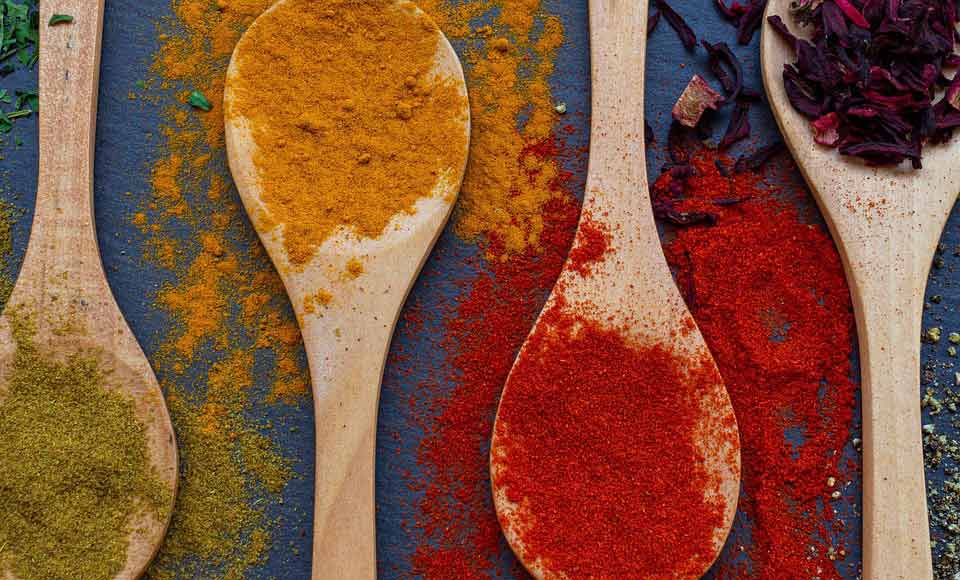
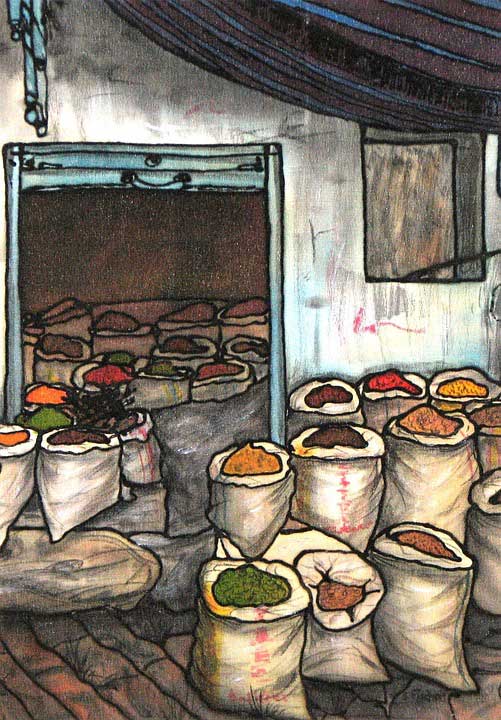
    The visual impact of spices is undeniable. The deep yellow of turmeric, the warm red of paprika, and the earthy brown of cinnamon offer painters natural pigments and vivid inspiration. Before the advent of synthetic paints, spices were often ground into powders and mixed with binders to create vibrant hues for artworks.

    Artists appreciated not only their colour but also the texture and luminosity of spice-based pigments. The way saffron-infused paint catches light, or the subtle warmth of a clove-derived pigment, allows for nuanced expression that mirrors the sensory experience of the spice itself. In still-life paintings, spice piles, bowls, and jars often appear alongside fruits, vegetables, and ceramics, turning the canvas into a celebration of daily life and sensory richness.

    2. Spices as Cultural and Symbolic Signifiers

    Much like sculptures and literature, spices in painting often convey cultural identity, wealth, and status. Historical European still-life paintings frequently depict pepper, nutmeg, and cinnamon as markers of luxury and global trade. These spices were expensive commodities, and their depiction in art signalled the wealth and sophistication of the owner.

    In Asian paintings, spices also carried ritual or symbolic significance. Turmeric and saffron could represent auspiciousness, spiritual purification, or sacred celebration. By placing spices within a composition, painters transformed everyday ingredients into symbols of cultural memory, rituals, and human aspiration, connecting the domestic and the divine.

    3. Spices in Still Life and Narrative Painting

    art

    Spices often appear prominently in still-life compositions, where they contribute both visual interest and narrative depth. Artists like the Dutch masters of the 17th century frequently included spice jars, peppercorns, or cinnamon sticks in market scenes or banquet tables. These depictions celebrated abundance, commerce, and the sensory pleasures of life, while also documenting historical trade and cultural exchange.

    In more narrative paintings, spices help tell stories or convey emotion. A bowl of saffron threads may hint at celebration or wealth, while scattered cloves could suggest domestic life, rituals, or remembrance. Spices become silent narrators, conveying meaning without words, much like their role in literature and film.

    4. Spices as Sensory and Emotional Devices

    Beyond colour and symbolism, spices evoke emotion and memory in painting. Warm golden hues from turmeric or saffron can suggest sunlight, joy, or comfort, while deep brown or black spices may evoke warmth, earthiness, or contemplation. Artists often use these tones deliberately, integrating spices into a composition to enhance the atmosphere, mood, and sensory resonance.

    In some contemporary artworks, painters even incorporate spice powders directly into the paint or onto the canvas, creating textured, aromatic surfaces. These works invite viewers to engage with the artwork multisensorially, connecting visual pleasure with memory, taste, and even imagined aroma.

    5. Spices as Metaphor and Storytelling

    painting

    Spices in painting also serve as metaphorical devices. Just as saffron can symbolise luxury or celebration, or pepper can suggest intensity, painters use spices to imbue works with layers of meaning. In some cross-cultural artworks, spices reference migration, trade, or cultural fusion, reminding viewers of their historical and social significance.

    Through these visual metaphors, painters highlight the relationship between the natural, the cultural, and the sensory, making spices a bridge between everyday life and human experience. A single spice on canvas can carry centuries of meaning, from commerce and rituals to domestic life and global interconnectedness.

    Conclusion: Painting with the Spirit of Spices

    Spices in painting demonstrate the multisensory potential of visual art. They provide colour, texture, symbolism, and cultural resonance, allowing artists to capture history, identity, and emotion on canvas. From still-life compositions to narrative and contemporary artworks, spices transform paint into a sensory language, engaging viewers beyond the visual, evoking taste, memory, and even imagined scent.

    Next time you encounter a painting featuring saffron, cinnamon, or pepper, consider the journey of the spice itself — its aroma, cultural significance, and historical weight. In painting, as in cuisine and sculpture, spices are not merely decorative: they are storytellers, memory keepers, and sources of inspiration.

    By infusing canvases with their colour and spirit, spices leave an enduring mark on both art and imagination, reminding us that even the most ephemeral of ingredients can inspire timeless beauty.

    As painting continues to explore the sensory richness of spices, photography offers yet another lens through which to capture their power. Where painters translate aroma into colour and form, photographers freeze the fleeting qualities of spices — their textures, shadows, and delicate structures — with exquisite precision. In many ways, photography extends the painter’s work, transforming the vibrancy of turmeric, the geometry of star anise, or the earthy depth of cinnamon into visual narratives shaped by light and perspective. Just as spices have long inspired brushstrokes, they now invite photographers to reimagine their beauty through composition, contrast, and intimate detail.

  • Spices in Music: The Rhythm of Flavour and Sound

    Spices and music might seem worlds apart at first glance — one delights the palate, the other the ear — yet both have the power to move, excite, and transport us. Across cultures and centuries, composers, songwriters, and performers have drawn inspiration from the intensity, rhythm, and emotional resonance of spices. Just as a pinch of saffron can transform a dish, a musical motif inspired by the aroma or imagery of a spice can transform a melody into a sensory journey.

    In this article, we’ll explore how spices influence music: as metaphor, inspiration, cultural signifiers, and emotional cues, creating a symphony of flavour and sound.

    1. Spices as Metaphor and Inspiration

    masala

    Music, like cuisine, thrives on contrasts — sweet and bitter, hot and cool, sharp and soft. Spices naturally lend themselves to musical metaphor. Jazz, for instance, has long used spice imagery in lyrics and titles: “Pepper Pot” and “Spicey” evoke rhythm, zest, and improvisational heat.

    In classical and world music, composers have similarly drawn on the exoticism of spices to evoke distant lands. The baroque fascination with cloves, nutmeg, and cinnamon — often featured in chamber music and operas with “Oriental” themes — reflects the European enchantment with the spice trade. These compositions didn’t just entertain; they transported listeners to the markets, ports, and deserts where spices were harvested, traded, and adored.

    Here, spice becomes more than flavour — it becomes musical character, symbolising energy, mystery, and allure.

    2. Spices as Rhythm and Emotion

    music

    In music, rhythm is the pulse that drives movement, just as spices provide the kick or warmth in a dish. Percussion-heavy genres often draw parallels to spices in their intensity: a sharp drumbeat can be imagined as chili, quick and exciting, while a warm marimba line evokes turmeric’s golden comfort.

    Bollywood music, in particular, integrates this idea metaphorically. Songs set in kitchens or bazaars often incorporate rhythms and instrumentation meant to evoke culinary energy. Sitar, tabla, and dhol beats mimic the clattering of pots, the chopping of spices, and the simmering of rich curries. These musical “aromas” carry emotion: anticipation, celebration, nostalgia, or desire.

    Even Western popular music uses spice metaphorically in lyrics: love can be “sweet as cinnamon” or “hot as pepper,” blending taste and feeling into soundscapes. Music captures what spices inherently do — stir the senses and evoke memory.

    3. Spices as Cultural Identity in Music

    Across the globe, spices are woven into musical traditions as markers of cultural identity. African drumming often mirrors the patterns of spice markets: syncopated, layered, vibrant. Latin American music, with its rhythmic complexity, evokes the sensory chaos of chili, cumin, and cocoa blending in sunlit kitchens.

    In Indian classical music, certain ragas are described in terms of seasons, moods, and even tastes — the taste of cardamom or saffron can inspire specific tonal qualities. Carnatic compositions or Hindustani performances might capture the warmth, sweetness, or pungency of a spice in melody and ornamentation.

    In this way, music and spices are intertwined as expressions of heritage. They both tell us where we are, who we are, and the history embedded in everyday life.

    4. Spices in Musical Storytelling

    Much like in cinema and literature, spices can serve as plot devices or narrative markers in music. Folk songs, operas, and modern compositions have used spices symbolically: cinnamon for home and comfort, saffron for luxury and celebration, chili for passion and danger.

    Even jazz improvisations or electronic music compositions borrow spice metaphors: a sudden, sharp note might be described as a “dash of cayenne,” while a lingering, warm chord could be likened to turmeric. Musicians have long recognised that spice, like rhythm and harmony, can shape emotional perception and narrative flow.

    5. Sensory Symbiosis: Listening as Tasting

    spices

    Perhaps the most fascinating aspect of spices in music is the cross-sensory experience they invite. Some composers and performers explore synaesthesia: the blending of senses where sound evokes taste and smell. In this context, a track inspired by nutmeg may feel warm and earthy; one inspired by clove may feel intense and lingering; one inspired by saffron may feel radiant and luxurious.

    This sensory interplay mirrors how spices affect food: subtlety, intensity, and balance create depth and pleasure. Music inspired by spices invites listeners to experience sound as they experience taste, forming a bridge between the palate and the ear.

    Conclusion: The Harmony of Flavour and Sound

    Spices in music are more than decorative metaphors. They are instruments of emotion, culture, and narrative. From jazz improvisations and Bollywood rhythms to classical compositions and folk storytelling, spices provide rhythm, warmth, intensity, and memory.

    Like a perfectly balanced dish, music enriched by spices awakens the senses, evokes heritage, and stirs the soul. Cinnamon, saffron, chili, and cloves are not just culinary treasures — they are musical ones, seasoning melodies, rhythms, and stories in ways that resonate far beyond the kitchen.

    Next time you listen to a song, try imagining its spice: what does it smell like, taste like, or feel like? In music, as in cooking, the right touch of spice can make all the difference.

  • Spices in Literature: The Aroma of Words and Worlds

    literature

    Spices have always carried stories, long before they ever found their way into kitchens. They are more than flavourings: they are history, memory, power, and culture. Literature, with its ability to transport readers across time and space, has frequently celebrated the mystique of spices — transforming cinnamon, saffron, cloves, and pepper into symbols, metaphors, and engines of narrative.

    As a blogger fascinated by the interplay of spices and human imagination, I have always found it enthralling how writers use spices to evoke emotion, cultural identity, or the exotic. In this article, we’ll explore how spices appear in literature: as a myth, as emotion, as culture, and even as instruments of intrigue.

    1. Spices as Myth and Exoticism

    Gulliver

    One of the most enduring literary roles of spices is their embodiment of the exotic and the mysterious. From the earliest travelogues to modern novels, writers have used spices to evoke far-off lands and the allure of the unknown.

    In Gulliver’s Travels by Jonathan Swift, for instance, spices are more than culinary detail: they represent the wealth, power, and mystery of distant territories. Similarly, adventure novels of the 18th and 19th centuries — including works inspired by the spice trade — cast pepper, cloves, and nutmeg as precious commodities that drive exploration, trade, and even conflict.

    Spices in these texts are often portrayed almost as characters themselves. They carry the fragrance of forests, the heat of sun-baked ports, and the value of gold — tangible reminders that human desire for flavour has shaped history as much as greed for gold or jewels.

    2. Spices as Memory and Emotion

    In literature, spices frequently evoke emotion and memory, bridging the past and present in ways that food alone rarely can.

    Like Water for Chocolate” by Laura Esquivel exemplifies this beautifully. In the novel, dishes infused with cinnamon, cloves, or rose petals are not mere recipes: they are vessels of longing, love, and sorrow. A meal becomes a message, a conduit for emotions too powerful for words. Readers almost taste the desire and heartbreak that each spice carries.

    Similarly, in Gabriel García Márquez’s works, spices often punctuate memory and sensuality. The scent of cloves or the bitterness of saffron in a dish can trigger recollections, desire, or an awareness of mortality. Here, spices act as literary shortcuts to the senses, allowing authors to compress time and emotion into a single sensory cue.

    3. Spices as Cultural Identity

    spices

    Just as in cinema, literature often uses spices to root a story in culture and place. They serve as markers of geography, heritage, and tradition.

    In Indian literature, for instance, the presence of turmeric, cumin, coriander, and cardamom in descriptions of kitchens or marketplaces immediately situates readers in a specific cultural and sensory landscape. In Salman Rushdie’s novels, spices are frequently more than ingredients; they are symbols of identity, history, and colonial encounters.

    In Moroccan literature, saffron, cinnamon, and preserved lemons become shorthand for bustling souks, intricate culinary traditions, and the fusion of Arab, Berber, and Mediterranean influences. Through spices, writers give readers access to worlds that are simultaneously exotic and intimate, historical and contemporary.

    4. Spices as Plot Devices and Conflict

    Beyond symbolism and atmosphere, spices sometimes play central roles in the plot and intrigue. Historical novels, especially those set during the Age of Exploration or the height of the spice trade, depict spices as commodities that motivate characters, trigger conflict, or change the course of events.

    For example, in adventure narratives inspired by real spice trading, cloves or nutmeg can signify wealth, power, and danger. Characters vie for control of spice plantations, smuggle rare seeds, or embark on perilous voyages to secure a single cargo of cinnamon. Spices, in these stories, are engines of narrative tension, driving both ambition and peril.

    5. Spices as Symbol and Sensory Language

    Writers also use spices metaphorically, linking them to emotion, character, and narrative tone:

    • Cinnamon often evokes warmth, nostalgia, or domestic comfort.
    • Chilli signals heat, passion, or danger.
    • Saffron conveys luxury, rarity, and desire.
    • Cloves suggest intensity or permanence.

    A character stirring a pot of spiced tea may be meditating on family or lost love; a marketplace fragrant with cardamom can convey the richness and chaos of urban life. Through spices, literature transforms taste and aroma into narrative and psychological tools.

    Conclusion: The Literary Power of Spice

    Spices in literature do what spices in life do best: they awaken the senses, anchor memories, and evoke desire. From adventure novels to magical realism, from historical epics to intimate domestic stories, spices carry meaning far beyond flavour. They are a myth, emotion, identity, and intrigue rolled into aromatic bundles.

    Next time you open a book and encounter cloves in a stew, saffron in a market, or cinnamon in a memory, remember: the author has chosen that spice deliberately. It is there to make you taste the world, to smell its history, and to feel its story.

    Spices, like literature, are bridges between imagination and the senses. And when the two meet, the result is unforgettable.

  • Fenugreek: The Underrated Spice with Deep Flavor and Ancient Roots

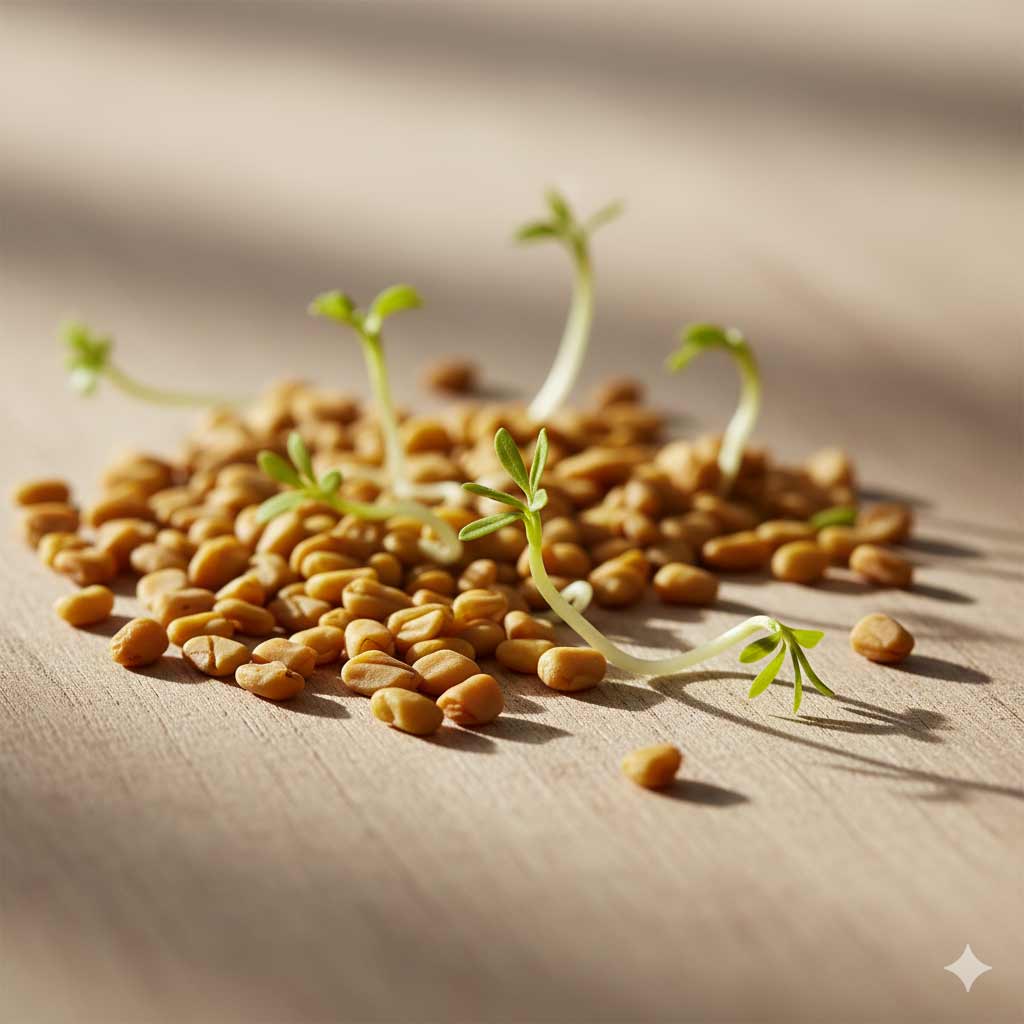
    fenugreek seeds

    Fenugreek is one of those spices that can quietly transform a dish with just a pinch. Its aroma is warm, its flavor distinctive, and its culinary versatility stretches across continents and centuries. Though often overshadowed by more famous spices, fenugreek has played an important role in Middle Eastern, Indian, Ethiopian, and Mediterranean cuisines for thousands of years.

    In this article, we’ll explore the spice’s origins, taste profile, culinary uses, traditional health benefits, and practical tips for cooking with it.

    Origin and History of Fenugreek

    A plant with a long global journey

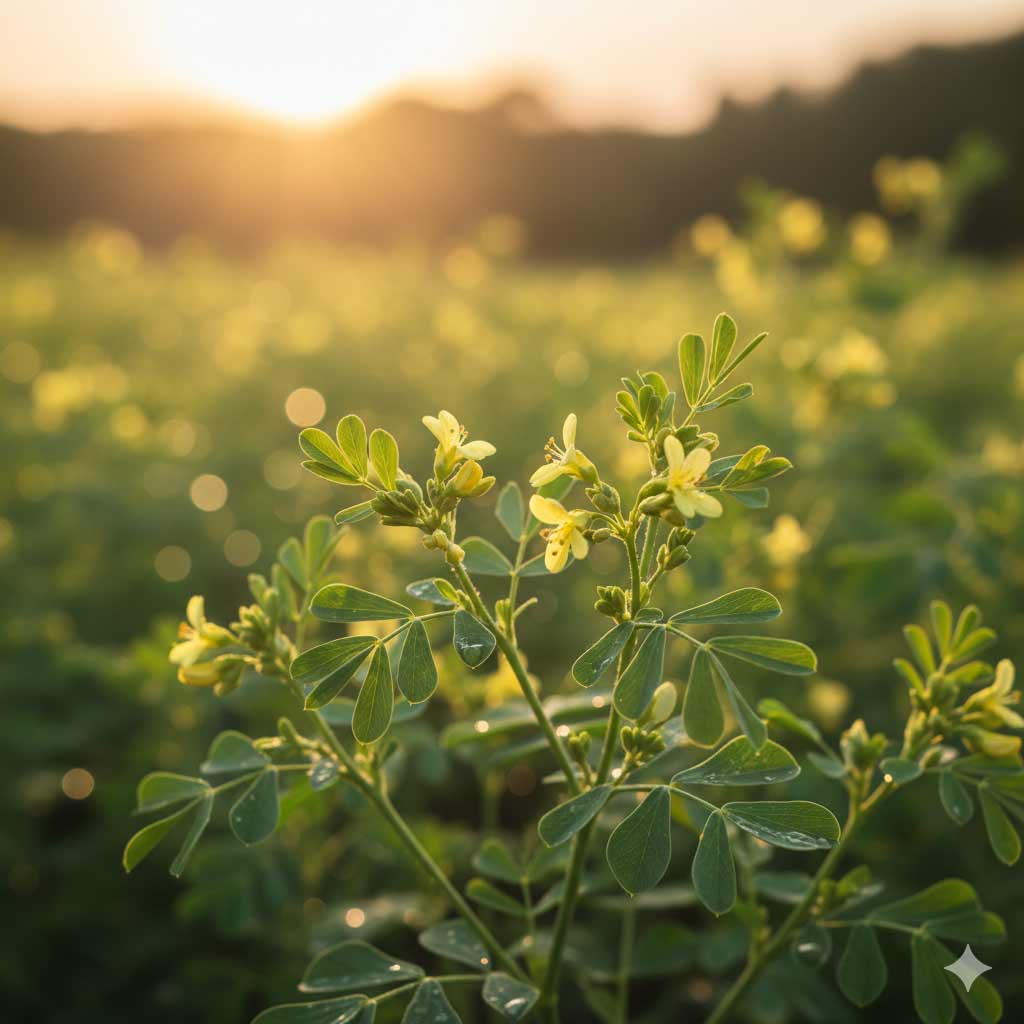
    Fenugreek (Trigonella foenum-graecum) is an annual plant in the legume family. It produces small golden seeds, used as a spice, and leaves, which serve as a flavorful herb in cooking. Both have been valued for centuries.

    Ancient roots

    • Middle East: Native to the Mediterranean and Western Asia.
    • Ancient Egypt: Seeds were used in cooking, rituals, and even embalming.
    • Greece and Rome: Called foenum-graecum, it was used as animal fodder and medicinally.
    • India: Incorporated into Ayurveda and regional cuisine, eventually becoming a staple in curries, breads, and pickles.

    Today, India is the largest producer and consumer, integrating fenugreek into both everyday dishes and festive meals.

    Flavor Profile: Warm, Slightly Bitter, and Unique

    Fenugreek seeds have a distinct taste:

    • Slightly bitter at first
    • Warm and nutty
    • A hint of maple syrup aroma when toasted or cooked
    • Deeply savory and earthy

    The leaves, used fresh (methi) or dried (kasuri methi), are more herbal and gently bitter, with notes reminiscent of celery and mild spinach.

    This balance of warmth, bitterness, and subtle sweetness gives dishes a unique depth, especially when combined with fats, acidity, or other spices.

    Culinary Uses: Adding Depth and Aroma

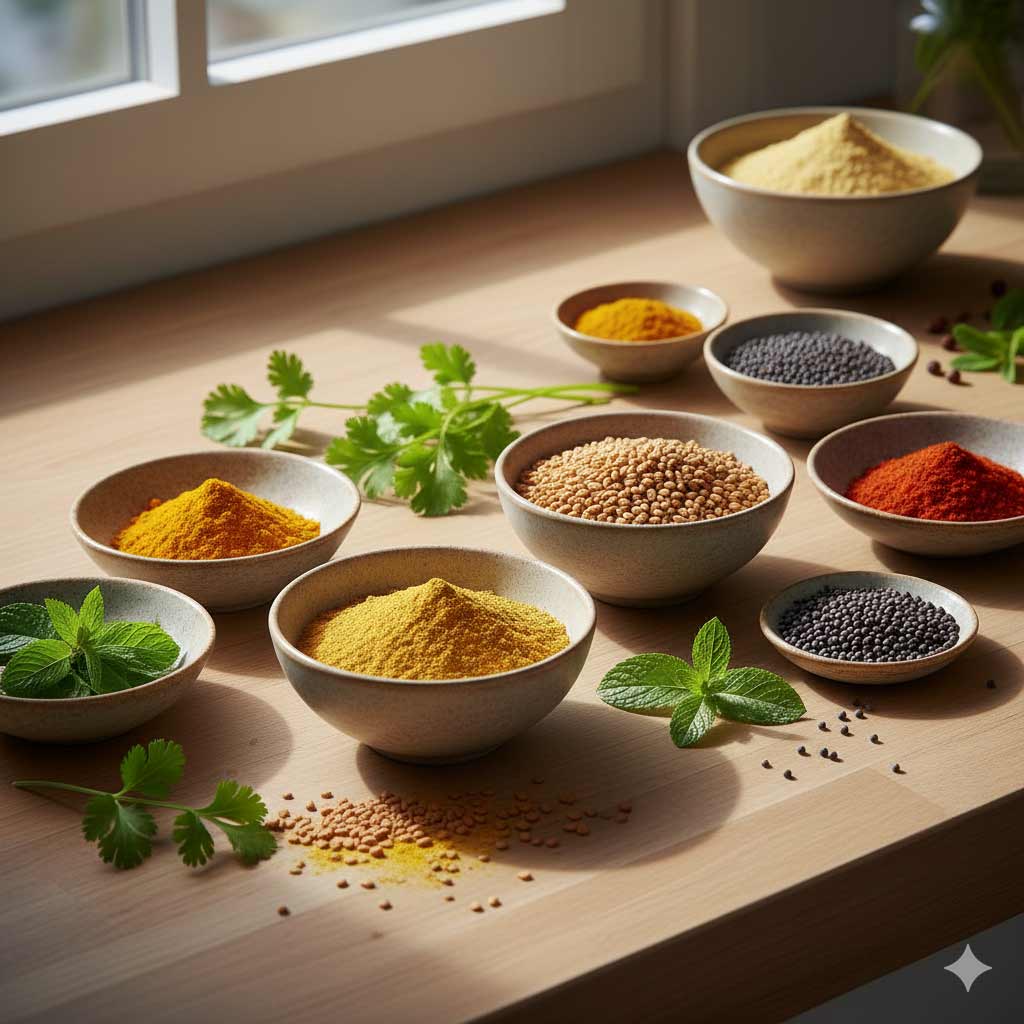
    fenugrec powder

    Fenugreek is versatile in many cuisines, each using it in different ways.

    Indian Cuisine

    • Spice blends: Found in garam masala, sambar powder, and panch phoron.
    • Lentils: Seeds or dried leaves add warmth and complexity to dal.
    • Curries: Leaves are often sprinkled at the end to enhance aroma.
    • Pickles: Seeds are used whole in mango, lemon, and chili pickles.
    • Breads: Fresh leaves incorporated into dough for methi paratha or thepla.

    Ethiopian and Eritrean Cuisine

    • Essential in berbere, a key spice blend for stews like doro wat.
    • Adds subtle bitterness to balance spicy and tangy flavors.

    Mediterranean and Middle Eastern Cuisine

    • Used in spice rubs, braised dishes, and herbal mixtures.
    • Valued for flavor and aroma in both cooking and traditional remedies.

    Everyday Tips

    • Add a pinch of toasted seeds to soups, stews, or vegetable dishes.
    • Sprinkle dried leaves into creamy sauces or lentils.
    • Blend ground seeds into marinades for chicken, tofu, or roasted vegetables.

    When toasted and gently cooked, the spice’s bitterness softens and contributes a savory depth.

    Health Benefits (Traditional Knowledge)

    fenugrec plant

    Fenugreek has long been used in traditional medicine. While research is ongoing, several benefits are recognized:

    • Digestive support: Traditionally used to reduce bloating and aid digestion.
    • Blood sugar support: Some studies suggest a potential role in glucose management.
    • Anti-inflammatory properties: Contains natural compounds with mild effects.
    • General wellness: Used in herbal teas and tonics.

    These benefits are based on traditional use and preliminary research rather than definitive medical evidence.

    Tips for Cooking with Fenugreek

    1. Toast the seeds lightly

    • Brings out sweet, nutty notes
    • Reduces initial bitterness
    • Avoid burning to prevent excessive bitterness

    2. Use sparingly

    • Most recipes require a pinch or up to 1/4 teaspoon of seeds.

    3. Bloom in oil

    • Add seeds or powder to hot oil early to extract maximum flavor.

    4. Add dried leaves at the end

    • Crush kasuri methi lightly between your fingers and sprinkle at the final stage of cooking.

    5. Pairings

    • Works well with lentils, potatoes, spinach, tomatoes, onions
    • Complements slow-cooked meats and vegetables
    • Blends with cumin, coriander, paprika, or mustard seeds

    6. Avoid using raw seeds in large quantities

    • Seeds can remain hard if not toasted or soaked first.

    Conclusion: A Small Spice with Big Impact

    Fenugreek may be subtle, but it can dramatically enhance the flavor of everyday dishes. Its warmth, gentle bitterness, and earthy sweetness have earned it a place in kitchens worldwide. With careful use, both seeds and leaves bring depth, aroma, and authenticity to your cooking.

    Whether you’re experimenting with Indian curries, Ethiopian stews, or simple vegetable dishes, this aromatic spice deserves a spot in your pantry.

  • The Best Secret to Next-Level Spice Flavor: Toasting and Grinding

    Have you ever followed a recipe perfectly, yet your dish lacked that vibrant, punchy flavor you expected from the spices? Chances are, you’re missing a crucial step that separates good home cooking from truly exceptional meals: toasting and grinding your own whole spices.

    While it might seem like an extra chore, this simple technique unlocks a universe of deeper, more nuanced flavors that pre-ground spices simply cannot deliver. Let’s dive into the science and the method behind this culinary game-changer.

    Why Whole Spices Reign Supreme

    Think of spices like tiny flavor bombs. Inside a whole spice—a cumin seed, a coriander seed, a black peppercorn—the aromatic compounds (essential oils) are safely contained within the plant’s cell walls. They are protected from their mortal enemies: light, air, and moisture.

    The moment a spice is ground, those cell walls are shattered. The essential oils are exposed to oxygen, and the clock starts ticking. Oxidation quickly degrades the volatile compounds, leading to a rapid loss of potency. That jar of pre-ground cumin might smell okay, but it’s often a shadow of its former, vibrant self.

    Whole spices, on the other hand, retain their freshness for much longer—often years, compared to months for ground varieties. This means you’re starting with a much higher quality ingredient, ready to release its full aromatic potential when properly prepared.

    The Magic of Toasting: What Happens?

    Toasting whole spices is about two key transformations:

    1. Evaporation of Moisture: Spices, even dried ones, retain a small amount of moisture. Toasting gently dries them out further, concentrating their flavors.
    2. Maillard Reaction & Pyrolysis: This is where the magic happens. The heat causes the sugars and amino acids in the spices to undergo the Maillard reaction (the same process that browns bread or sears meat), creating hundreds of new, complex flavor compounds—nutty, earthy, smoky, and richer notes. If toasted longer, a process called pyrolysis introduces deeper, slightly bitter, and robust flavors.

    The result is a more aromatic, multi-layered, and intense flavor profile that is simply impossible to achieve with raw, pre-ground spices.

    [Image Suggestion 1: An overhead shot of a dry stainless steel pan on a stove, with various whole spices (cumin, coriander, star anise) gently toasting and smoking slightly, with a wooden spoon nearby.] To be added when Gemini’ll work again

    How to Toast Whole Spices: A Step-by-Step Guide

    The process is straightforward and takes just a few minutes.

    1. Choose Your Spices: Select whole spices. This technique works best for seeds (cumin, coriander, fennel, mustard), whole peppercorns, and even larger spices like cardamom pods or cinnamon sticks (though they may take longer).
    2. Heat Your Pan: Place a dry skillet (preferably stainless steel or cast iron – avoid non-stick as high heat can damage it) over medium heat. Do not add any oil.
    3. Add Spices (Single Layer): Add your whole spices to the dry, hot pan in a single layer. Overcrowding the pan can lead to uneven toasting. If you have many spices, toast them in batches.
    4. Agitate Constantly: Shake the pan frequently or stir with a wooden spoon. This ensures even toasting and prevents burning. Burnt spices taste bitter and unpleasant.
    5. Watch and Smell: Pay close attention. Spices toast quickly. You’ll see them slightly darken, and you’ll begin to smell their powerful aroma filling your kitchen. This is your cue! Depending on the spice and the heat, this usually takes between 1 to 3 minutes.
    6. Remove Immediately: As soon as they are fragrant and lightly toasted, transfer the spices immediately from the hot pan to a cool plate or shallow bowl. Leaving them in the hot pan will cause them to continue cooking and potentially burn.

    The Art of Grinding: Freshness Matters

    Once your spices are perfectly toasted and cooled, it’s time to grind them.

    1. Cool Completely: Ensure the spices are completely cool before grinding. Grinding hot spices can trap steam and lead to a less fine powder, and can also gum up your grinder.
    2. Choose Your Tool:
      • Mortar and Pestle: The traditional tool. Excellent for small batches, allowing you to control the texture from coarse to fine. It also releases the essential oils beautifully through crushing.
      • Coffee Grinder (Dedicated Spice Grinder): The fastest and most efficient method for larger quantities or very fine powders. It’s highly recommended to have a separate grinder for spices, as coffee residues can taint your spices (and vice versa). Clean it by grinding a tablespoon of rice to absorb residual oils and odors.
    3. Grind to Desired Consistency: Grind in short bursts if using an electric grinder to avoid overheating the spices, which can dull their flavor.

    When to Toast and Grind

    This technique is particularly impactful for:

    • Curries and Indian Cuisine: Cumin, coriander, cardamom are transformed by toasting.
    • Mexican Cuisine: Cumin, chili seeds for chili powders.
    • North African/Middle Eastern Dishes: Spices for tagines, ras el hanout.
    • Homemade Spice Blends: Elevate your garam masala, curry powder, or steak rub.
    • Marinades and Rubs: The fresh aroma will penetrate meat and vegetables more effectively.

    For delicate herbs (like dried oregano or basil), toasting is generally not recommended, as their flavors are more volatile and can easily become bitter.

    Conclusion

    Embracing the habit of toasting and grinding your own whole spices is a small effort with a monumental payoff. It transforms your cooking, adding layers of depth, aroma, and complexity that will surprise and delight your palate. So, next time you reach for a spice, ask yourself: could this be even better? The answer is almost always yes, with a little heat and a little effort. If you want more, click here to discover how to master spices and herbs !

  • Espelette Chili in Basque Country: When Red Ropes Become a Legacy

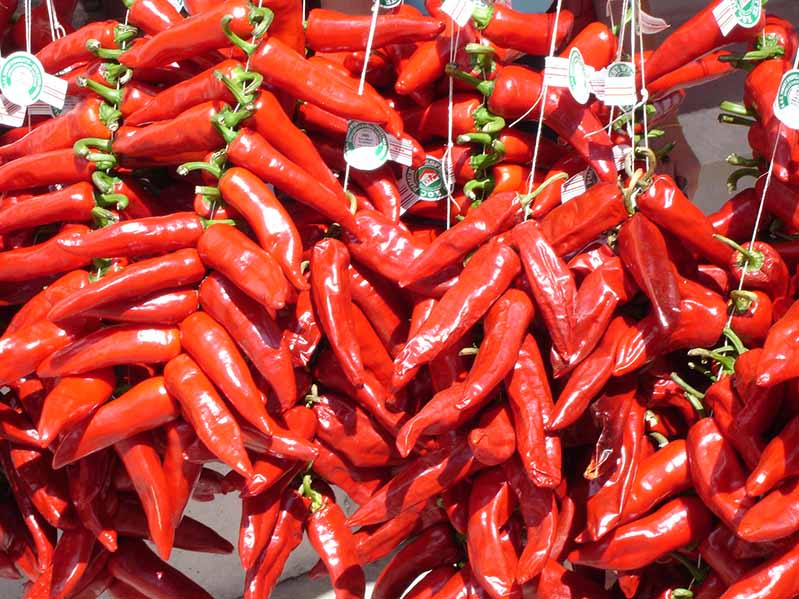
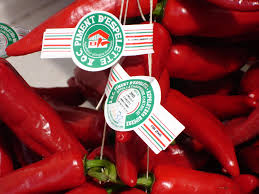
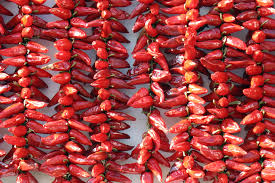
    Espelette Chili ropes

    The village of Espelette awakens in autumn under a blush of red. From balconies and whitewashed façades hang ropes of peppers, swaying gently in the Atlantic breeze. Their color is almost ceremonial, a visual signal that the harvest has arrived. In the Basque Country, this is the rhythm of the seasons made tangible, the aroma of tradition drifting through the streets, and the first hint of warmth on a palate waiting for winter stews. The piment d’Espelette speaks in flavors, colors, and textures — a spice that tastes of place and time.

    A Journey from the New World to Basque Soil

    Though it feels rooted in Basque identity, the pepper traces its origins to the Americas. The Gorria variety of Capsicum annuum, introduced to Europe in the wake of 16th-century voyages, eventually found fertile ground in the small communes of the Pyrénées-Atlantiques. By the mid-17th century, local farmers were selecting seeds from the previous harvest, refining flavors, and adapting cultivation techniques to suit the region’s mild, humid climate. (fr.wikipedia.org)

    Over generations, this chili adapted to its new home. Ocean breezes, rolling hills, and subtle variations in soil and humidity shaped a microclimate that nurtured the peppers into a product distinctive enough to earn international recognition centuries later.

    The Geography That Shapes Flavor

    The piment d’Espelette thrives within a specific set of ten communes, including Espelette, Ainhoa, Cambo-les-Bains, and Itxassou. (en.wikipedia.org) The interplay of maritime influence and hillside sun creates conditions that are difficult to replicate elsewhere. Peppers grown just a few kilometers away may look similar, but the combination of soil, wind, and rainfall in these communes gives the AOP-labeled peppers their unique aroma and gentle heat. (pimentdespelette.com)

    Rope by Rope: Crafting the Pepper

    From spring planting to autumn harvest, attention to detail defines the process. Farmers tend the fields carefully, spacing plants to allow airflow and hand-picking the pods once they reach a deep red. These peppers are then threaded into long strings, called cordes, and left to dry naturally on walls and balconies. (pimentdespelette.com)

    Some producers finish the drying in residual heat from bread ovens, ensuring a gentle desiccation that preserves flavor. The final product, ground into a fine powder, carries subtle notes of fruit, roasted hay, and a warmth that slowly builds on the palate. Each string, each bag of powder, is a result of labor, observation, and intimate knowledge of the plant.

    Espelette Chili Certification and Commitment

    The piment d’Espelette carries both the AOC (Appellation d’Origine Contrôlée) and the European PDO (AOP) designations, recognizing its link to a specific geography and traditional production methods. (en.wikipedia.org)

    Strict criteria govern its production: only the Gorria variety can be used, irrigation is minimal, harvesting is manual, and the drying process must follow time-honored techniques. The Syndicat du Piment d’Espelette AOP monitors these steps, stamping approved products with a colored emblem that signals authenticity. (ossau-iraty.fr)

    These measures preserve the flavor profile that distinguishes Espelette peppers from other reds on the market.

    Espelette Chili: A Subtle Fire and Fruity Complexity

    On the tongue, Espelette pepper offers warmth rather than searing heat. Its Scoville rating hovers around 4,000, enough to enliven dishes without overwhelming them. (en.wikipedia.org) The aroma is a layered blend of ripe fruit, dried hay, and hints of toast. When added to stews, sauces, or grilled meats, it unfolds gradually, adding depth and character rather than forcing its presence.

    Its powder glows from orange to deep red-brown, reflecting the light of the Basque sun that nurtured it, and the careful drying that preserved its essence. (inao.gouv.fr)

    Espelette Chili uses in the Basque Country

    Piment d’Espelette flavors iconic dishes like piperade, a vibrant stew of peppers, onions, and tomatoes, or axoa, a gently spiced veal or pork preparation. (complexheat.com) Chefs also use it to enhance sauces, condiments, and even desserts, where its gentle fruitiness complements chocolate or caramel.

    In Basque kitchens, the pepper functions as a seasoning that harmonizes ingredients rather than overwhelming them. Its presence signals careful timing and regional attention to flavor, reflecting centuries of culinary observation.

    Threads of Tradition

    Each autumn, when façades fill with strands of drying peppers, the villages take on a festive rhythm that locals often describe as the true start of the Basque year.

    Espelette’s annual party : Fête du piment

    The annual Fête du Piment, held since 1968, transforms Espelette into a vibrant crossroads of music, dance, and regional pride. Producers parade with their harvest, confréries don ceremonial robes, and cooks demonstrate age-old techniques that have shaped the region’s palate. More than a celebration, the festival acts as a living reminder of the strong collective identity surrounding the pepper—an identity grounded in hard work, craftsmanship, and a shared sense of place. In this context, the piment becomes a cultural emblem, one that stands shoulder to shoulder with Basque songs, traditional sports, and handicrafts in the constellation of symbols that define the region.

    The ropes and powder carry stories of hands that tend plants, of shared techniques, and of a region’s attachment to flavor as a form of identity.

    Ending

    A pinch of Espelette powder releases soft warmth and layered aroma, hinting at hillsides, ocean breezes, and months of careful attention. Its flavor arrives gradually, lingering gently, a testament to the labor, climate, and soil behind each harvest. In kitchens, markets, and homes, the pepper resonates with the Basque landscape and the rhythm of local life, a quiet, enduring presence that continues to define a region’s culinary heartbeat.

    Discover another fascinating culinary hstory article right there !

  • Kampot Pepper’s Journey: From Near-Extinction to Culinary Crown: The Jewel of Cambodia

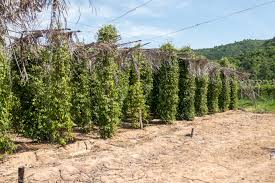
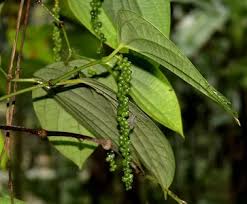
    Kampot pepper Cambodia


    Long before it graced the tables of gourmet chefs around the world, Kampot pepper was a humble yet integral part of Cambodian life — an aromatic thread woven through generations, nearly torn from the tapestry by political upheaval, but ultimately restored to its rightful place in the world of spices.

    A Pepper Rooted in Time

    The story of Kampot pepper begins long ago, with roots that run as deep as the liana vines on which it grows. As early as the 13th century, Chinese diplomat Zhou Daguan, visiting the Angkorian Khmer Empire, made note of pepper cultivation in the region. (Wikipédia) Yet it was only toward the end of the 19th century—amid global shifts in spice trade—that pepper farming around Kampot truly expanded. (Farmlink)

    In fact, much of this growth can be traced to the aftermath of the Aceh War (1873–1908). When the Sultan of Aceh, in present-day Indonesia, burned his own pepper plantations rather than see them fall into Dutch colonial hands, skilled growers migrated — and planted their pepper in Cambodian soil. (Wikipédia) Under French colonial rule, Kampot pepper flourished. The region’s exports soared; by the early 20th century Cambodia was producing thousands of tonnes each year. (Kadodé)

    It’s said that in the 1920s nearly all the pepper consumed in France came from Kampot, a testament to both the scale and prestige of this spice. (cambodiaip.gov.kh)

    A Highland Jewel Nearly Lost

    Yet this prosperity did not endure. The mid-20th century brought turbulence to Cambodia, culminating in the brutal Khmer Rouge regime (1975–1979). Under Pol Pot, the entire social and economic order was violently upended. Pepper growers—often viewed as bourgeois landowners—saw their plantations destroyed or abandoned. (www.kampot.co.uk)

    During these years, rice became the regime’s sole priority: other crops, including pepper, were forsaken. By the end of the conflict, only a handful of pepper poles survived out of the once-million-strong vines in Kampot. (Wikipédia) The cultural memory of pepper was nearly wiped out.

    But as Cambodia gradually stabilized in the late 1990s, a remarkable revival began. Farmers — some descendants of the original pepper-growing families — returned to their ancestral lands. They cleared overgrown vines, tended to the few surviving ones, and restarted cultivation using traditional know-how passed down through generations. (cambodiaip.gov.kh)


    Rebirth and Recognition: The Geographical Indication

    The comeback of Kampot pepper was not just an act of restoration—it became a declaration. In 2006, producers, farmers’ cooperatives, and development partners banded together to form the Kampot Pepper Promotion Association (KPPA). (WIPO) Over the following years, they drafted a rigorous book of specifications to define what authentic Kampot pepper is: how it must be grown, harvested, dried, and graded.

    This effort paid off. On 2 April 2010, Kampot pepper became the first Cambodian product to earn a Protected Geographical Indication (PGI) from the Ministry of Commerce. The PGI guards not only the name, but also guarantees quality, origin, and traditional methods. (FAOHome)

    Later, thanks to growing international demand, it also gained recognition in Europe — adding another layer of protection and prestige. (Wikipédia)


    Terroir, Technique & Taste

    What makes Kampot pepper so special? Part of it lies in the terroir. The coastal hills of Kampot and Kep provinces offer a unique soil: rich in minerals and quartz, a composition that nourishes the roots of the pepper vines and magnifies the aromatic qualities of the berries. (ellyspirits.com) The climate — humid, monsoon influenced — further enhances its character. (terreexotique.com)

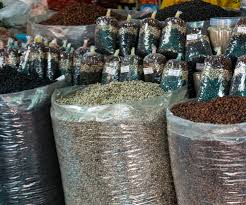
    Four principal varieties grow there: green, black, red, and white. (kampot.city)

    • Green peppercorns are picked young, fresh and tender, with a bright, vegetal flavor.
    • Black peppercorns are harvested slightly later, fermented under the sun, and develop complex notes: hints of mint, eucalyptus, even chocolate. (Le Cafetier)
    • Red pepper comes from fully ripe berries, allowed to mature on the vine—its taste is fruity, warm, with notes of dates, honey, or rosehip. (Stony Groves)
    • White pepper is made by soaking red berries, removing their outer skin; the result is a creamy, delicate spice, with citrus or tea-like nuances. (ellyspirits.com)

    Every step — from hand-harvesting to sun-drying and hand-sorting — is done manually and with great care, according to the PGI specifications. (La Plantation)


    Consequences of the Khmer Rouge Era: More Than Just a Vanished Crop

    The nearly catastrophic impact of the Khmer Rouge on Kampot pepper was more than agricultural. It was cultural, economic, and deeply personal. Families broken apart, ancestral knowledge at risk of being lost forever, and a legacy of flavor that seemed destined to vanish.

    But the revival of pepper has had spiritual resonance too. For many farmers, replanting vines meant restoring a piece of their heritage. For the nation, it became a symbol of resilience: the most intimate and fragrant way to heal wounds from a devastating past. (www.kampot.co.uk)

    Global Reverence — and Local Impact

    Thanks to its PGI status and growing global fame, Kampot pepper has regained not only its place on spice racks, but a role in strengthening rural livelihoods. Through the KPPA, farmers are able to certify their pepper, demand fair prices, and protect against fraud or mislabeling. (FAOHome)

    There’s also been a spiritual dimension to this comeback: spice aficionados often refer to Kampot pepper as the “champagne of pepper.” (Stony Groves) Its revival is a story not just of commerce, but of cultural survival and renewal — a living heirloom from Cambodia’s past, now celebrated on tables across the world.

    Looking Ahead: Challenges and Promise

    Despite its revival, Kampot pepper remains fragile. Production is still relatively small-scale, and climate change looms as a threat. (Wikipédia) There is also pressure to maintain traditional farming methods even as demand grows — a delicate balance between scaling up and preserving heritage.

    The KPPA continues to enforce strict standards, ensuring that every pepper labeled “Kampot PGI” is traceable, authentic, and grown according to age-old practices. (La Plantation)


    A Spice Bound to Memory and Soil

    Kampot pepper’s story is one of resilience, rising again after near-annihilation under one of the world’s most brutal regimes; of heritage, cultivated today just as it was centuries ago by hands that carry living memory; and of excellence, now safeguarded by a Protected Geographical Indication that binds the spice inseparably to its native soil.And when you taste it — whether in a stir-fried crab, a steak crust, or simply freshly ground at your table — you’re not just experiencing a spice. You’re tasting a story.

    In the world of culinary history, few spices carry such emotional weight. Kampot pepper is not just pepper: it’s memory, revival, and hope — carried on a vine, dried in the sun, cracked under your teeth. Its journey from the brink of extinction to global recognition is testament to what tradition, dignity, and craftsmanship can reclaim.

    Discpouver a delicious traditional recipe using Kampot pepper in this article !

  • Spanish Cumin: The Earthy, Ancient Spice at the Heart of Iberian Cooking

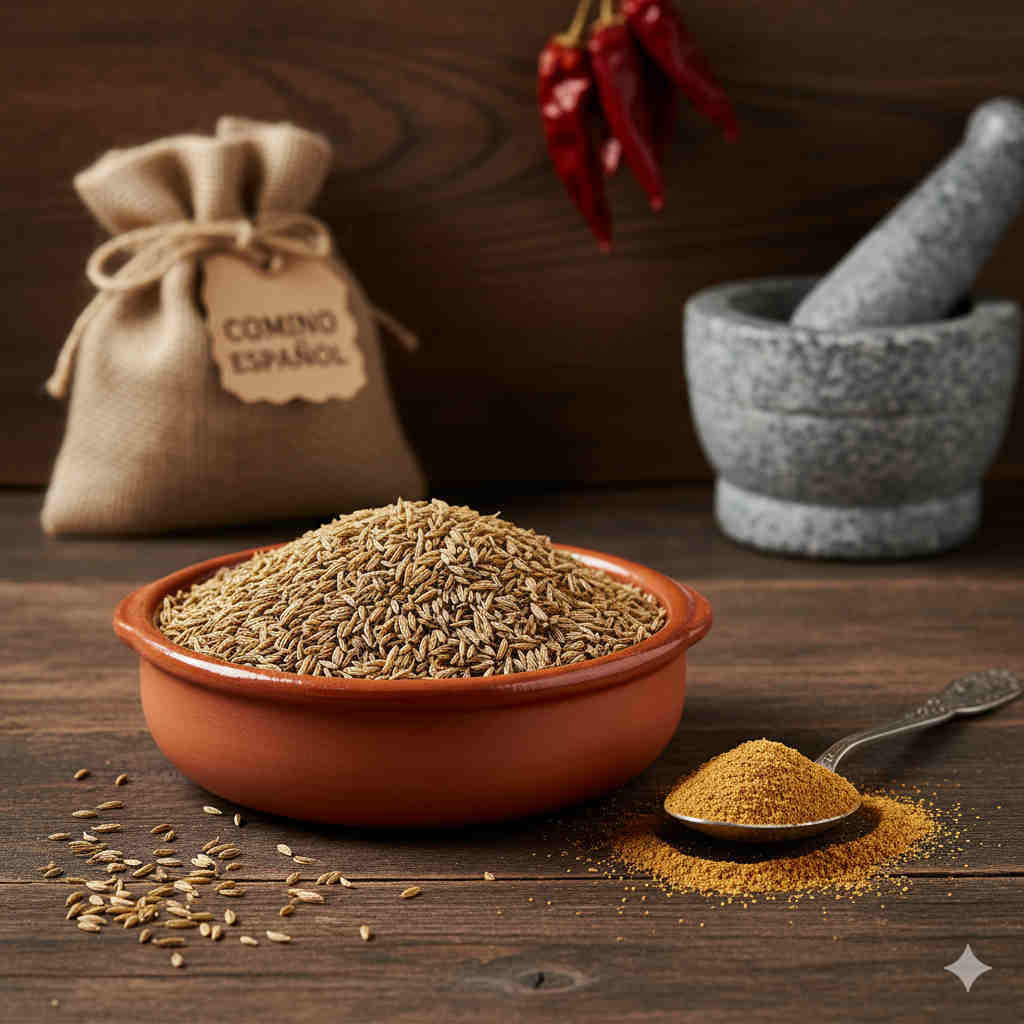
    Spanish Cumin Spice

    A Spice That Bridged Continents and Cultures

    Among all the spices that shape Spanish cuisine, few have a story as ancient and far-reaching as Spanish cumin. Known locally as comino, cumin is one of Spain’s most essential and distinctive flavors—especially in the southern region of Andalusia, where Moorish influence left an enduring culinary legacy. While many associate cumin with Middle Eastern, Indian, or North African cooking, it is deeply rooted in Spanish tradition as well, playing a fundamental role in stews, sausages, marinades, and rustic comfort foods.

    Spanish cumin stands out for its warm, earthy aroma, smoky undertones, and slightly bitter yet citrus-like finish. More intense than many commercially available varieties, it has a depth that speaks to centuries of tradition, cultural exchange, and regional craftsmanship. This article explores the flavor profile, culinary uses, and rich historical significance of Spanish cumin—and why it remains a cornerstone of Iberian cuisine today.


    Flavor Profile: Warm, Earthy, and Intensely Aromatic

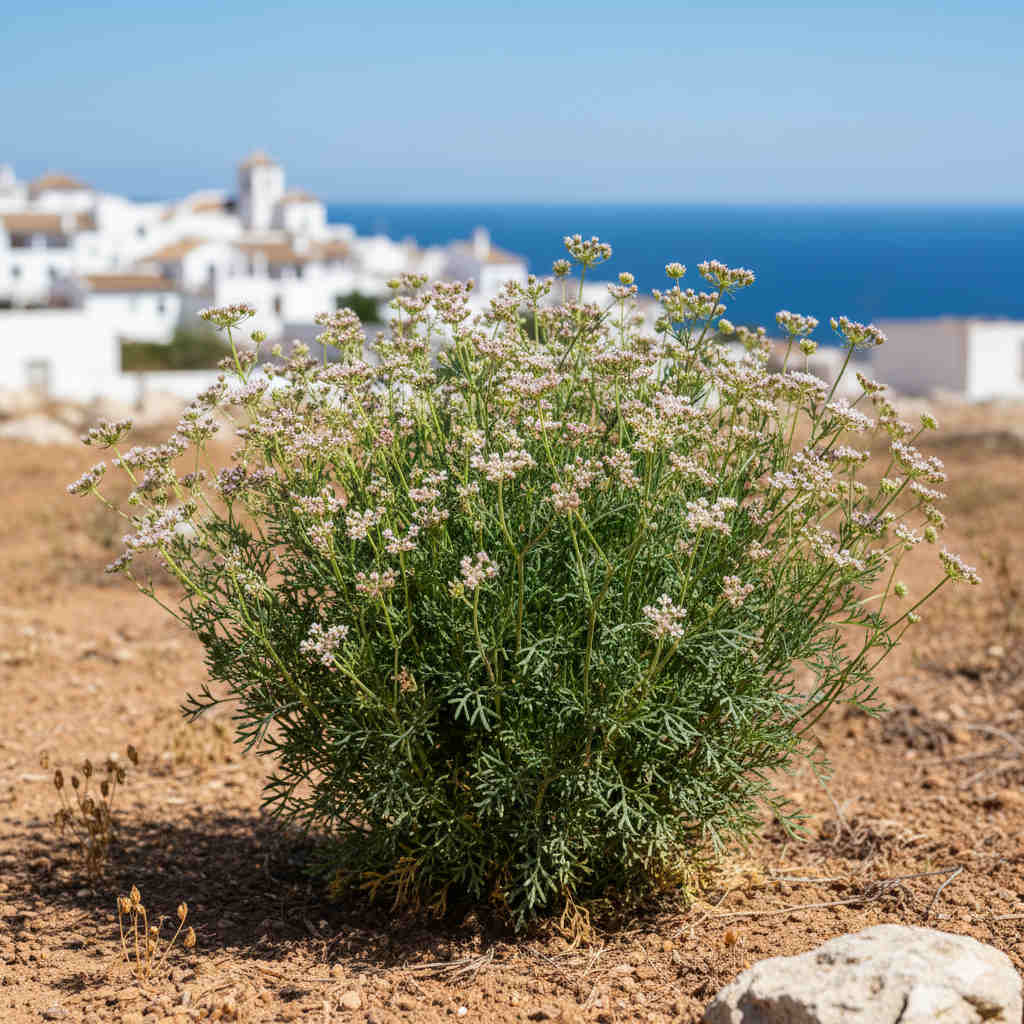
    Spanish Cumin Plant

    Spanish cumin is known for its bold and unmistakable smell—the kind of fragrance that instantly evokes home-cooked stews and rustic kitchens.

    Key Flavor Notes of Spanish Cumin

    • Earthy and warm, with deep aromatic richness
    • Nutty and slightly smoky, especially when toasted
    • Subtle citrus brightness
    • A touch of bitterness, which adds complexity
    • Lingering, savory finish

    Spanish cumin contains high levels of cuminaldehyde, the compound responsible for cumin’s signature aroma. But due to Spain’s climate and soil, local cumin often tastes slightly sharper, richer, and more intense than typical varieties.

    Whole vs. Ground Cumin

    Spanish kitchens traditionally use both:

    • Whole seeds, often toasted for stews and sauces
    • Ground cumin, essential for seasoning meat, sausages, and beans

    Toasting cumin seeds in a dry pan before use dramatically enhances their nutty and smoky qualities—one of the secrets behind the flavor of many Spanish dishes.


    How Cumin Is Used in Spanish Cooking

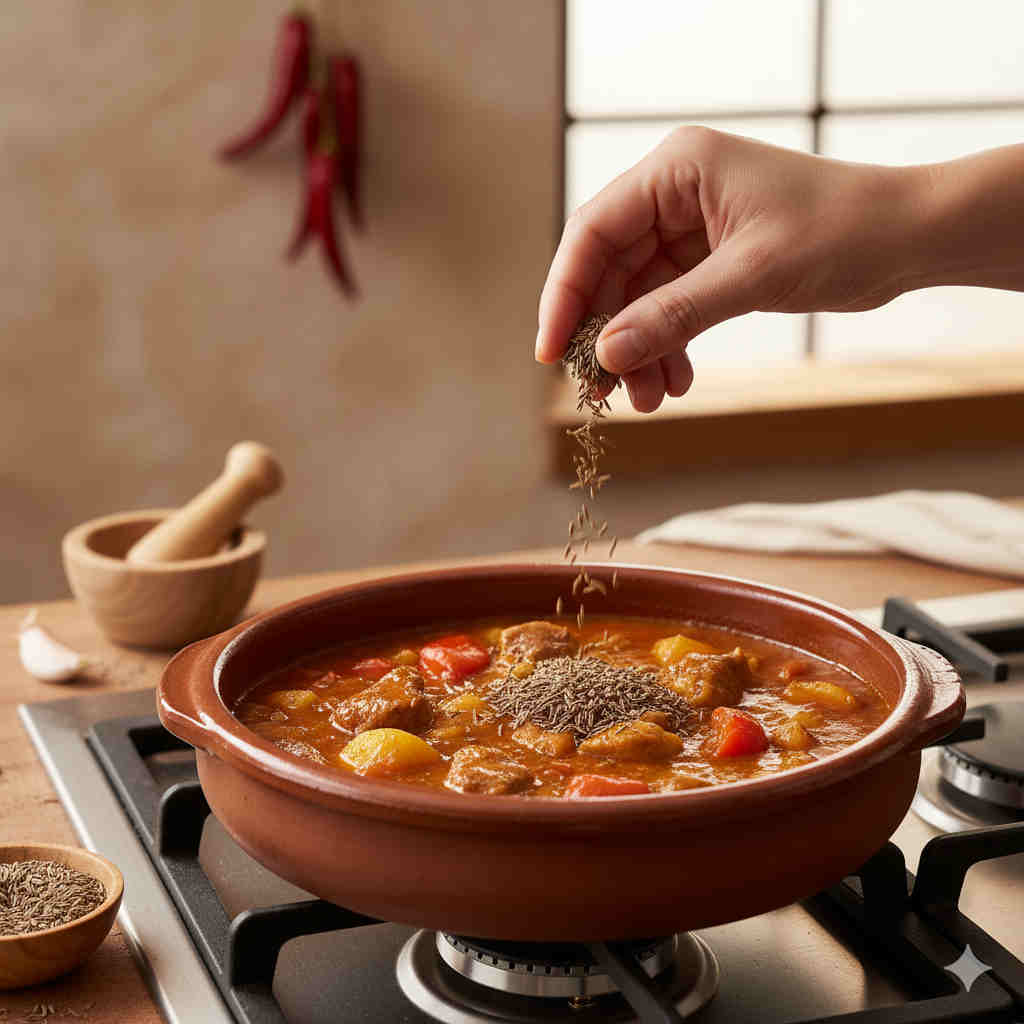
    Spanish Cumin Recipes

    Cumin is a foundational spice in multiple regions of Spain, but especially in Andalusia, Extremadura, and the Canary Islands. Its influence is most visible in rustic, slow-cooked recipes.

    1. Stews and Legume Dishes

    Cumin is essential in classic Spanish guisos (stews), beloved for their comforting depth. It is often found in:

    • lentil stew (lentejas guisadas)
    • chickpea stew (potaje de garbanzos)
    • white bean dishes
    • tomato-based stews

    Just a small amount enhances the earthiness of legumes and balances the sweetness of vegetables.

    2. Sausages and Meat Seasonings

    Cumin is a defining flavor in many Spanish sausages, especially:

    • morcilla (blood sausage)
    • chorizo (particularly some Andalusian styles)
    • longaniza

    It also appears in marinades for:

    • pork
    • chicken
    • lamb
    • beef

    A typical Spanish marinade with cumin includes:

    • garlic
    • sweet smoked paprika
    • black pepper
    • olive oil
    • vinegar or wine
    • oregano

    Cumin provides the earthy backbone that gives Spanish meats their rustic identity.

    3. Andalusian and Moorish-Influenced Cuisine

    Cumin is central to many dishes that reflect Spain’s historical connection with North Africa. Some examples include:

    • Andalusian albóndigas (meatballs in cumin-tomato sauce)
    • Pinchitos morunos (Moorish-style skewers)
    • Andalusian-style roasted vegetables
    • Soups with saffron and cumin

    In these recipes, cumin blends seamlessly with paprika, garlic, saffron, and coriander—a flavor palette deeply inspired by centuries of cultural exchange.

    4. Canary Islands Mojo Sauces

    The Canary Islands feature two iconic sauces:

    • mojo rojo (red garlic-paprika sauce)
    • mojo verde (green cilantro-parsley sauce)

    Both rely heavily on cumin for flavor balance. In mojo rojo, cumin adds depth and earthiness; in mojo verde, it provides grounding contrast to fresh herbs and lime.

    5. Bread, Savory Pastries, and Pickling

    Although lesser known, cumin also appears in:

    • traditional breads
    • savory pastries
    • brines and pickles
    • artisanal cheeses

    Its pungency works beautifully in fermentation and slow baking.


    The History of Cumin in Spain: A Journey Across Civilizations

    Cumin’s story in Spain spans over 3,000 years, intertwined with the migrations, conquests, and trade networks that shaped the Iberian Peninsula.

    1. Arrival Through Ancient Trade Routes

    Long before the Moors, cumin was used in Phoenician and Roman cooking. The Romans introduced it widely across their empire, and cumin quickly became a valued spice in Iberian households.

    2. The Moorish Golden Age

    The most significant influence came with the Moors, who ruled large parts of Spain from the 8th to the 15th century. They brought refined spice techniques, agricultural knowledge, and culinary traditions that transformed Spanish cooking.

    During this period:

    • cumin became a household staple
    • it was used in stews, breads, and spice blends
    • it gained prominence in Andalusia’s evolving food culture

    Many traditional Andalusian dishes today still contain the same cumin-based seasoning combinations developed centuries ago.

    3. Medieval Spanish Medicine and Tradition

    In medieval Spain, cumin wasn’t just food—it was medicine. Herbalists used it for:

    • digestion
    • sore throats
    • congestion
    • disinfecting wounds

    Even today, cumin tea and infusions remain popular folk remedies in rural communities.

    4. Cumin in Modern Spain

    While many global cuisines adopted cumin, Spain maintained a uniquely rustic interpretation. Spanish cumin remains a symbol of tradition—especially in home kitchens where recipes are passed down through generations.


    Why Spanish Cumin Is Uniquely Valuable Today

    Modern chefs and home cooks prize Spanish cumin for several reasons:

    1. Powerful, Distinct Flavor

    Spanish cumin is typically more intense and aromatic than generic cumin varieties, making it a preferred choice for authentic recipes.

    2. Versatility Across Culinary Styles

    It works well in:

    • rustic stews
    • barbecue rubs
    • vegetarian dishes
    • sauces and dips
    • global fusion recipes

    Its complexity allows it to shine whether used sparingly or boldly.

    3. Health Benefits

    Cumin is rich in:

    • antioxidants
    • iron
    • antimicrobial compounds
    • digestion-supporting oils

    These qualities align perfectly with modern wellness-focused cooking.

    4. A Link to Cultural Heritage

    Using Spanish cumin brings historical authenticity to dishes with Moorish, Andalusian, or Canary Island roots. For food lovers seeking culinary identity, cumin is a gateway to Spain’s multi-layered past.


    Conclusion: Spanish Cumin, the Soul of Iberian Comfort Food

    Spanish cumin is more than a spice—it is a storyteller. Its bold, earthy aroma evokes ancient trade routes, Moorish palaces, Roman kitchens, and generations of Spanish home cooking. Its flavor is warm, rustic, and unmistakably Iberian, shaping everything from lentil stews to sausages and signature sauces like mojo.

    For cooks seeking an authentic taste of Spain, or simply wanting a spice with depth and character, Spanish cumin is an essential ingredient. It captures the heart of Spanish comfort food: humble, aromatic, and rooted in centuries of tradition.

    Other Spanish Typical Spices:


    – Smoked Paprika

    Saffron

    Ñora Pepper

    Spanish Oregano