Black Pepper History
Black pepper, often hailed as the “king of spices,” is more than a mere seasoning on our dinner tables. Its journey from the humid tropical forests of South India to kitchens across the world is a fascinating tale that intertwines commerce, exploration, cultural exchange, and culinary evolution. The story of black pepper is a testament to how a tiny, pungent fruit shaped economies, inspired explorers, and became an indispensable part of global cuisine.
Origins in the Malabar Coast
The story of black pepper begins in the lush, tropical landscapes of the Malabar Coast, in present-day Kerala, India. Pepper, scientifically known as Piper nigrum, thrives in the region’s humid climate and fertile soil. For millennia, it was harvested by local communities who recognized its culinary and medicinal value. Ancient texts from India, such as the Atharvaveda (c. 1200 BCE), mention pepper as a prized commodity used not only in cooking but also in traditional medicine. Its pungent flavor and preservative qualities made it highly valued, especially in an era when refrigeration was nonexistent.
Pepper and Ancient Trade Networks
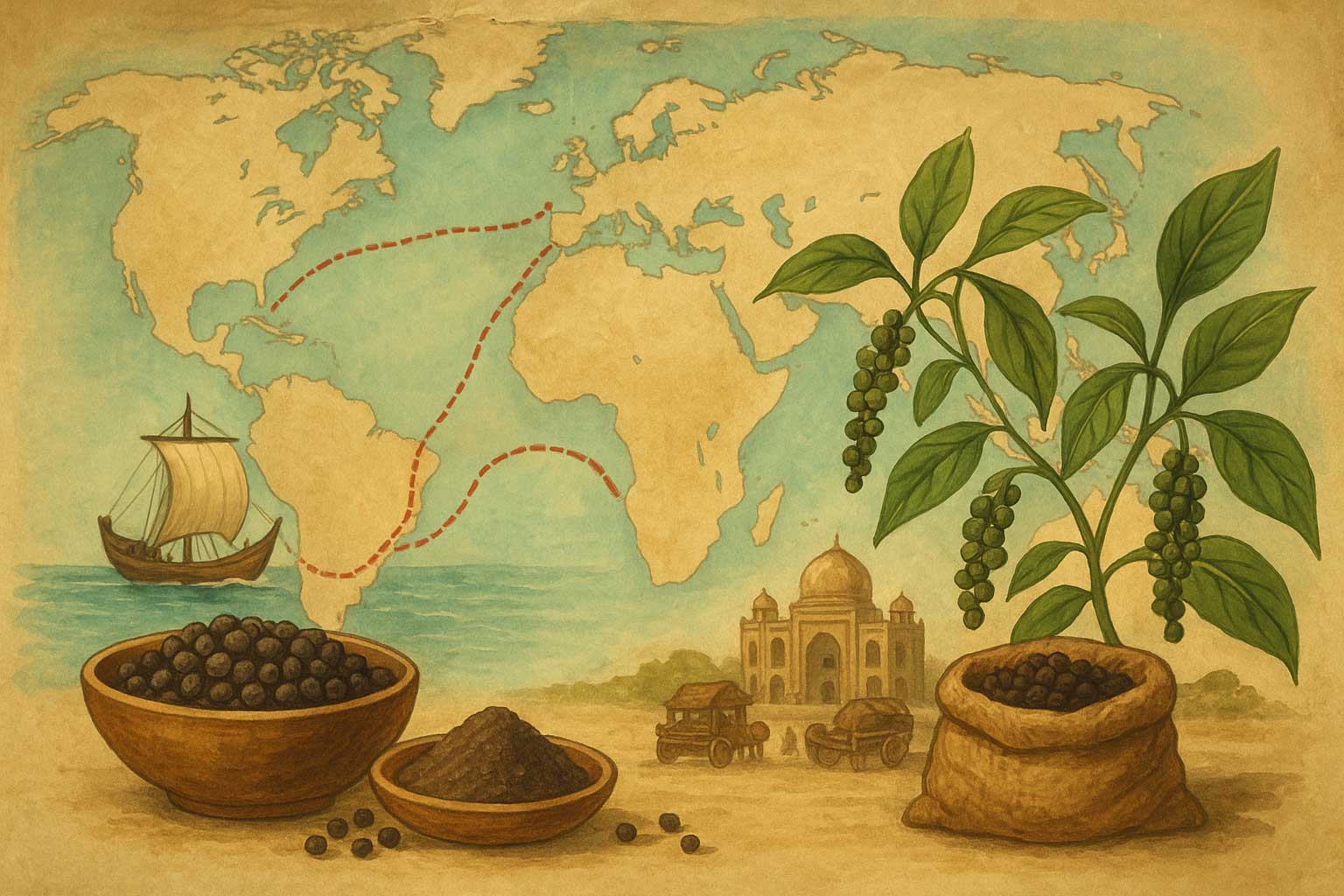
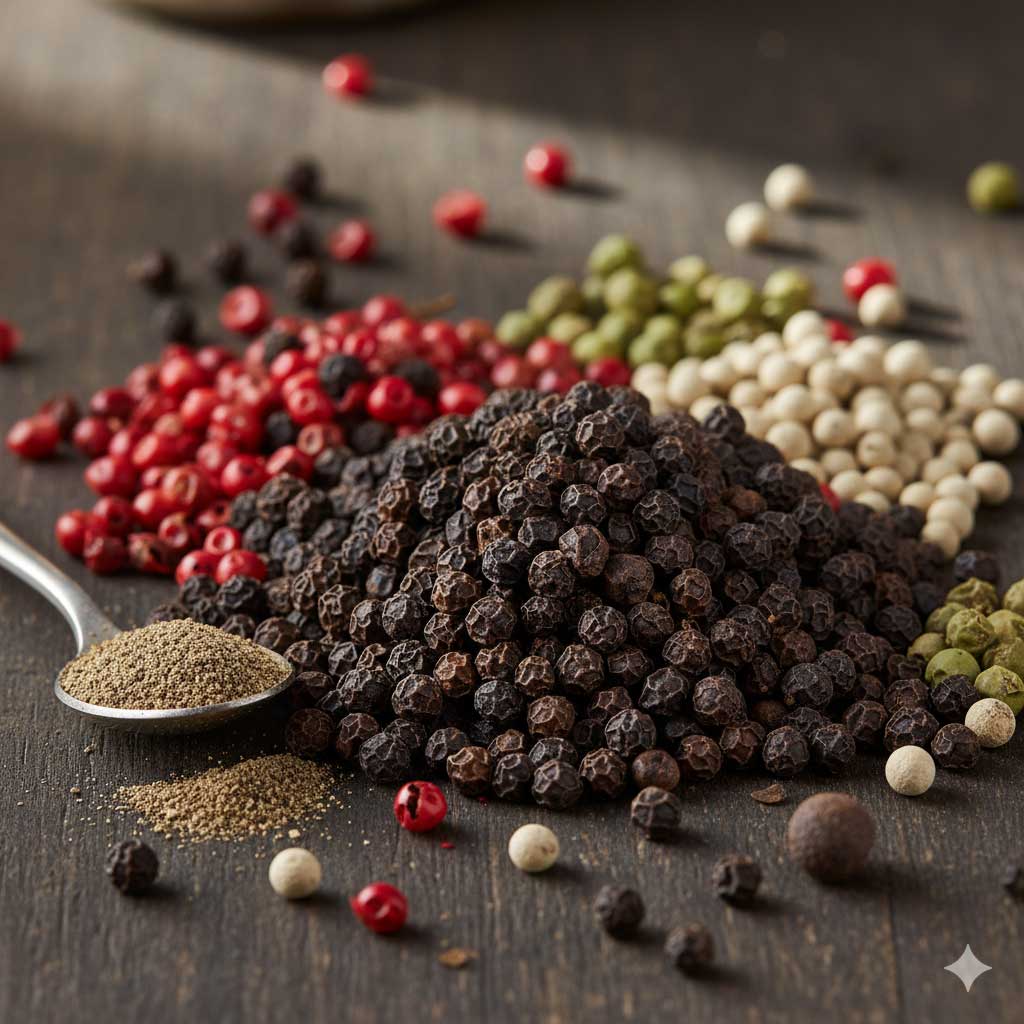
Black pepper’s global journey began with the trade networks of the ancient world. By the first millennium BCE, it had become a staple of trade between India and the Mediterranean civilizations. Arab merchants, renowned for their maritime prowess, played a pivotal role in transporting pepper to the Middle East and beyond. The spice was so valuable that it was often referred to as “black gold,” symbolizing wealth and prestige.
The Roman Empire, in particular, developed a profound taste for pepper. Wealthy Romans used it to flavor meats and sauces, and it became an essential part of their culinary repertoire. Pepper was also considered a luxury item, so much so that it could be used as currency or offered as a tribute to royalty. Accounts by Roman writers, such as Pliny the Elder, describe its use and high cost, highlighting how indispensable it had become to elite cuisine.
The Medieval Spice Trade
During the Middle Ages, black pepper continued to drive global commerce. Arab traders dominated the trade routes connecting India to Europe via the Red Sea and the Persian Gulf. From there, Venetian and Genoese merchants imported pepper into European markets, where it was highly sought after. Its rarity and price made it a status symbol among Europe’s nobility. Medieval cookbooks often feature recipes that include pepper, demonstrating its integration into European culinary traditions.
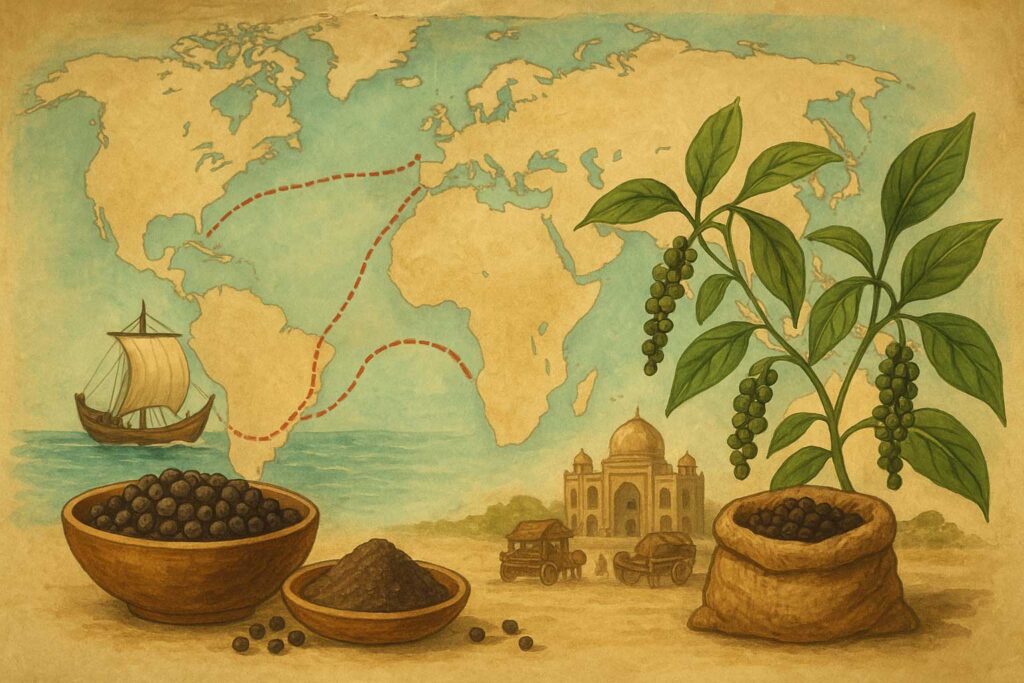
The desire to control the lucrative spice trade motivated exploration and conquest. The Portuguese, under the leadership of Vasco da Gama, sought a direct sea route to India in the late 15th century, bypassing Arab middlemen. Their successful voyage in 1498 marked the beginning of European colonial involvement in the spice trade. Subsequently, the Dutch and British East India Companies also vied for control over the pepper-producing regions, recognizing its economic and strategic importance.
Pepper in the Age of Colonization
European colonial powers reshaped the production and distribution of black pepper. The Portuguese established trading posts along India’s western coast, while the Dutch and British later took over large-scale cultivation and exportation. Colonial plantations in India, Indonesia, and other parts of Southeast Asia were developed to meet Europe’s insatiable demand for pepper. The spice not only fueled economic growth but also contributed to the rise of global trade networks that connected Asia, Europe, and eventually the Americas.
During this period, pepper was more than a culinary delight; it was a tool of power. Control over pepper-growing regions meant immense wealth and influence. European powers invested heavily in protecting their interests, sometimes resorting to military force to secure the spice trade. Pepper thus became entwined with the broader story of colonization, globalization, and the expansion of European empires.
The Culinary Impact
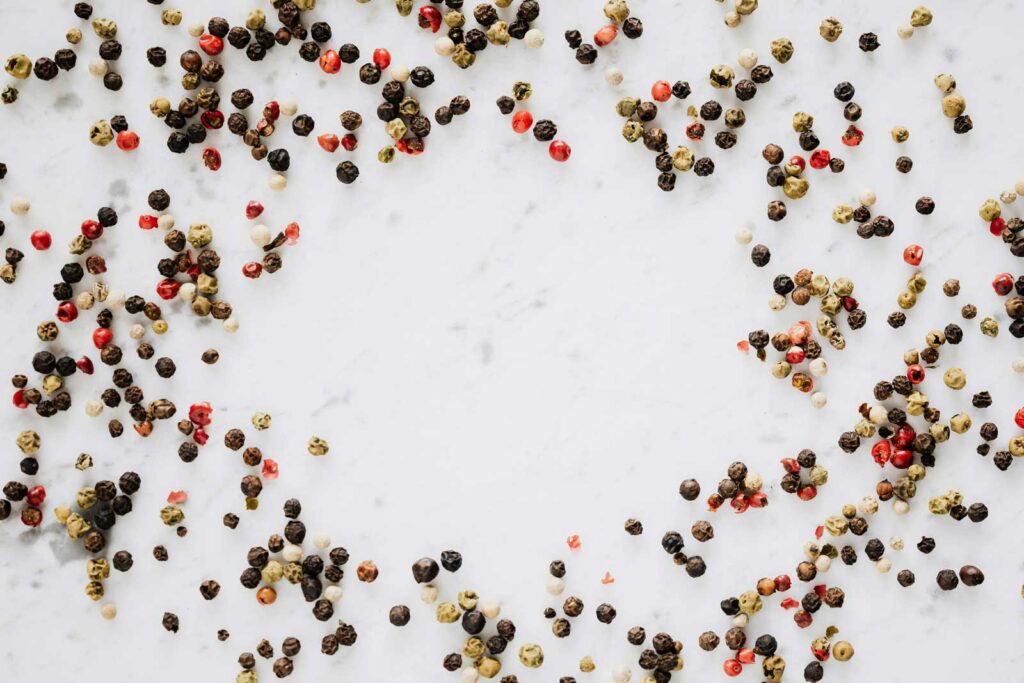
As black pepper spread across the globe, its culinary applications expanded beyond its Indian roots. In Europe, it transformed the flavor profiles of medieval and Renaissance cuisine. By the 17th century, it had become a staple in kitchens from France to England, often paired with salt to season meat, fish, and vegetables. Its pungency complemented rich sauces and stews, elevating simple dishes into gourmet experiences.
In Asia, pepper maintained its integral role in traditional cuisine. In Indonesia, Malaysia, and Vietnam, it was incorporated into both fresh and dried spice blends. In India, it continued to be a key ingredient in masalas, curries, and pickles . Across the world, pepper’s versatility ensured its enduring popularity, whether as a condiment on a dinner table or as a flavoring in sophisticated culinary creations.
Modern Production and Globalization
Today, black pepper is produced in multiple regions, with Vietnam, India, and Indonesia being the largest exporters. Modern agricultural techniques and global logistics have made pepper widely accessible and affordable, transforming it from a luxury item to an everyday kitchen staple. It is now a common sight in households, restaurants, and food industries worldwide.
Despite its global ubiquity, the legacy of black pepper remains tied to its historical journey. Its presence on modern tables is a living reminder of centuries of exploration, trade, and cultural exchange. Pepper is not just a spice; it is a symbol of how human curiosity and commerce can transform a local product into a global phenomenon.
The journey of black pepper from the forests of the Malabar Coast to the global stage is a narrative of economic ambition, culinary innovation, and cultural connectivity. From ancient traders to modern supermarkets, this tiny spice has left an indelible mark on world history. It has flavored more than food; it has shaped economies, inspired voyages of discovery, and influenced societies across continents. Every grind of black pepper today carries with it centuries of trade, tradition, and transformation—a true testament to its title as the “king of spices.”


Leave a Reply