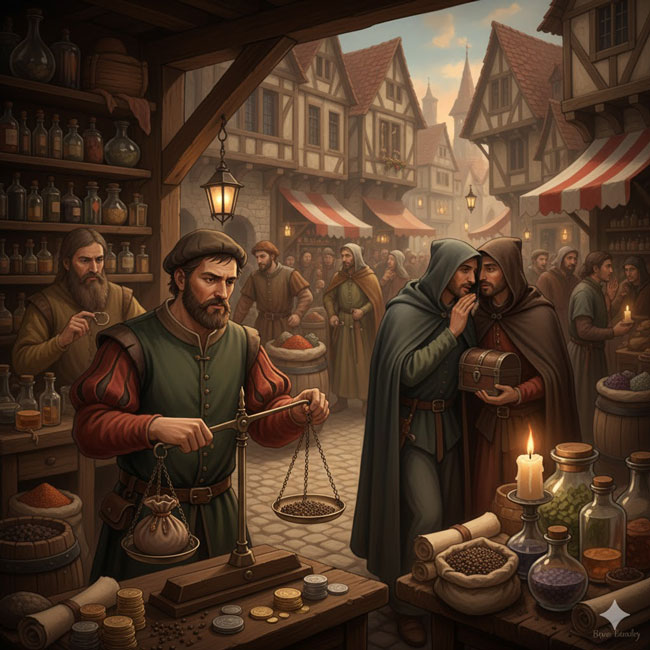
Few spices have shaped human history as profoundly as pepper. Today, it sits quietly on dining tables around the world, casually sprinkled over meals as if it had always been an everyday ingredient. But for most of history, pepper was nothing short of a luxury—a prized commodity that sparked exploration, inspired myths, and even served as a form of currency. Beyond its unmistakable sharp, warming flavor, pepper has built empires, enriched traders, and caused countless amusing misunderstandings along the way.
Origins: A Spice Born in the Western Ghats
Pepper comes from Piper nigrum, a climbing vine native to the lush forests of the Western Ghats in southern India. For thousands of years, this region—especially the areas around Kerala—was the world’s primary source of black pepper. Ancient Indian texts mention pepper not only as a flavoring agent but also as a valuable medicinal ingredient believed to warm the body and improve digestion.
Early Indian traders recognized the spice’s value long before foreigners learned of it’s true origin. According to folklore, local farmers would tell outsiders elaborate stories about ferocious animals guarding pepper forests, hoping to discourage competition. While the animals were mostly harmless monkeys, the myth successfully increased pepper’s mystique—and its price.
Pepper’s Journey to Ancient Civilizations
By around 1000 BCE, pepper had begun traveling west through ancient trade networks. Arab traders dominated the spice routes and acted as intermediaries between India and Mediterranean civilizations. They intentionally cultivated an air of mystery around pepper, refusing to reveal its true origin.
One famous anecdote describes how Arab merchants told the Greeks that pepper grew in snake-infested valleys. According to their tale, the only way to harvest pepper was to burn the entire valley so the snakes fled, causing pepper berries to turn black from the smoke. The story was obviously fabricated—but effective. Greek buyers were shocked and impressed, and pepper’s price rose accordingly.
Romans, who eventually became obsessed with pepper, paid exorbitant sums for it. Wealthy Roman households used pepper in nearly every dish, sweet or savory. It was so valuable that Alaric the Visigoth demanded 3,000 pounds of pepper as part of the ransom to lift his siege of Rome in 408 CE. Pepper was literally worth its weight in gold.
Medieval Europe: Pepper as Money, Medicine, and Mystery
During the Middle Ages, pepper was a key commodity in European trade. Because it could be stored for years without losing value, it was often used as currency. Many merchants paid taxes, rents, and even dowries in peppercorns. This led to the term “peppercorn rent,” referring to a symbolic or nominal payment still used in legal language today.
The spice was so precious that pepper thieves became a genuine concern. A humorous record survives from a merchant guild in 13th-century London describing an apprentice caught with pepper hidden in his shoes. When asked why he had stuffed his boots with peppercorns, he claimed he “merely wished for warmer feet.” His master replied that his feet would indeed be warmed—by the whipping he was about to receive.
Meanwhile, pepper also played a surprising role in medieval medicine. Europeans believed it could cure everything from stomachaches to the plague. During the Black Death, many households lined their doorways with pepper and burned peppercorns in the hope that the spicy smoke would chase away bad air. Unsurprisingly, the plague was unimpressed.
The Age of Exploration: Pepper Drives the World Eastward
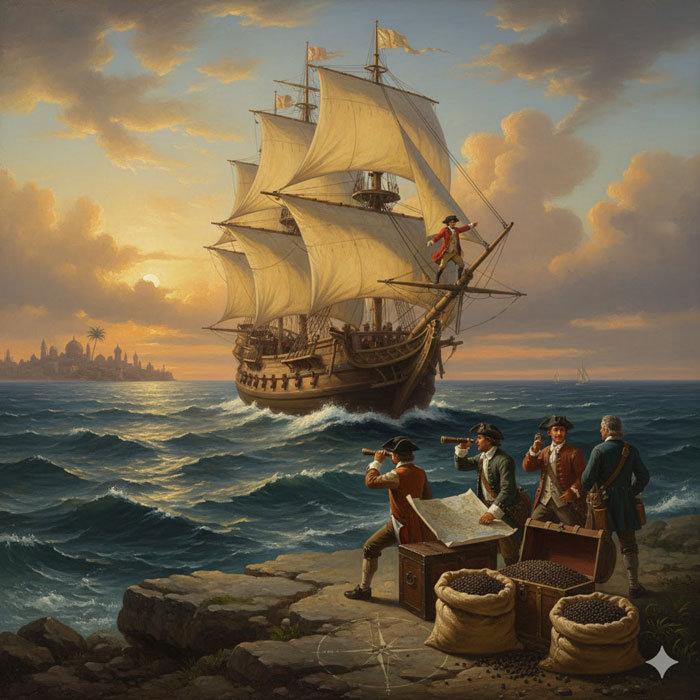
By the 15th century, pepper had become so crucial to European trade that explorers risked their lives to find direct routes to India. Arab and Venetian merchants controlled the Mediterranean spice trade, keeping prices high. This motivated European powers to send ships into the unknown.
Christopher Columbus initially sailed west not to discover new continents, but in search of a shortcut to India and its spice markets. When he reached the Americas, he mistakenly identified local chili plants as a form of pepper, naming them “pepper” due to their heat—a linguistic confusion that persists today in words like “bell pepper,” which contains no real pepper at all.
Vasco da Gama’s successful voyage around the Cape of Good Hope in 1498 changed everything. Portugal gained direct access to Indian pepper, creating a lucrative and sometimes brutally enforced trade network. Soon after, the Dutch and the British joined the competition, building global empires in part to control spice-rich regions.
One amusing diplomatic anecdote survives from this era. When Dutch traders attempted to negotiate directly with a Kerala ruler, they offered gifts including fine cloth, mirrors, and weapons. The king’s advisor politely inspected each item, then reportedly whispered: “Tell them to bring pepper next time. We already have mirrors.” This shows how the origin of pepper was always more valuable than other goods.
Pepper in the Modern World: A Common Treasure

By the 18th and 19th centuries, pepper production expanded, especially in Southeast Asia. As supply increased, prices finally began to drop, making pepper accessible to ordinary households. What was once a luxury for emperors, merchants, and pirates gradually became a humble kitchen essential.
Today, pepper remains one of the world’s most traded spices. India, Vietnam, Indonesia, and Brazil are among the major producers. Black pepper continues to be prized for its sharp heat and earthy aroma, while white pepper, green peppercorns, and pink peppercorns offer variations in flavor. Even today, knowing the origin of the peppercorn adds to its appreciation.
But pepper’s long and dramatic history isn’t forgotten. In fact, some pepper plantations in Kerala still tell embellished legends about how monkeys steal pepper and toss the berries at tourists—sometimes true, often exaggerated, always entertaining.
https://frogsaga.com/wp-admin/post.php?post=145&action=edit
Conclusion: A Spice That Transformed the World
Pepper’s story is one of adventure, myth, wealth, and endless curiosity. It shaped trade routes, influenced wars, funded empires, and flavored meals across continents. From snake-filled valleys invented by Arab traders, to Roman ransom demands, to apprentices stuffing pepper in their shoes, the spice has generated centuries of colorful tales.
https://maxdaumin.com/en/blog/le-grimoire/history-of-pepper-or-how-this-trade-shaped-the-world

Leave a Reply