Tag: recipe

  • How to Make the Best Homemade Garam Masala

    garam masala

    Garam masala is more than just a spice blend — it’s a fragrant symbol of centuries of culinary tradition and cultural exchange. But why buy it when you can make your own? By crafting your own garam masala, you unlock deeper aromas, fresher flavor, and a connection to the ancient spice routes that shaped South Asian cuisine. In this article, we’ll explore not only how to make this warming spice mix but also dive into its history, regional variations, and versatile uses in the kitchen. Ready to spice things up?

    What is garam masala? A blend with deep roots

    “Garam masala” literally means “hot mixture” in Hindi (garam = hot, masala = spice blend). But that “hot” doesn’t refer to spiciness — instead, it comes from its warming character in Ayurveda, believed to increase the body’s internal temperature. 

    Originating in the Indian subcontinent, garam masala is foundational in Indian, Pakistani, Bangladeshi, Nepali, and even some Caribbean cuisines. There’s no one “authentic” recipe — every region, household, and even generation develops its own blend. Common spices include cumin, coriander, cardamom, black pepper, cloves, cinnamon, nutmeg, bay leaves, star anise, and sometimes mace. 

    Why make your own garam masala

    1. Superior aroma and freshness
      Whole spices retain volatile essential oils much better than pre-ground ones. Toasting them just before grinding helps release these oils, giving your blend much more fragrance.
    2. Customization
      You’re in control. Want it more floral? Add extra cardamom. Prefer a hint of sweetness? Increase the cinnamon. Not a fan of cumin? Many recipes omit it altogether.
    3. Cultural and emotional connection
      Making your own spice blend is a way to honor culinary traditions. Many home cooks, for instance, treasure family garam masala recipes shared over generations.
    4. Longer shelf-life
      When stored in an airtight, dark container, fresh homemade garam masala can stay potent for several months.

    How to make homemade garam masala? A step‑by‑step recipe

    Here’s a reliable, well-balanced recipe you can adapt to your taste:

    Ingredients

    • 3 tablespoons coriander seeds
    • 2 tablespoons cumin seeds
    • 1 tablespoon green cardamom pods, seeds removed
    • 1 tablespoon black peppercorns
    • 2 teaspoons whole cloves
      1 cinnamon stick (≈ 3 inch)
    • 1 bay leaf
    • ¼ teaspoon whole nutmeg, freshly grated

    Instructions

    1. Dry roast the spices
      Heat a heavy skillet over medium heat (low-to-medium works best to prevent burning). Add the coriander, cumin, cardamom (seeds), peppercorns, cloves, cinnamon stick, and bay leaf. Toast them gently, stirring constantly, until they become fragrant — about 2–4 minutes.
    2. Cool completely
      Once toasted, remove the spices from heat and spread them out on a cool plate. Let them cool fully — this prevents moisture or steam from forming when you grind them.
    3. Grind to a powder
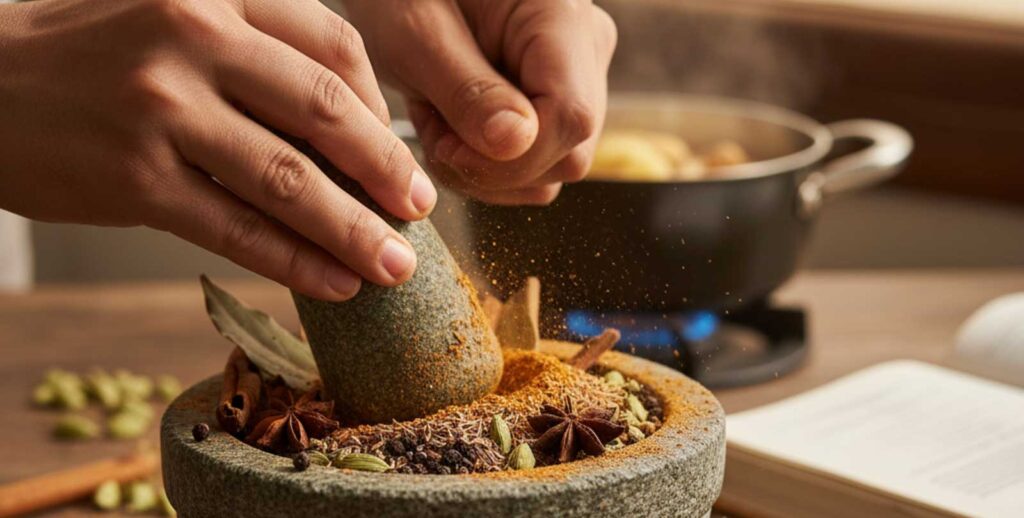
      Use a spice grinder, coffee grinder (dedicated to spices), or mortar and pestle. Grind in small batches until you obtain a fine, uniform powder.
    4. Mix in nutmeg
      Add the freshly grated nutmeg to the ground mixture and stir well to combine all the flavors evenly.
    5. Store properly
      Transfer your garam masala into an airtight, preferably opaque container. Store it in a cool, dark place. Use within 3–6 months for the best flavor. 

    Variations and regional twists

    Garam masala is far from a one-size-fits-all spice blend. Here are some popular regional or customized adaptations:

    • Punjabi-style garam masala: Heavier on black pepper, cloves, and bay leaves for a bold, punchy flavor.
    • Bengali garam masala: Often milder, sometimes omitting cumin entirely and favoring just cardamom, cloves, cinnamon, and nutmeg.
    • Mughlai garam masala: Rich and aromatic — includes mace, star anise, and sometimes fennel seeds for a more floral, sweet profile.
    • Modern twists: Some home cooks add nontraditional spices like fennel seeds for licorice notes or red chili for heat. 

    Flavor profile and culinary uses

    Flavor profile

    Garam masala is a symphony of flavors, each spice contributing its own distinct note to create a complex, harmonious blend. The warmth and sweetness come from cinnamon, nutmeg, and bay leaf, which lend a gentle, comforting sweetness that balances the sharper spices. Black peppercorns and cloves provide a spicy, pungent punch, giving the blend depth and a subtle bite that awakens the palate. Coriander seeds bring a citrusy, bright quality, adding a hint of lemon-like freshness, while cumin introduces an earthy undertone that grounds the blend. Finally, green cardamom pods infuse delicate floral notes, contributing a subtle complexity that rounds out the overall flavor. Together, these elements create a spice blend that is both warm and aromatic, versatile enough to enhance a wide range of dishes.

    Culinary uses

    Garam masala is incredibly versatile:

    • Curries and stews: Add at the end of cooking to preserve its aroma — for example in dal, chicken tikka masala, or rich lentil stews.
    • Marinades: Mix into yogurt, oil, or citrus-based marinades for meat, tofu, or vegetables.
    • Soups and sauces: Stir a pinch into soups or sauces to deepen the flavor.
    • Finishing spice: Sprinkle a little garam masala on top of roasted vegetables, grilled meats, or even bowls of rice just before serving for a fragrant flourish.
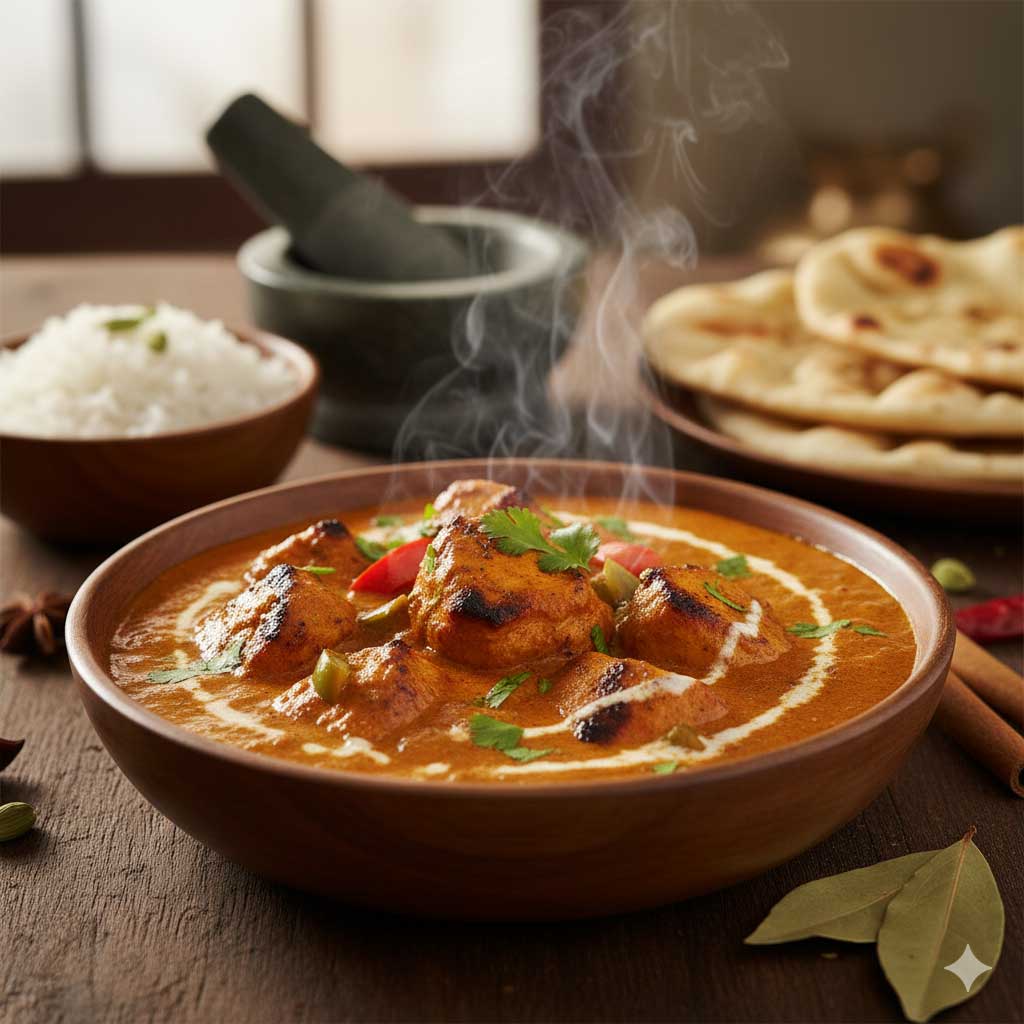
    dish with garam masala

    Why is your homemade blend a game changer?

    • Freshness: Nothing beats freshly toasted and ground spices.
    • Personalization: You decide the flavor balance.
    • Cultural Link: You’re part of a storied tradition that spans continents and centuries.
    • Sustainability: Making small batches reduces waste, and you avoid additives or preservatives often found in commercial mixes.
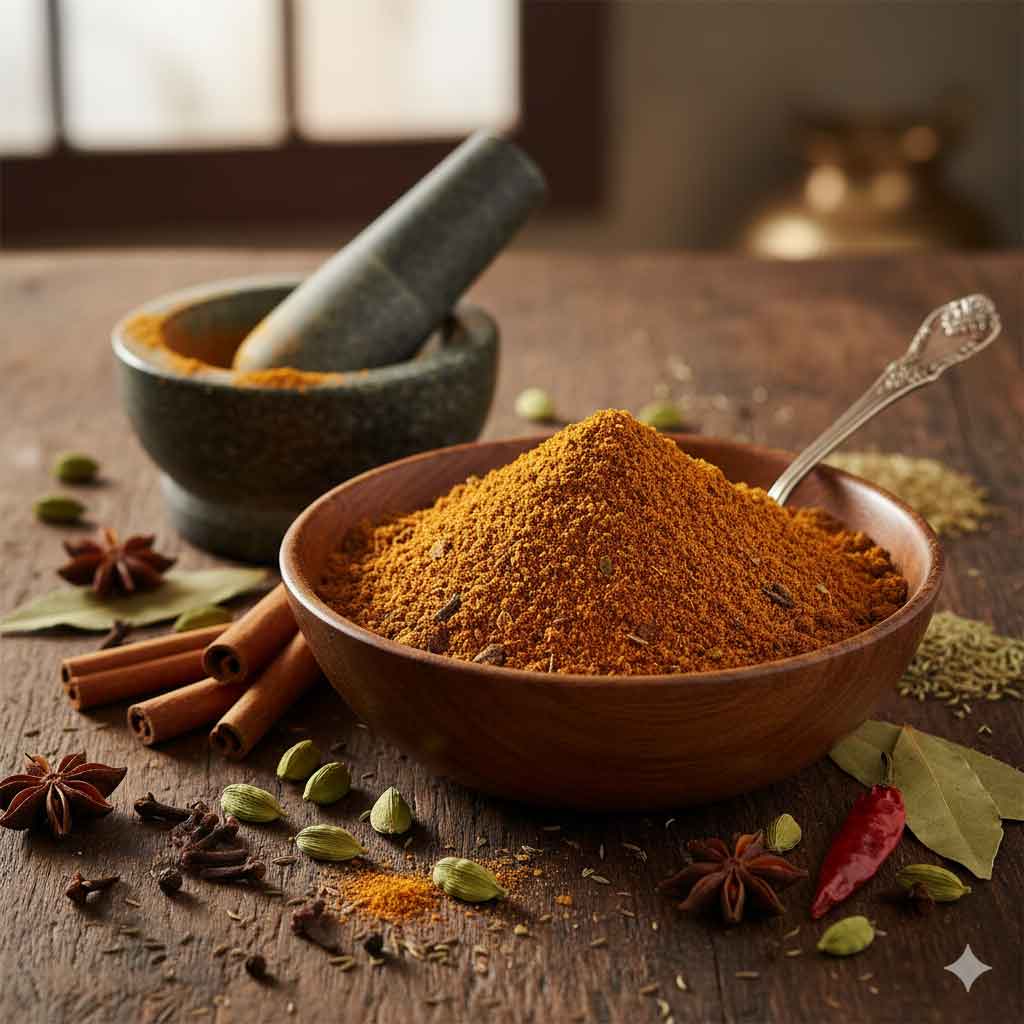
    garam masala

    Making your own garam masala is a journey — one that ties together history, culture, and the simple joy of cooking. With just a handful of whole spices, a gentle roast, and a grind, you can create a blend that’s warm, aromatic, and deeply personal. Use it to elevate curries, soups, marinades, or even as a finishing flourish, and you’ll understand why this spice mix holds such a cherished place in global cuisine.

    Give it a try! Roast, grind, taste — and then share your creation. Let me know in the comments: how did your garam masala turn out? What tweaks did you make?
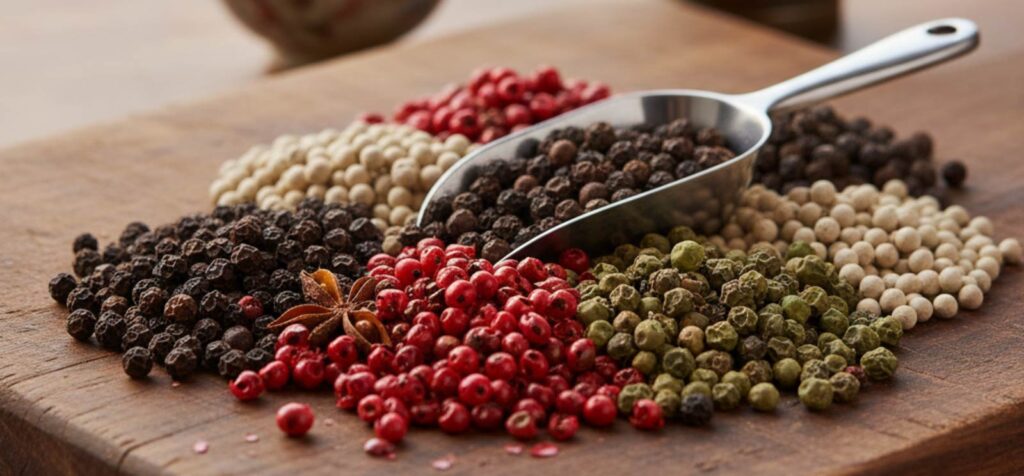
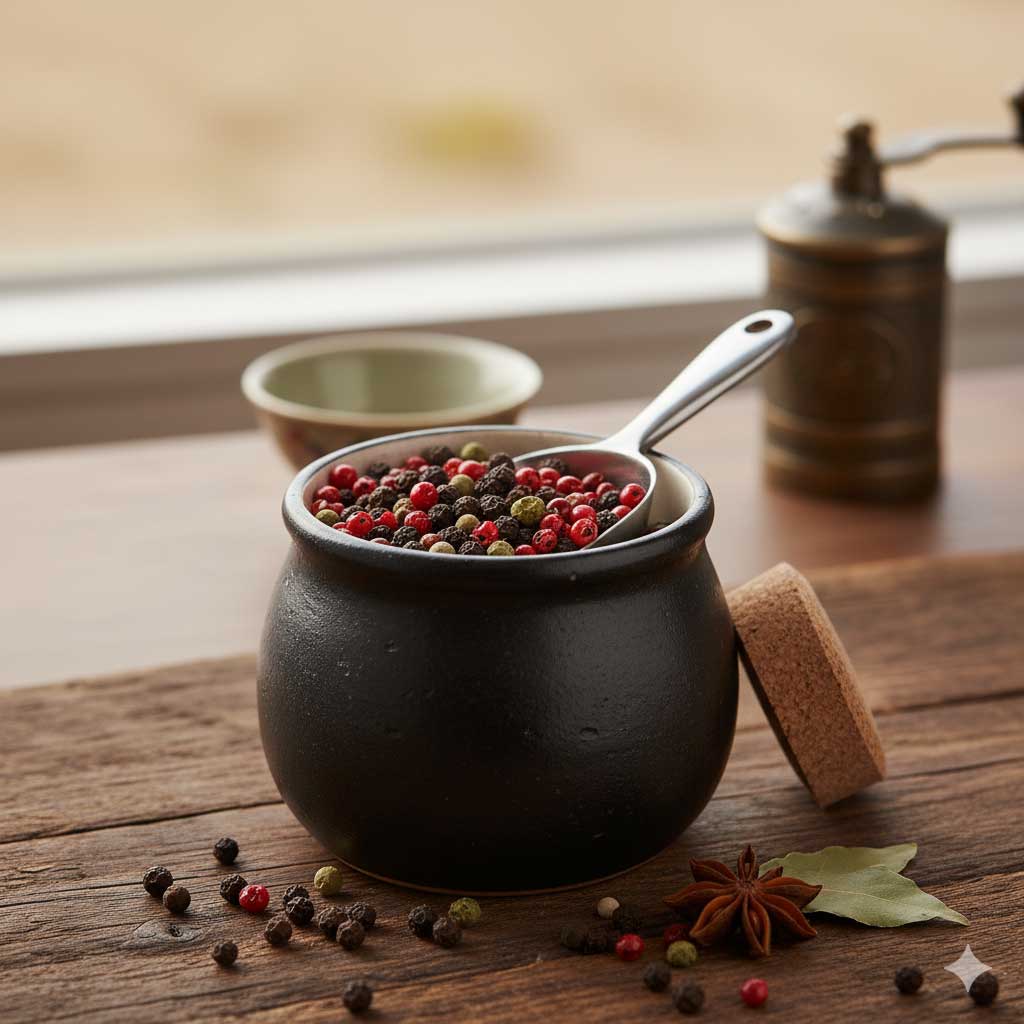
  • The Magic of the 5‑Pepper Blend: A Flavorful Journey Through History, Culture & Cooking

    5-pepper blend

    5-pepper blend isn’t just a decorative addition to your pepper grinder — it’s a vibrant mix brimming with history, aroma, and culinary complexity. But what makes this colorful seasoning more than just pepper? By exploring its unique peppercorn varieties, its storied origin, and its versatile uses in the kitchen, you’ll discover why this medley deserves a place in your spice rack. Join me on a journey through trade routes, sensory layers, and modern gastronomy, and learn how to use and appreciate the multicolored symphony in your own cooking.

    What is the 5‑pepper blend?

    At its core, the 5‑pepper blend (also called “five-­peppercorn mix” or “cinq baies” in French) typically combines five distinct “pepper” elements that come from different plants or are processed differently. The most common composition includes black, white, green, and pink peppercorns — all from the same species Piper nigrum — plus allspice (also known as Jamaica pepper).

    The black, green, and white peppercorns originate from the same fruit but undergo distinct processing: black pepper is the sun-dried unripe fruit, white pepper comes from fully ripened berries whose outer skin has been removed, and green peppercorns are harvested early to capture a fresher, milder flavor. Pink peppercorns, however, are not true peppercorns at all; they are the dried berries of the Schinus tree and bring a subtly fruity, floral character. Finally, allspice adds a sweet, slightly warming undertone with hints of cinnamon, clove, and nutmeg. 

    The flavor profile of the 5‑pepper blend

    The 5‑pepper blend sings in multiple registers. Black pepper provides the familiar, robust heat — round, earthy, and warming. White pepper, in contrast, delivers a slightly sharper, more concentrated piquancy with an almost fermented or musky tone. 

    Then there’s the bright, herbaceous note of green peppercorns, which feel fresher and more vegetal, sometimes even citrusy. Pink peppercorns bring a delicate, floral sweetness — light and slightly fruity, standing apart from the Piper nigrum family. Rounding it out, allspice provides a gentle warmth, like a whisper of cinnamon, clove, and nutmeg, giving the whole blend a cozy, aromatic base.

    This layering of spicy, sweet, floral, and warming notes makes the 5‑pepper blend both complex and balanced — a seasoning that evolves on your palate with every grind.

    Culinary uses

    The versatility of this pepper mix is one of its biggest strengths. Here’s how different kitchens around the world put it to work:

    • Meats and roasts: Use a coarse grind of the 5‑pepper mix as part of a rub for beef, lamb, or game. The boldness of black and white pepper is tempered by the floral and fruity tones, while allspice brings a hint of warmth — ideal for seared steaks or slow-roasted joints.
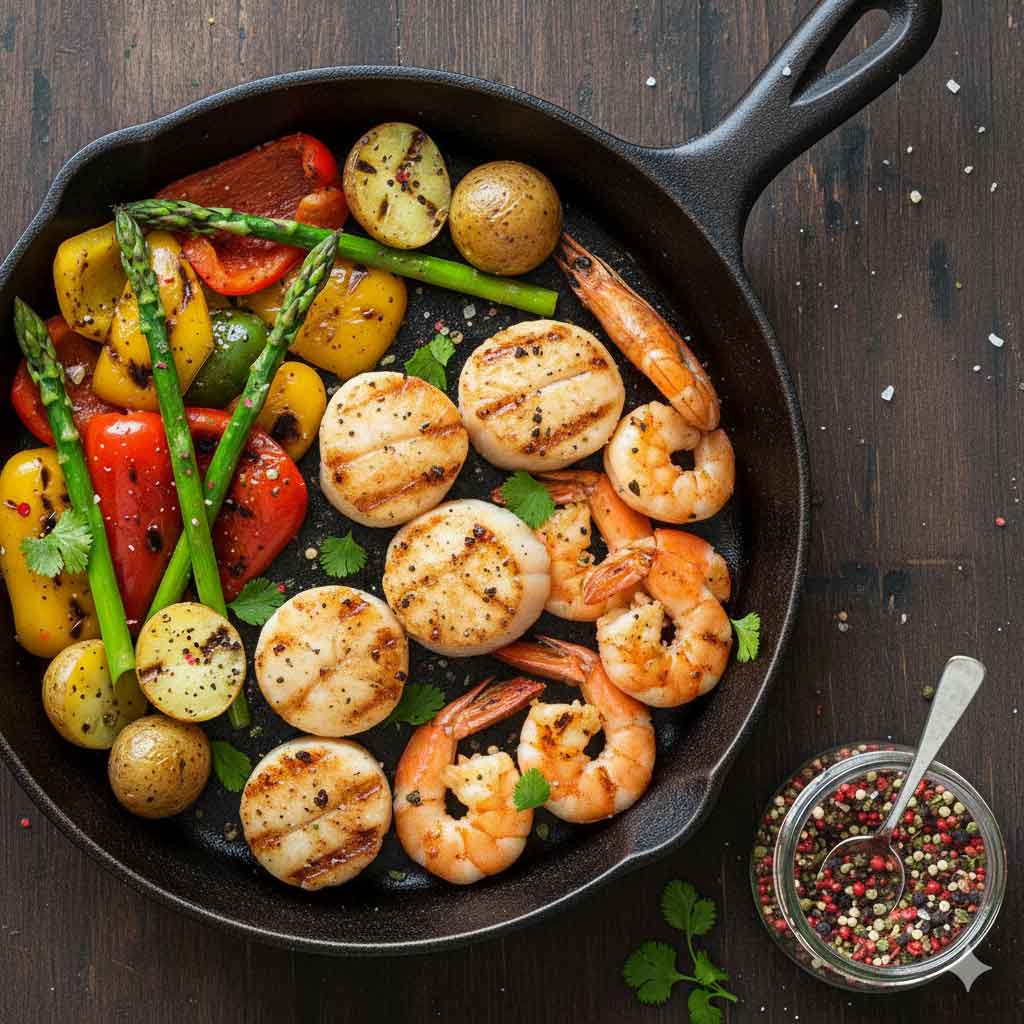
    • Seafood and poultry: The lighter and brighter notes of green and pink peppercorns make this blend a beautiful finishing spice for fish or chicken. Try gently cracking the pepper and sprinkling it on grilled salmon — you’ll taste the freshness and the aromatic depth.
    • Sauces and dressings: When freshly ground, the pepper blend elevates sauces, especially creamy or velvety ones. Allspice adds a subtle sweetness, while the peppercorns layer spiciness in a refined way.
    • Salads and vegetables: Use as a finishing flourish. Just grind a little over roasted veggies or toss into a salad to add a punch of color and a sophisticated peppery note.
    shrimps with 5-pepper blend

    Cooks often recommend using a transparent pepper mill so you can admire the visual charm of the different peppercorns. And because the flavor of peppercorns is at its peak when freshly ground, it’s best to grind just before serving for maximum aromatic impact. 

    Choosing and storing your 5‑pepper blend

    If you’re shopping for a 5‑pepper blend, look for high-quality, whole peppercorn mixes that contain the five classic components: black, white, green, pink, and allspice. Blends from reputable spice merchants often use premium, ethically sourced peppercorns. 

    Here are a few notable products you might consider:

    • Old India Five Mixed Peppercorns — a classic gourmet blend.
    • Fauchon Mélange 5 Baies — elegant and refined, from a French luxury brand.
    • Fenbrook Five Peppercorn Mix 250 g — generous quantity, great for frequent use.
    5-pepper

    To preserve freshness, store your peppercorn blend in an airtight, opaque container in a cool, dark place. Avoid direct sunlight and moisture — whole peppercorns keep their aromatic compounds best this way. 

    Why the 5‑Pepper Blend Matters: More Than Just a Seasoning

    This blend isn’t just pretty — it’s a symbol of culinary evolution. It reflects centuries of spice trade, the botanical diversity of pepper, and the artistry of layering flavors. When you grind this mix over a dish, you’re not just seasoning your food; you’re connecting with a tradition that spans continents.

    From a health perspective, each type of peppercorn brings its own benefits. Black pepper contains piperine, which can improve nutrient absorption. Allspice, meanwhile, has been used historically for digestive relief. 

    Conclusion

    The 5‑pepper blend is a multi-dimensional treasure: visually stunning, richly aromatic, and deeply rooted in history. Whether you’re finishing a delicate fish, building a robust meat rub, or elevating a salad, this peppercorn medley brings layers of flavor that few single spices can match.

    Don’t stop here — try grinding your own mix, experiment with proportions, and let your culinary imagination run wild. If you give it a spin, I’d love to hear: how do you use your pepper blend? Share your favorite dishes or moments of discovery!