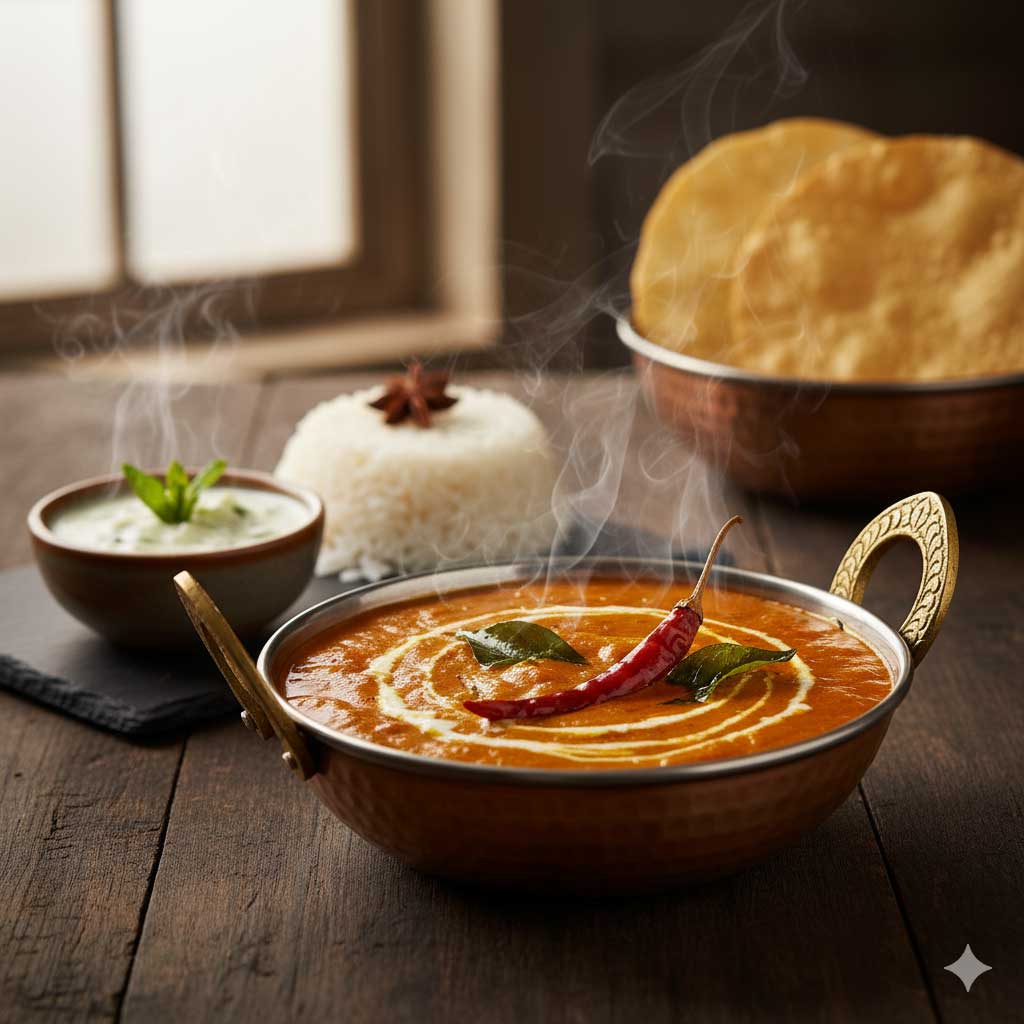
The term Madras Curry is perhaps the most globally recognized name that represents a singular, standardized flavour profile within the vast category of Indian cuisine. However, the dish and the famous powder are an invention of the British Raj, a culinary export that has little to do with any single, authentic recipe found in Chennai (formerly Madras), the bustling port city in the state of Tamil Nadu. Instead, Madras Curry is an enduring legacy of the Anglo-Indian relationship, defining a bold, hot, and distinctly sour flavour profile popular in Western restaurants.
The history of the Madras curry powder is closely linked to the early British occupation of India. As the East India Company set up trading posts, Westerners quickly fell in love with the complex, aromatic local dishes. Lacking the necessary time, knowledge, or specific ingredients to recreate authentic masalas in their home countries, they sought a simple, portable, and shelf-stable way to achieve a similar flavour. Thus, the commercially pre-mixed Madras Curry Powder was born, primarily manufactured for export to Britain.
The Flavour Profile: Heat, Tang, and Turmeric
The key characteristics that distinguish a Madras curry from a general Indian curry are:
- Intense Heat: A traditional Madras curry is defined by its significant use of dried red chilies. It is often positioned on restaurant menus as a “hot” or “fiery” option, making it far spicier than a creamy Korma or a mild Japanese Kare.
- Tanginess (Sourness): A crucial and defining element is the tanginess. This acidity is traditionally achieved through the liberal use of tamarind paste or, in many Western interpretations, lemon or lime juice. This sourness balances the rich spices and the heat, providing a complex, mouth-watering depth.
- Turmeric and Colour: Madras powder uses a high proportion of turmeric, giving the resulting dish a recognizable, deep orange-red hue.
Unlike the complex, freshly ground masala that defines an authentic South Indian dish, the Madras powder relies on standardized quantities of dried spices, making it a reliable and easily replicated flavour across the globe.
The Spice Blend Breakdown
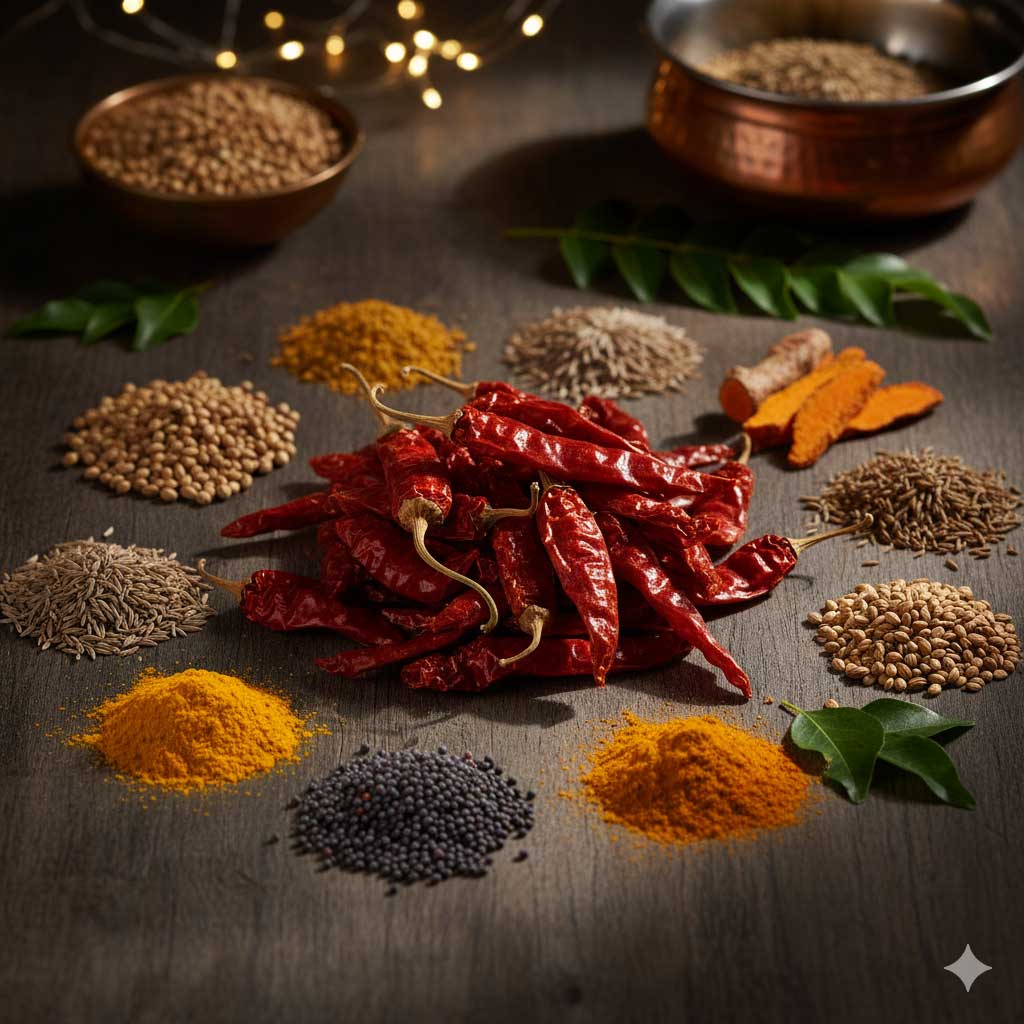
A typical, commercially produced Madras Curry Powder blend will heavily feature:
- Red Chilies: Providing the signature heat and red color.
- Coriander Seeds: The bulk of the blend, offering a citrusy and warm note.
- Cumin Seeds: Earthy and savory.
- Fenugreek Seeds: Adds a distinct bitterness and characteristic aroma.
- Turmeric: Provides the orange/yellow color and earthy flavour.
- Mustard Seeds: A common ingredient in South Indian cuisine, adding a sharp, nutty bite, often used whole in the tempering (tadka).
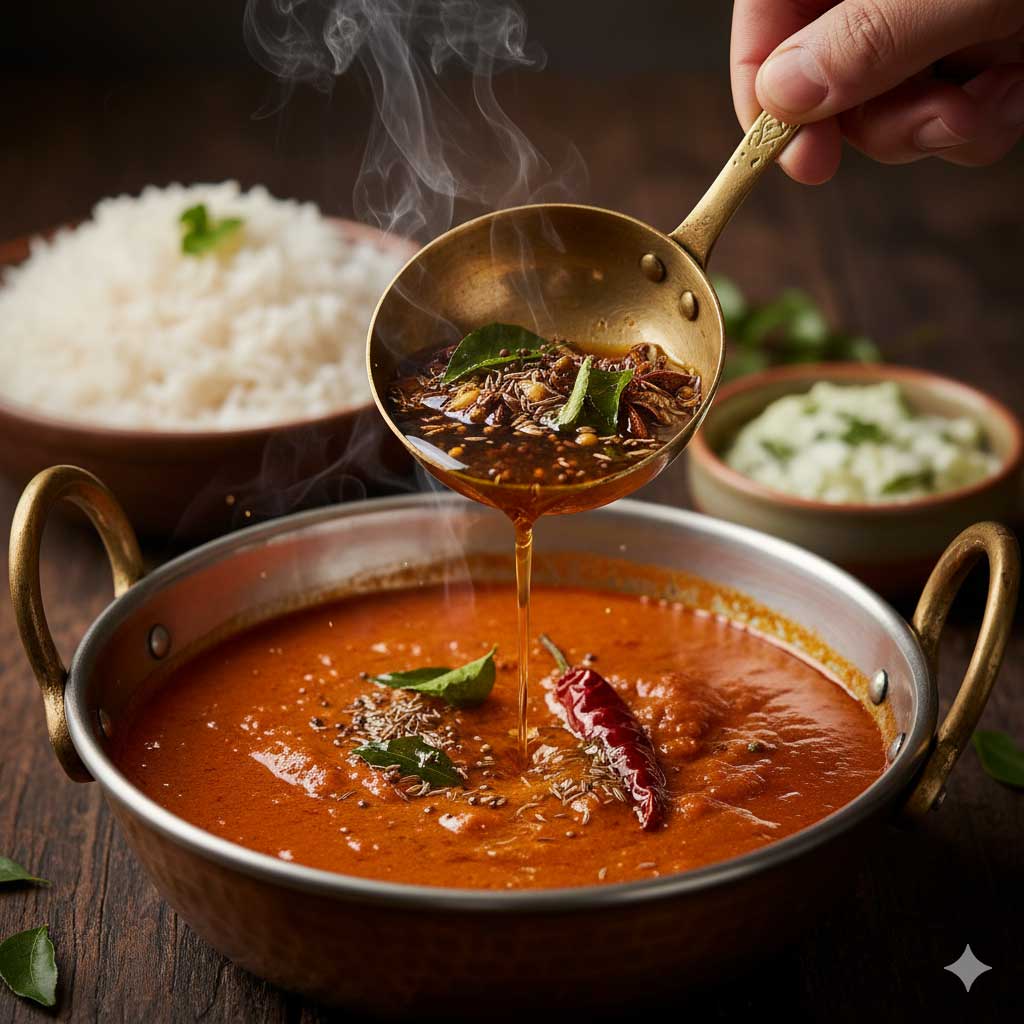
In a prepared dish of Madras curry, the powder is typically bloomed in oil along with fresh aromatics like ginger, garlic, and sometimes curry leaves (another hallmark of Southern Indian cooking). The final gravy is often thinner than North Indian dishes, using water or coconut milk rather than heavy cream, although cream is sometimes added in Western kitchens to temper the heat.
The actual Tamil cuisine from the region around Chennai often features intensely spiced, thinner broths known as kulambu or lentil-based dishes like sambar and rasam. These dishes are always built from scratch using fresh ingredients like roasted pulses, whole dried chiles, and coconut, traditionally ground into a wet paste on a grinding stone. The Madras curry powder simplifies this intricate daily process into a single, convenient item. Consequently, when preparing a ‘Madras curry’ dish, the best way to utilize the powder is still to follow the Indian technique: bloom it in hot oil or ghee with fresh garlic, ginger, and curry leaves to release its full aromatic potential before adding the liquid base, ensuring it never tastes simply like dried, dusty spices.
South Indian Influence: The Myth vs. The Reality
While the Madras curry is not a direct replication of a dish found in Chennai, it does draw inspiration from the culinary techniques of the Tamil region:
- Curry Leaves: The use of fresh or dried curry leaves is indispensable in South Indian cooking, often fried first to infuse the oil with their pungent aroma. A good Madras curry will include these.
- Lighter Gravy: Tamil curries are often made with a lighter gravy, allowing the rice to absorb the flavour easily. They are rarely as heavy or creamy as North Indian specialties like Korma.
- Vegetable Focus: The Southern diet includes a greater variety of vegetables and legumes. While the global Madras curry is often served with meat (lamb or chicken), the principles echo a style more focused on lighter, tangier flavors.
Modern Popularity and Legacy
The Madras Curry remains a staple in curry houses from London to Sydney. Its straightforward, assertive flavor profile is deeply embedded in the Western perception of Indian food. For many, it is the classic, powerful, and deeply satisfying “hot curry.”
Today, the popularity of authentic South Indian cuisine is growing internationally, showcasing dishes like the spicy Chettinad chicken or the tangy Goan fish curry, which are the true, complex culinary representatives of the region. However, the trusty Madras Curry powder continues its global journey, a reminder of how trade and cultural translation can simplify and popularize a complex flavour, leaving behind a culinary icon that is both a misnomer and a beloved, fiery tradition.
It is a dish that embodies the colonial-era simplification of a deeply regional cuisine, but in doing so, it has defined a spicy, sour, and comforting corner of the global curry landscape.
As with most Indian curries, the Madras variety is traditionally served with basmati rice, which provides a neutral foundation to soak up the intense, tangy gravy. Accompaniments often include a crisp, thin lentil wafer called pappadam, and cooling dairy sides like raita (yogurt mixed with cucumber and mint) to temper the dish’s signature heat. This balance of fiery flavour, cooling texture, and aromatic rice completes the experience, solidifying the Madras curry’s place not just as a blend, but as a complete, globally recognized meal.


Leave a Reply