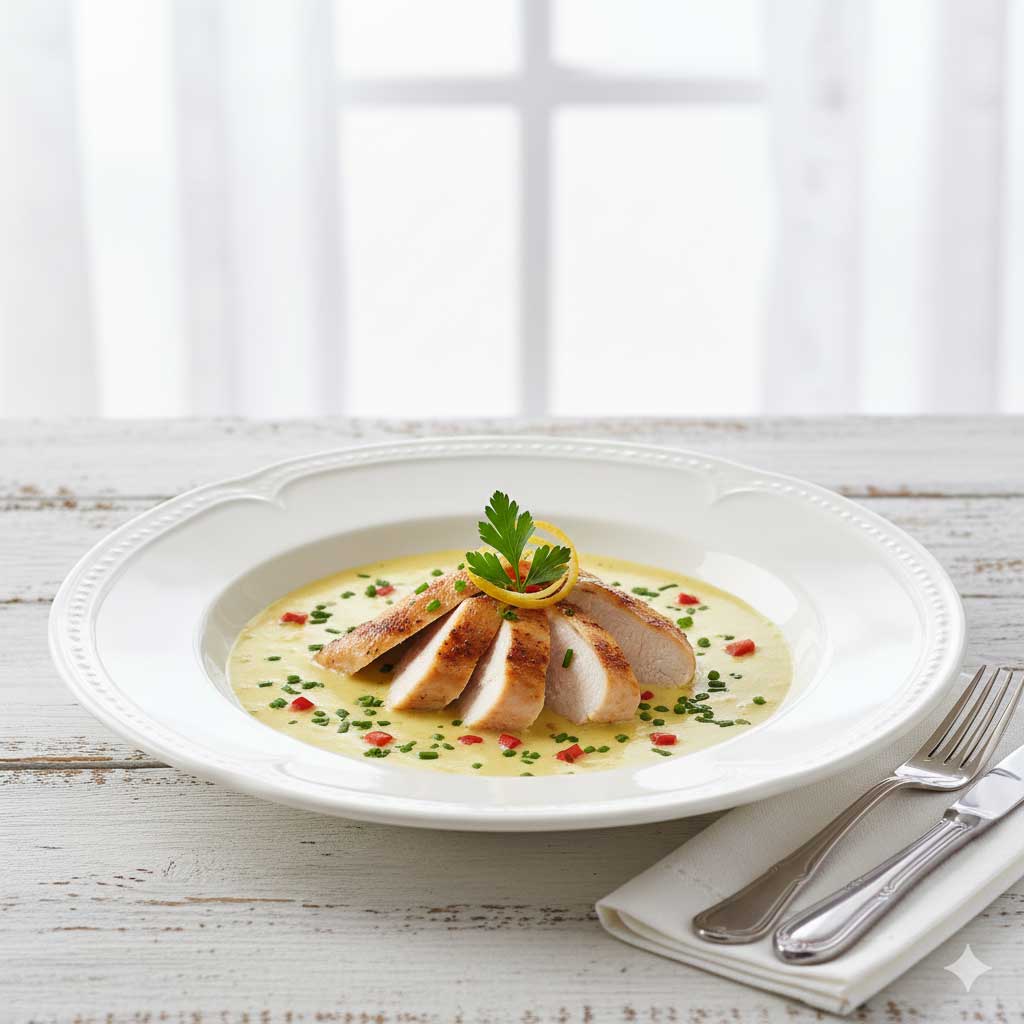
When most people think of curry, their minds immediately travel to the vibrant street stalls of Delhi, the fragrant markets of Bangkok, or the comforting kitchens of Osaka. Yet, tucked away in the culinary history of Western Europe, a distinctive and often misunderstood variety exists: the French Curry. This is not a curry in the traditional sense, but a refined, colonial-era interpretation that showcases how French classical cuisine absorbed, translated, and ultimately elevated an exotic flavour profile for a European palate.
The story of French curry is rooted in empire and trade. Long before the global movement of people brought authentic South Asian cuisine to Paris, spices like turmeric, ginger, and coriander found their way into French ports via maritime trade routes, particularly those connected to Pondicherry, a French colonial outpost in India, and the spice islands of the Caribbean and Indochina. Chefs in the 18th and 19th centuries, eager to introduce new, fashionable tastes to the aristocracy, began experimenting. However, lacking the deep culinary knowledge and specific ingredients of India, they developed a mild, elegant, and often creamy dish that bore only a passing resemblance to its origin.
A Culinary Translation: From Spice Blend to Sauce
The core difference between French curry and its South Asian counterparts lies in its structure and composition. Traditional Indian curries are built on a complex foundation of fried aromatics (onions, ginger, garlic) followed by a progression of powdered and whole spices, often culminating in a thin, broth-like consistency or a dry coating.
The French curry is fundamentally different. It is primarily a sauce-based dish, derived from the foundational techniques of la haute cuisine. The typical French curry starts with a classic French roux—a mixture of butter and flour—to create a thick, stable base (either a Béchamel or a Velouté). To this white sauce, a pre-mixed, mild curry powder is added. This powder, often lighter in colour and lower in chili content than even mild Indian blends, provides the ‘curry’ flavour without the heat or the textural complexity of fried spices.
This technique yields a sauce that is smooth, rich, and uniformly coloured—a far cry from the multi-layered, often oil-separated (called tarka or tadka) textures prized in Indian cooking. The French focus is on integration and refinement: every element must be homogenous and subtle.
Key Ingredients and Execution
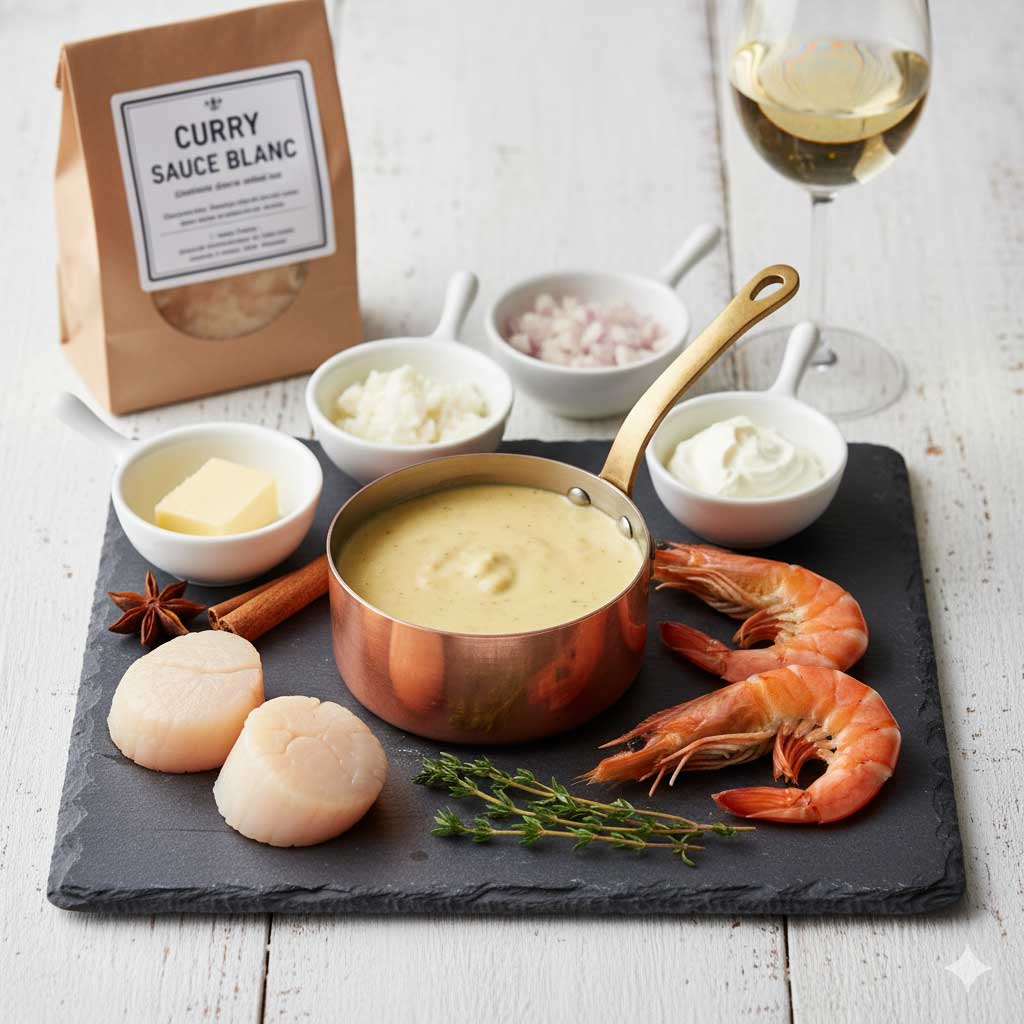
A defining feature of the classic French curry is its pairing with seafood, particularly shellfish. The mild, creamy sauce is considered the perfect partner for delicate flavours like lobster (Homard au Curry), scallops (Coquilles Saint-Jacques au Curry), or prawns. The gentle, aromatic powder highlights the sweetness of the seafood without overpowering it.
Essential components typically include:
- The Base: A butter-rich roux and a dairy element (crème fraîche, cream, or milk) to create the Velouté or Béchamel.
- The Flavouring: A mild, pre-packaged curry powder, which may include turmeric, coriander, and cumin, but often lacks fenugreek, mustard seed, or the aggressive heat of chili peppers.
- Aromatics: Unlike Indian curries, the aromatics are often limited to shallots or white onions, sautéed gently (not browned) to maintain the sauce’s pale colour and delicate flavour.
- Acid/Sweetener: A touch of acid, such as white wine or a squeeze of lemon juice, might be used to cut through the richness, while occasionally, a hint of apple or fruit chutney (again, a colonial import) is incorporated for sweetness.
The result is a dish of culinary elegance: a beautiful white plate presenting perfectly cooked scallops nestled in a pale, lemon-yellow sauce. It is the epitome of French cuisine’s belief that flavour should be inferred and suggested, not shouted.

A Legacy of Adaptation
The French curry may seem antiquated today, especially given the accessibility of authentic global cuisine. However, its historical significance is undeniable. It serves as a perfect example of cultural translation in food—how one culture’s complex, traditional dish is reinterpreted through the technological and philosophical lens of another.
This dish also highlights the role of colonialism in shaping Western flavour profiles. It wasn’t the vibrant, heat-forward food of the masses that made it to the French elite’s dinner tables, but a carefully curated, softened version suitable for their established gastronomic sensibilities.
Contemporary French chefs rarely feature the traditional French curry in its purest form, but its legacy lives on in modern fusion cuisine. We see its influence when chefs use curry powder to season a sophisticated hollandaise, or when a touch of Madagascan vanilla is added to a mild curry sauce to accompany duck—blending the aromatic warmth of the Orient with the classical richness of the Occident.
In conclusion, the French curry is a quiet counterpoint to its fiery global cousins. It’s a sauce first, a spice profile second, and a testament to the enduring French dedication to technique, elegance, and the art of the perfect, creamy consistency. It reminds us that “curry” is a concept as much as it is a specific dish, capable of speaking many culinary languages, even with a delicate French accent.

Leave a Reply