Category: Saffron

  • Saffron: The Golden Essence of Spanish Cuisine

    Saffron Spice

    A Spice Worth Its Weight in Gold

    There are few spices in the world that evoke as much curiosity, mystique, and admiration as saffron, known in Spanish as azafrán. Often called “red gold,” it is more than just the world’s most expensive spice—it is a cultural emblem, a symbol of craftsmanship, and an integral part of Spain’s culinary heritage. The delicate crimson threads, harvested by hand from the Crocus sativus flower, have been used for centuries to bring aroma, color, and depth to countless dishes. In Spain, it is inseparable from some of the country’s most iconic recipes, including the famed paella, arroz con pollo, and rich fish stews.

    But beyond its culinary appeal, it carries with it a rich history shaped by ancient civilizations, trade routes, and agricultural traditions that still exist today.


    Understanding the Flavor Profile of Saffron

    To appreciate it’s culinary power, one must understand its unique taste. Unlike many spices that deliver bold or aggressive flavors, it’s prized for its subtlety. A small quantity—sometimes only a few threads—is enough to transform an entire dish.

    Saffron’s Aroma and Taste

    High-quality Spanish saffron, particularly from La Mancha, is known for:

    • Aromatic floral notes, reminiscent of honey and wild herbs
    • Warm, earthy undertones, similar to hay
    • A hint of bitterness, adding balance and complexity
    • A golden color, which infuses liquids with a deep yellow-orange hue

    The spice doesn’t overwhelm; instead, it enhances. Its fragrance blooms when steeped in warm liquid, releasing compounds that carry both flavor and color throughout the dish. This makes this spice a favorite in recipes where subtle aromatic depth is desired.


    How to Use Saffron in Cooking: Techniques and Applications

    Saffron Recipes

    Because of its cost and intensity, it must be used thoughtfully. When used properly, its effect is unforgettable.

    1. The Infusion Method: Unlocking Maximum Flavor

    Steps to use saffron correctly:

    1. Lightly crush a pinch of threads (between 8 and 12 threads is typical for a family-sized dish).
    2. Add them to a small bowl of hot water, broth, or milk.
    3. Let them steep for at least 10 minutes.
    4. Pour the entire infusion—including the threads—into your dish.

    This method ensures the spice releases its aroma and color evenly.

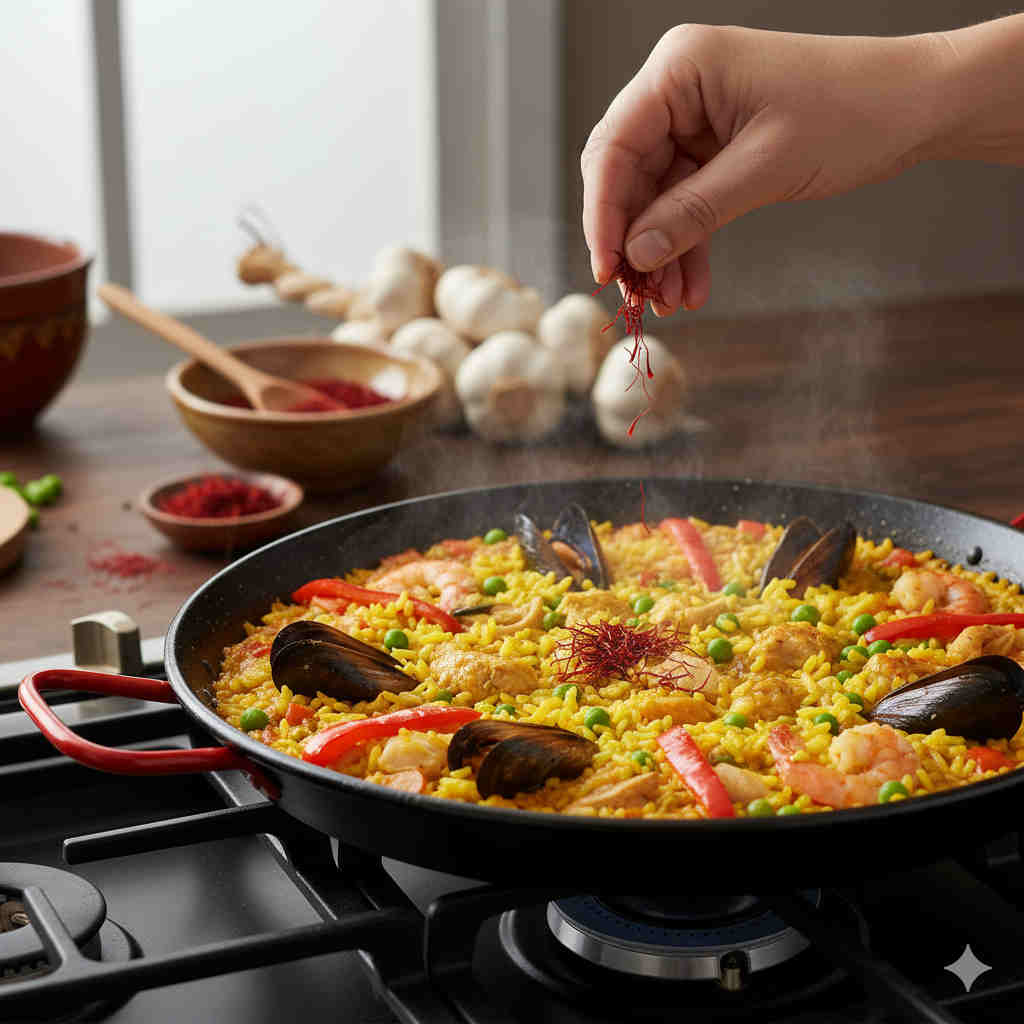
    2. Paella: Most Famous Stage

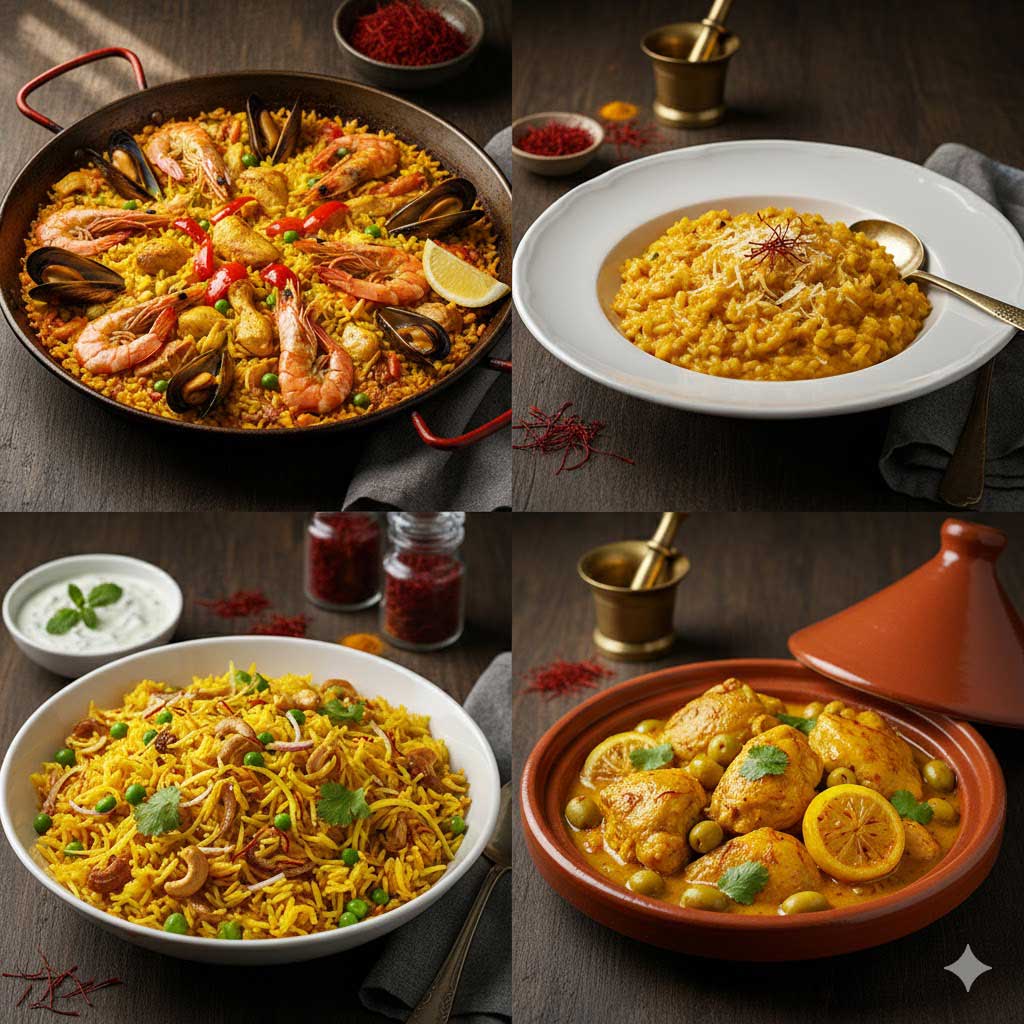
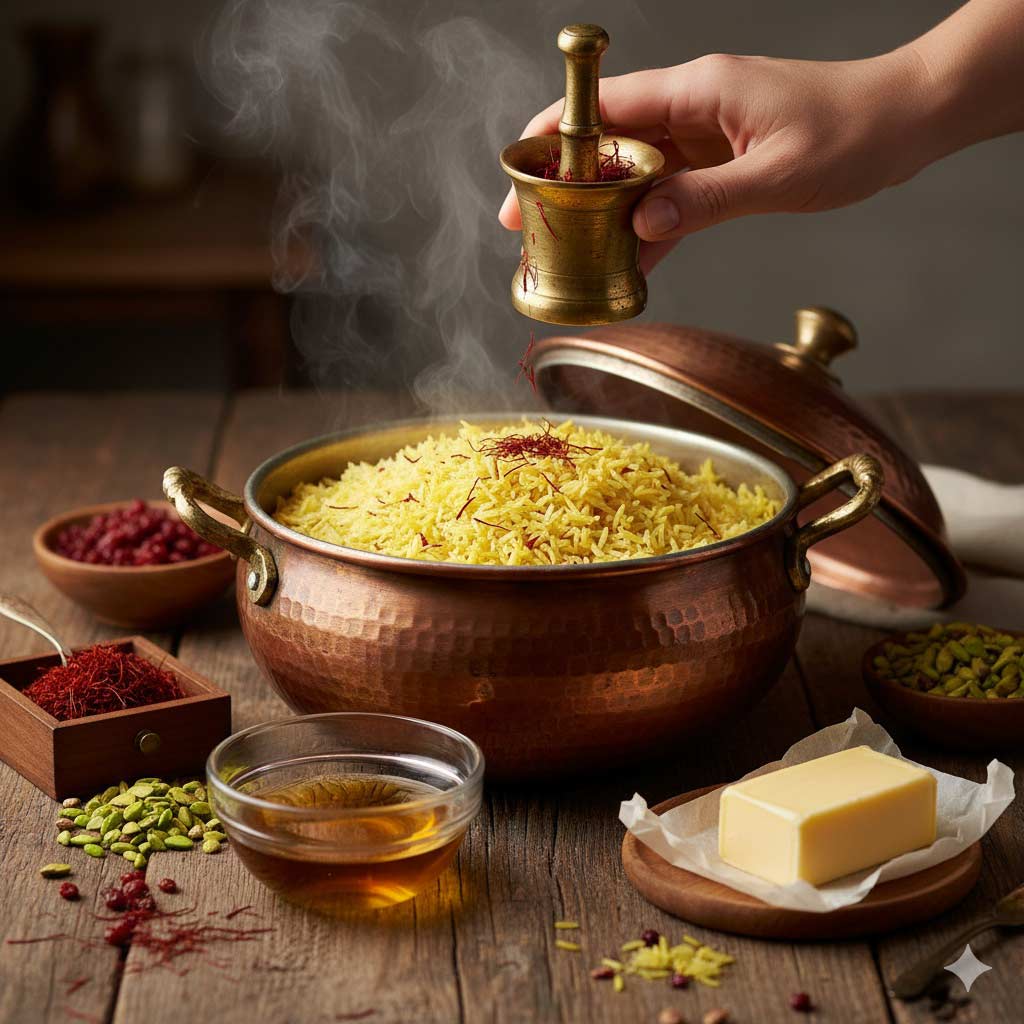
    No ingredient is more synonymous with paella than saffron. It gives:

    • Signature golden color
    • Delicate floral aroma
    • Balanced earthiness

    Whether the dish includes seafood, chicken, vegetables, or rabbit, itties the flavors together into the unmistakable taste of authentic Spanish paella.

    3. Rice and Grain Dishes Beyond Paella

    It enhances a wide variety of Spanish rice dishes:

    • Arroz caldoso (brothy rice)
    • Arroz al horno (oven-baked rice)
    • Arroz con pollo
    • Arroz negro (in some regional variations)

    The spice adds elegance even to simple white rice, instantly elevating it into something festive.

    4. Fish and Seafood Preparations

    Because its aroma pairs beautifully with seafood, it appears in:

    • Fish stews
    • Seafood soups
    • Mediterranean broths
    • Infused butter for grilled fish

    In these dishes, saffron brings complexity without overpowering delicate proteins.

    5. Sauces, Aiolis, and Modern Uses

    Contemporary Spanish cuisine embraces it in:

    • Cream sauces
    • Aioli
    • Flavored oils
    • Infused desserts such as custards, cakes, or milk puddings

    Its versatility shows why chefs worldwide consider it indispensable.


    The History of Saffron: A Journey Through Civilizations

    Saffron Flower

    Saffron’s story spans thousands of years, crossing empires and continents.
    It originated in the eastern Mediterranean and quickly gained reputation as a luxury commodity for:

    • medicine
    • cooking
    • textile dye
    • ritual and religious ceremonies

    1. The Arrival of Saffron in Spain

    Saffron entered Spanish culture primarily during the Moorish occupation, starting in the 8th century. The Moors brought advanced agricultural techniques and a deep appreciation for spices, transforming saffron cultivation into a thriving Iberian tradition.

    2. La Mancha: Spain’s Saffron Heartland

    The La Mancha region has the ideal climate:

    • dry summers
    • cold winters
    • rich, well-drained soils

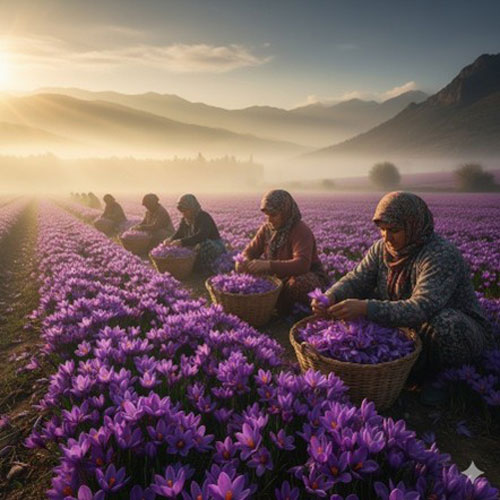
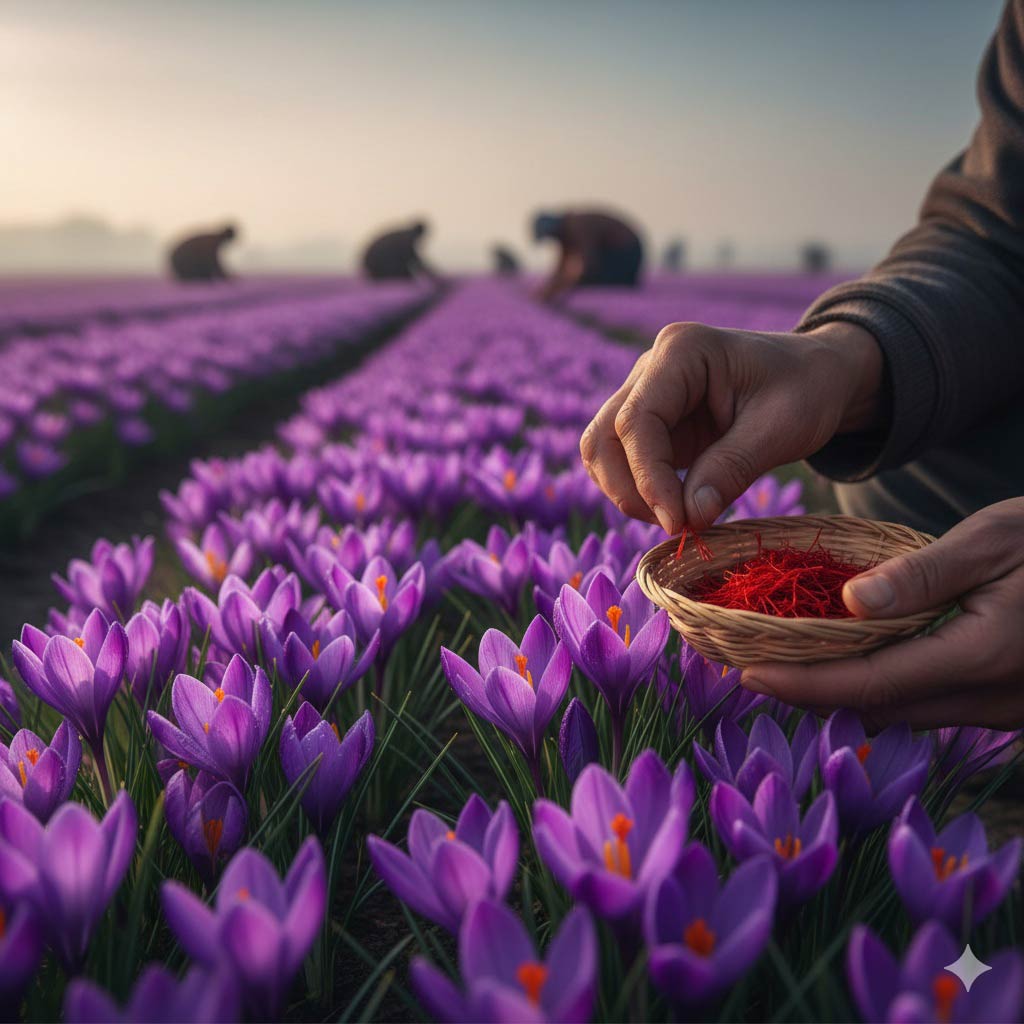
    Harvesting is still done entirely by hand. Each flower blooms for only a few hours, and workers must carefully pluck the three delicate stigmas before the petals wilt. It takes between 150,000 and 200,000 flowers to produce 1 kilogram of saffron.

    This meticulous process explains why it has historically been worth more than gold by weight.

    3. A Legacy of Excellence

    Spanish saffron remains highly sought after for its:

    • Color strength
    • Aroma intensity
    • Purity standards
    • Protected D.O. certification

    La Mancha saffron is regarded by many chefs as the world’s finest, maintaining centuries-old harvesting and drying techniques.


    Why Saffron Is So Valuable

    People often wonder why saffron is the most expensive spice. The reasons are clear:

    • Labor-intensive harvesting (always by hand)
    • Extremely low yield per flower
    • Short harvest season
    • Manual separation, drying, and selection
    • High demand and limited supply

    Its value is a reflection of rarity and craftsmanship, not artificial inflation.


    Conclusion: A Spice of Tradition, Luxury, and Timeless Flavor

    Saffron is far more than an ingredient—it’s a cultural symbol, a culinary tool, and a historical artifact all at once. Its floral aroma, golden color, and subtle complexity have shaped Spanish cuisine for more than a millennium. Whether you stir it into paella, infuse it into a broth, or add it to modern interpretations of classic dishes, saffron brings a sense of occasion and authenticity that no other spice can match.

    From the sun-drenched fields of La Mancha to kitchens around the world, saffron remains a spice of prestige and passion—Spain’s true golden essence.

    Other Spanish Typical Spices:


    – Smoked Paprika

    Ñora Pepper

    Spanish Oregano

    Spanish Cumin

  • Golden Saffron: The Spice with a Story as Rich as Its Flavor

    golden saffron spice

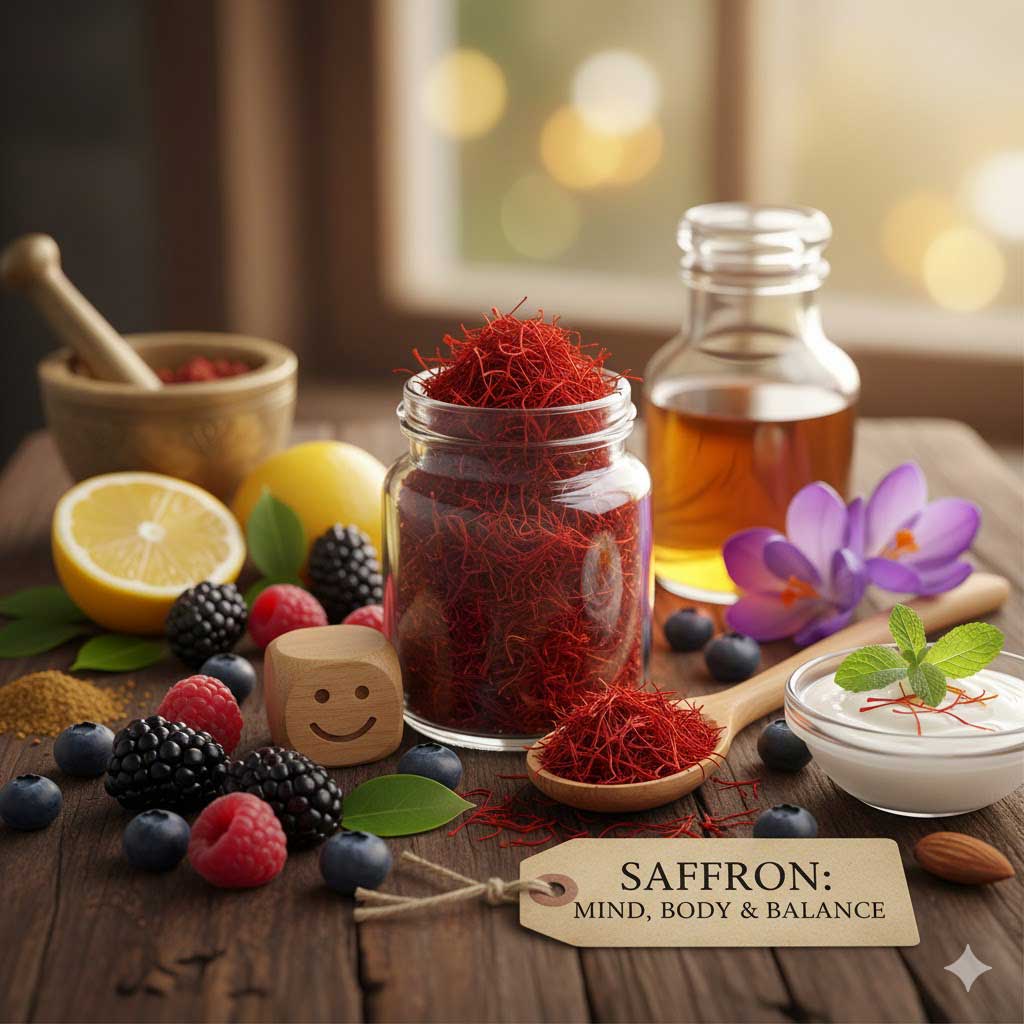
    Did you know that the golden saffron is the world’s most expensive spice and is harvested by hand, from delicate purple flowers that bloom for just a few weeks each year? Meet saffron, the golden thread that has dazzled chefs, healers, and emperors for over 3,000 years. Revered for its vivid color, heady aroma, and subtly sweet taste, saffron is more than a culinary ingredient—it’s a cultural icon, a historical treasure, and a source of endless fascinating stories. Golden saffron gets its stunning color from crocin, the pigment that gives it its signature golden threads. Join us on a journey through the world of saffron, where flavor meets legend, and every tiny stigma carries centuries of tradition.

    The Flavor Profile of the golden Saffron: A Symphony of Subtlety

    Saffron’s flavor is unlike any other. Often described as earthy, honeyed, and slightly floral, it has a unique umami-like depth that can transform both savory and sweet dishes. A pinch can elevate a simple rice dish to regal status, while a hint in desserts like custards or pastries adds a luxurious warmth.

    Saffron’s aroma is equally mesmerizing—intense yet delicate, reminiscent of hay and honey, with a subtle metallic note that hints at its extraordinary origin. It is a spice that demands attention but rewards restraint; too much can overpower a dish, while just the right amount turns ordinary meals into unforgettable experiences.

    Interestingly, the golden saffron’s flavor and aroma are due to three key chemical compounds: crocin (color), picrocrocin (taste), and safranal (smell). This chemical trio is what gives saffron its signature golden hue, complex flavor, and intoxicating fragrance.

    Culinary Uses: From Royal Kitchens to Everyday Magic

    Saffron has long been a staple in cuisines across the globe. In Persian and Middle Eastern cooking, it flavors rice, stews, and desserts, creating dishes that are as visually stunning as they are delicious. In Spain, it is indispensable in the classic paella, providing both color and a subtle depth that makes the dish iconic. Italy, too, has embraced this golden saffron, most famously in Risotto alla Milanese, where a few strands turn creamy Arborio rice into a golden, aromatic masterpiece. India boasts its own saffron-infused treasures, from luxurious biryanis to fragrant desserts like kesar peda and kulfi.

    Beyond these traditional dishes, golden saffron has found its way into modern gastronomy. Innovative chefs use it in ice creams, cocktails, and even savory pastries. Its versatility—paired with both sweet and savory, meat and vegetable, hot and cold—makes saffron a rare and prized ingredient in kitchens worldwide.

    A Rich History: Emperors, Trade, and Myth

    Saffron’s history reads like a page from a novel. Its cultivation dates back over 3,000 years in ancient Persia, where it was as valuable as gold. It traveled along trade routes to Greece, Egypt, and beyond, coveted by kings and emperors for its medicinal and culinary properties. Cleopatra famously used saffron in her baths, and the spice was said to add a radiant glow to her complexion.

    In medieval Europe, saffron was worth more than its weight in silver, often stolen and fought over during conflicts. Venice even had a “Saffron War” in the 14th century, sparked by the lucrative trade of these golden threads. In literature, saffron is referenced in works from Homer to Shakespeare, symbolizing luxury, beauty, and passion.

    Cultural Significance: Symbolism and Tradition

    Saffron is more than a spice; it carries profound cultural meaning. In India, saffron represents purity, prosperity, and courage. It is one of the three colors in the Indian national flag, symbolizing sacrifice and valor. In Iranian and Middle Eastern cultures, saffron is a sign of hospitality and celebration, often used in weddings and religious ceremonies.

    Even in Europe, saffron threads have ceremonial uses. In parts of Ireland and the UK, saffron buns and breads are baked for festive occasions, keeping the golden tradition alive. Across continents, saffron is intertwined with storytelling, rituals, and symbolic meaning—a true spice of life.

    Fun Facts and Surprising Applications

    Here’s where golden saffron’s story gets delightfully quirky:

    • Tiny but mighty: It takes around 75,000 saffron flowers to produce just one pound of dried spice. No wonder it’s called “red gold”!
    • Medicinal marvel: Historically, saffron was used as an antidepressant, digestive aid, and even an aphrodisiac. Modern research suggests it may help mood regulation and support eye health.
    • Color magician: A few threads can turn dishes bright yellow-orange, making it a natural food dye long before artificial colors existed.
    • Culinary creativity: Beyond food, saffron has been used in teas, wines, perfumes, and even traditional dyeing of fabrics.

    Saffron’s combination of rarity, sensory magic, and historical weight makes it a truly remarkable spice that continues to fascinate chefs and culture enthusiasts alike.

    Conclusion: The Timeless Allure of Saffron

    Saffron is not just a spice; it is a story woven from centuries of culinary innovation, cultural tradition, and pure human fascination. From royal banquets to everyday kitchens, from ancient myths to modern gastronomy, saffron continues to enchant with its golden hue, complex flavor, and rich history. Next time you sprinkle a few strands into a dish, remember: you’re tasting more than flavor—you’re tasting history, culture, and a little bit of magic.

    So why not let saffron inspire your next culinary adventure? Share your saffron stories, experiment with its golden threads, and let this legendary spice bring a touch of luxury to your kitchen.

  • “I Am the Precious Saffron”: The Autobiography of the World’s Most exquisite Spice

    Precious

    My name is Saffron, the most precious spice, known to botanists as Crocus sativus and to poets as “red gold.” For thousands of years, humans have treasured me for my color, my fragrance, my flavor, and the mysteries I carry within my delicate threads. I may look small, fragile even, but my journey through history has shaped empires, inspired legends, and woven me into the heart of medicine, cuisine, and culture.

    Allow me to tell you who I am, where I come from, and why I remain one of the most extraordinary spices ever cultivated.

    My Origins: Born From a Flower of Legend

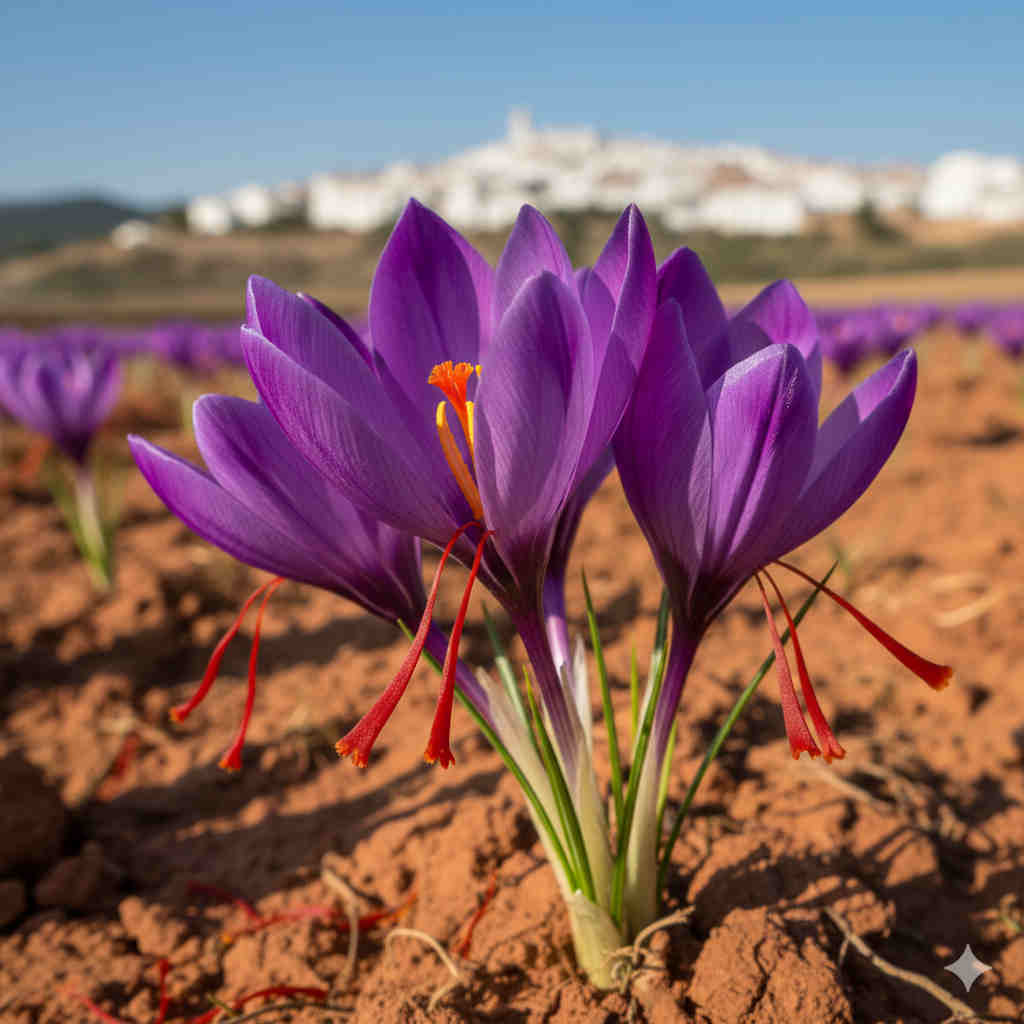
    I begin my life inside a purple crocus flower that blooms briefly but brilliantly. Each flower holds just three red stigmas. Those slender threads are me. You can imagine how rare I am: to obtain one kilogram of this dried spice, humans must pick around 150,000 flowers, all by hand, often at dawn when my blossoms open to the sun.

    My birthplace? Ancient Persia, modern-day Iran. I grew there long before your nations and borders existed. Traders carried me along the Silk Road, and soon I appeared in Egypt, Greece, India, China, and across the Mediterranean as the most beloved and precious spice. Pharaohs used me in perfumes and embalming rituals; Greek poets praised my scent as divine; Roman nobles soaked their halls in my fragrance during lavish feasts.

    Some claim I was first born on the island of Crete, others say Kashmir. I find the ambiguity amusing, after all, when you are desired by so many cultures for so long, your story often becomes shared among them all.

    My Journey Through History

    Spice

    I have lived many lives.
    I dyed the robes of kings and monks with my radiant golden color.
    I flavored ancient medicinal brews to calm sorrow and sharpen the mind.
    I perfumed the baths of emperors and lovers.

    By the Middle Ages, I became so precious in Europe that a war broke out over me: the “Saffron War” of the 14th century. Pirates even hijacked shipments of me, treating my threads like treasure.

    Kings taxed me. Merchants guarded me. Healers prescribed me. And cooks… well, cooks adored me as a precious spice.

    Over time, I found new homes in Spain, Italy, Morocco, Kashmir, Turkey, and Afghanistan. Yet Iran remains my greatest sanctuary, still producing most of the world’s spice named saffron today.

    What Makes Me So Valuable

    Humans often say I am expensive. Rare. Exquisite. They are correct, but let me explain why.

    1. My Harvest Is Pure Labor of Love

    Every thread is plucked by human hands. Machines cannot touch me. I bruise easily and lose my magic if handled harshly. After picking, I must be dried with great care to preserve my aroma and potency to then be used as a spice.

    2. I Am Concentrated Power

    Within my thin red strands lies a remarkable world of chemistry:

    • Crocin gives me my vivid golden color.
    • Safranal carries my famous honey-like aroma.
    • Picrocrocin gives me my subtle bitterness, the signature of my flavor.

    These three compounds make me unmistakable. No other spice tastes or smells quite like me because i am precious.

    3. I Am Naturally Rare

    Because I grow from sterile bulbs, humans must replant me each year. I cannot reproduce on my own. My existence depends entirely on your cultivation and care.

    My Personality: Color, Aroma, and Flavor

    People describe me in many ways: sweet, floral, grassy, warm, exotic. But let me tell you how I truly see myself.

    • My color: radiant gold, the color of sunrise and illumination.
    • My aroma: a mysterious blend of hay, honey, and soft earth.
    • My flavor: delicate but persistent, weaving through a dish without overwhelming it.

    I am subtle but unforgettable. A few threads transform an entire pot of rice, stew, or broth. In this, I take pride: I never need to shout to make my presence felt.

    My Role in Cuisine Around the World

    I have traveled through countless kitchens, and each culture has given me a special place.

    • In Persian cuisine, I shine in rice dishes, stews, and desserts.
    • In Spanish paella, I give the rice its characteristic sunset-yellow color.
    • In Italian risotto alla Milanese, I lend both elegance and warmth.
    • In Indian biryani, I bring fragrance and richness.
    • In French bouillabaisse, I add depth and aroma to the broth.

    I have also appeared in teas, ice creams, cakes, and even spirits. Humans are endlessly creative with me and I am honored by every interpretation.

    My Medicinal Side: Ancient and Modern Wisdom

    Spice

    Long before modern science examined me, ancient healers recognized my power.

    I Lift the Spirit

    Persian texts describe me as a mood enhancer. Modern studies now confirm that I may support emotional well-being and help reduce mild to moderate depression.

    I Protect the Body

    My antioxidants, crocin and safranal, help fight oxidative stress, supporting overall cellular health.

    I Support Memory and Learning

    Some research suggests that I may improve cognitive performance and protect brain cells.

    I Aid Digestion

    Traditional medicine used me to soothe the stomach and enhance appetite.

    I Promote Radiant Skin

    My compounds have been used in masks and oils for centuries, believed to brighten and rejuvenate the complexion.

    I am not a miracle cure, but I am a natural companion to wellness, as I have been for millennia.

    My Life Today

    I continue to flourish in sunlit fields, most abundantly in Iran, but also in Spain, Morocco, India, and Afghanistan. I remain expensive, but not because of vanity, only because I am rare, delicate, and intensely concentrated.

    In a world of mass production and synthetic shortcuts, I stand as a symbol of care, craft, and authenticity.

    My Final Words

    I am Saffron:

    A flower’s whisper that became a legend.
    A thread so fragile it must be picked at dawn, yet strong enough to shape cultures and cuisines.
    A precious spice that carries history in every strand, and golden light in every dish.

    Though I am small, I have traveled far.
    Though I am delicate, I have endured centuries.
    And though I am rare, I share my color, my flavor, and my spirit with anyone willing to experience me with care.

    My story continues in every kitchen, every culture, and every hand that harvests me with love.

  • Saffron: The Golden Spice of Gastronomy

    Few spices can match the prestige and allure of this golden spice. Known for its vibrant color, delicate aroma, and subtle flavor, it has been prized for centuries in cooking, medicine, and even dye-making. Today, this aromatic treasure remains a symbol of luxury and culinary refinement, transforming ordinary dishes into extraordinary creations.

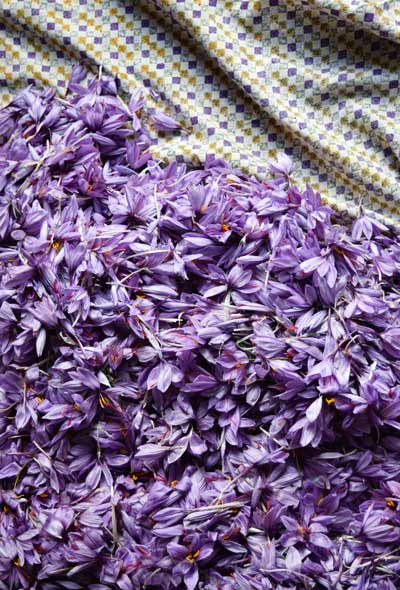
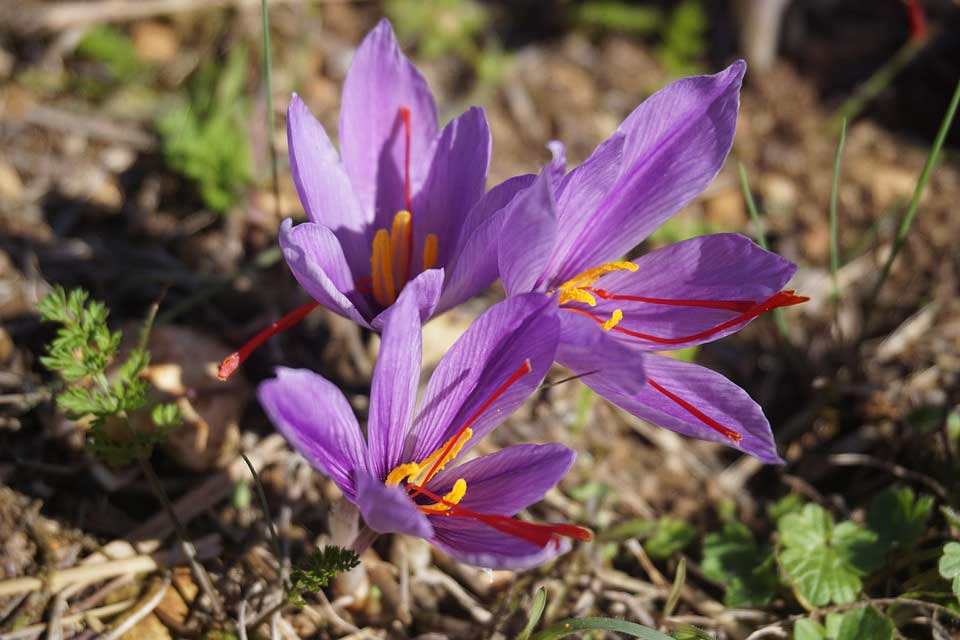
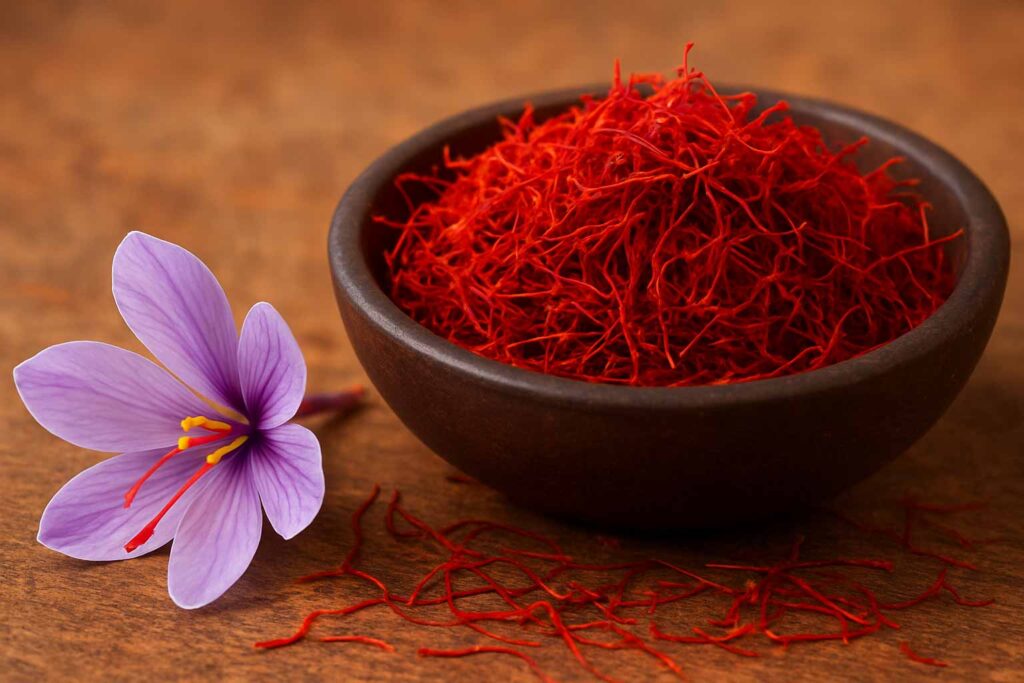
    Delicate Crocus sativus flowers, the source of saffron, also known as the golden spice.

    Origin and history

    Where This Spice Comes From

    This exceptional ingredient is obtained from the stigmas of the Crocus sativus flower, a small purple bloom cultivated mainly in Iran, Spain, and the Kashmir region of India. Each flower produces only three red stigmas, which must be harvested by hand. Tens of thousands of flowers are needed to produce just one pound of the golden spice, making it one of the most labor-intensive and expensive seasonings in the world.

    A Golden Spice With a Rich Legacy

    The legacy of this precious product stretches back over 3,000 years. Ancient Persians valued it for fragrance, dyeing, and medicinal purposes, while Egyptians used it in cosmetics and religious rituals. It later spread to Europe, where the golden spice became a symbol of wealth and refinement. Today, it is appreciated globally in both everyday and haute cuisine, admired not only for its taste but also for the luminous golden hue it imparts to dishes.

    Culinary Comparison

    Although unique, this spice is sometimes confused with turmeric or safflower. Turmeric offers a strong earthy flavor and bright yellow color but lacks the subtle aromatic complexity of this golden spice. Safflower can imitate the color but contributes very little flavor. What truly sets this spice apart is its delicate floral aroma, gentle sweetness, and remarkable ability to elevate both color and taste.

    How to use this spice in cooking

    Storage Tips

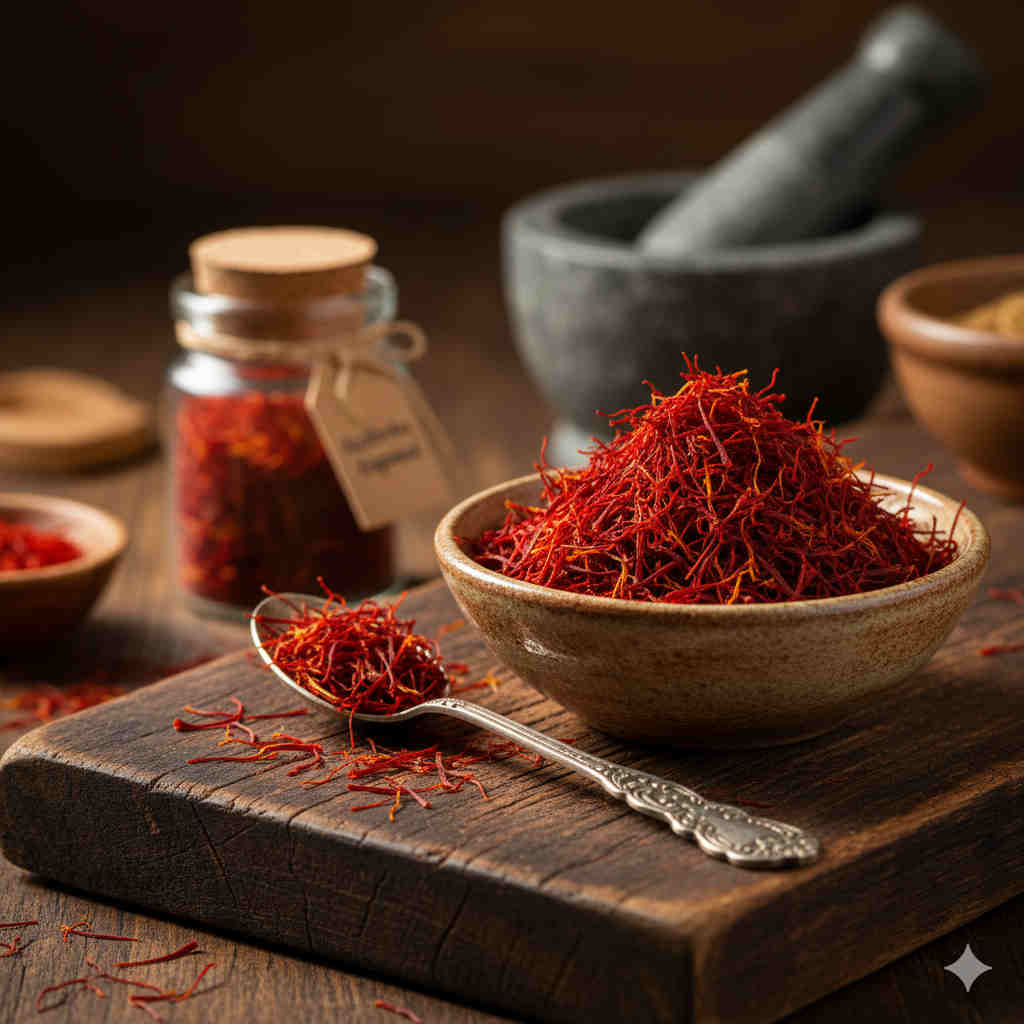
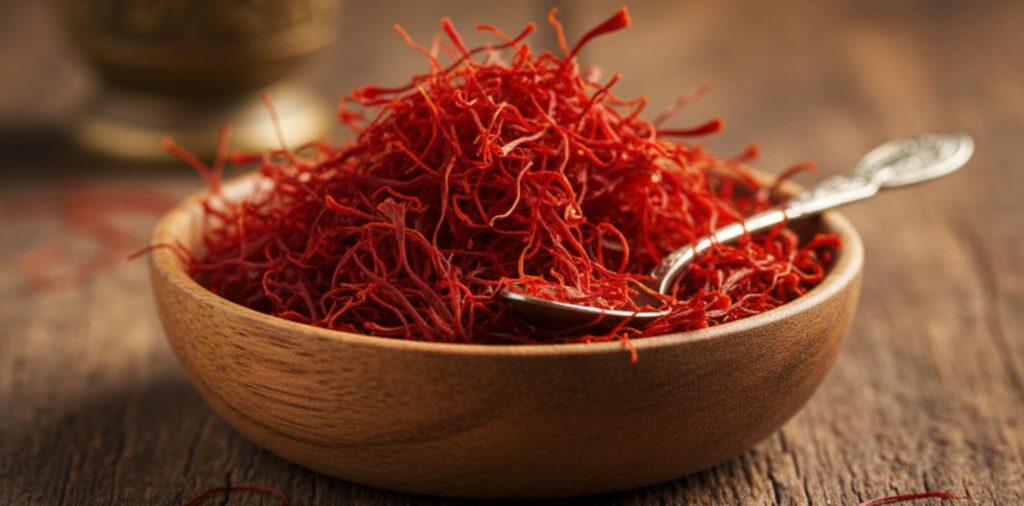
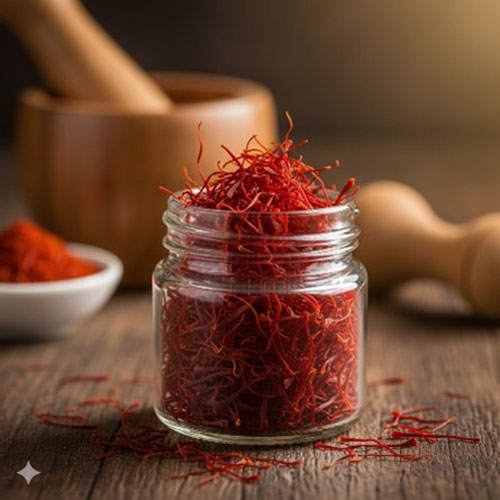
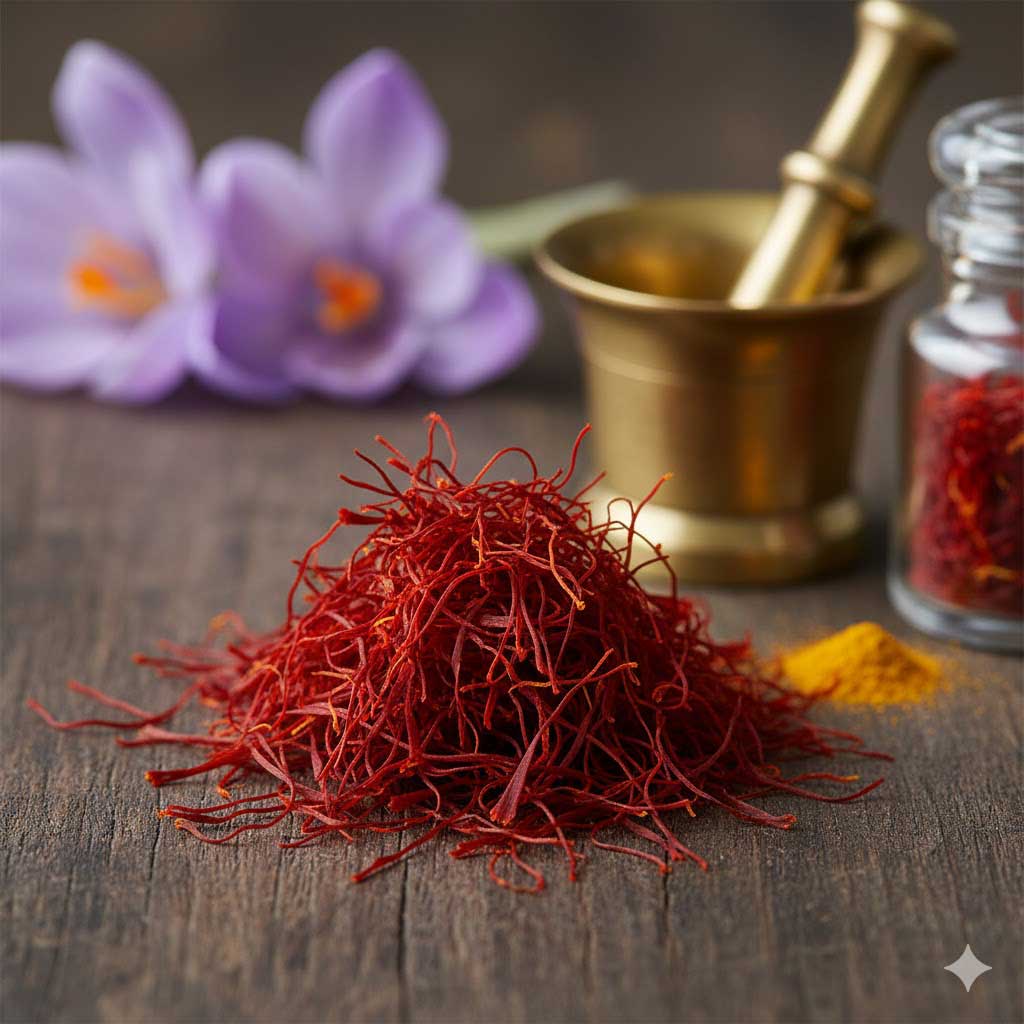
    This ingredient is sensitive to light, heat, and moisture. To preserve its color and aroma, store it in an airtight container in a cool, dark place. Whole threads last longer than powdered versions and provide a more vibrant flavor when used correctly.

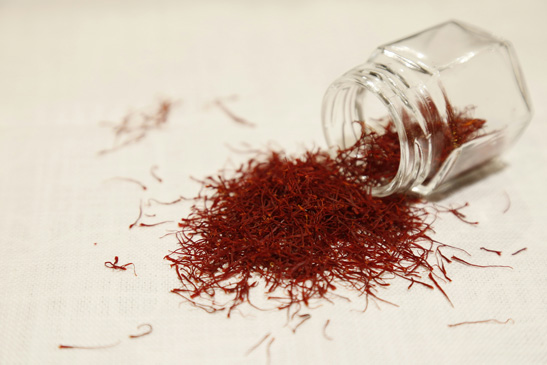
    Fresh saffron threads stored in a jar, showcasing the vibrant color and aroma of the precious golden spice.

    Preparing the Spice

    For optimal results, the threads should be soaked in warm water, milk, or broth before being added to dishes. This step releases both flavor and color more evenly. Using the threads directly in cooking may result in uneven distribution and a less pronounced aroma

    Substitutions and Considerations

    Because of its high cost, some recipes recommend turmeric or safflower as substitutes. While these alternatives can mimic the color, none can reproduce the unique aroma and delicacy of this exquisite ingredient. In dishes where the golden spice plays a central role, like paella or risotto, there is no true replacement.

    Health Benefits

    Nutritional and Medicinal Properties

    Beyond its culinary impact, this aromatic treasure offers several health benefits. The golden spice contains antioxidants such as crocin and safranal, which may help protect cells from oxidative stress. Research suggests it may support mood, digestion, and anti-inflammatory functions. While used sparingly, this spice can still contribute meaningfully to a balanced diet.

    Myths and Reality

    This luxurious ingredient is sometimes marketed as a miracle solution for weight loss or as a powerful aphrodisiac. While some traditional claims have scientific support, its true value lies in its aroma, flavor, and subtle wellness benefits rather than dramatic physiological effects.

    Culinary Applications

    Savory Dishes

    This golden seasoning enhances risottos, paellas, stews, and broths. It pairs beautifully with rice, seafood, poultry, and vegetables. Even a few threads can transform a dish’s appearance and flavor, creating a luxurious culinary experience.

    Sweet Recipes

    The spice also appears in desserts and pastries. It complements custards, cakes, ice creams, and sweet breads, offering a gentle floral aroma and warm golden color. Its subtle profile balances sweetness without overwhelming it.

    Beverages

    This ingredient is popular in teas, milk-based drinks, and cocktails. Infused syrups or warm milk highlight its fragrance, while a few threads can add elegance and warmth to both traditional and modern beverages.

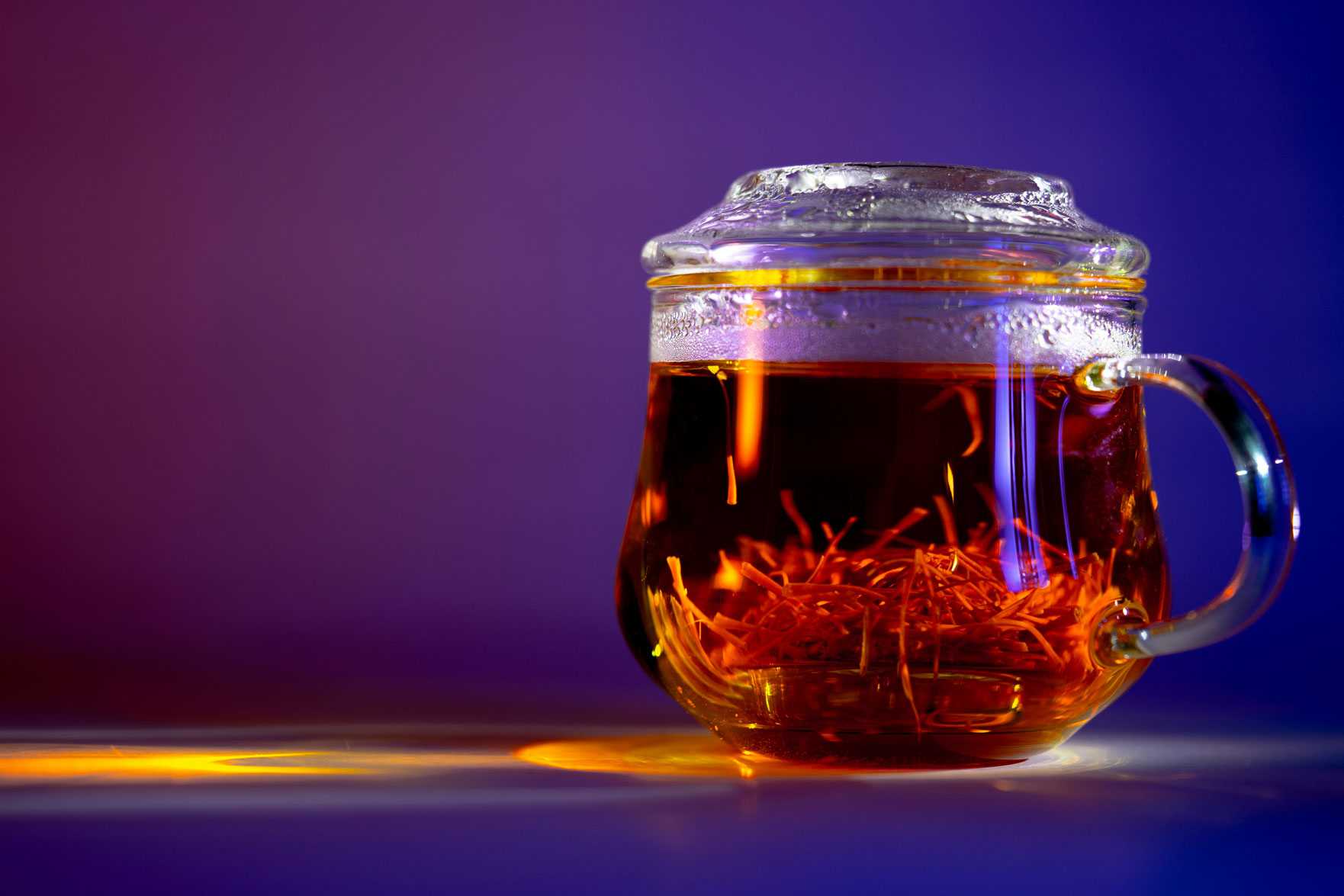
    A cup of saffron-infused tea in a clear glass, highlighting the golden spice threads and their vibrant color and aroma.

    DIY Spice Blends

    Home cooks can craft personalized spice blends featuring this precious ingredient. Combined with cardamom, cinnamon, or nutmeg, it creates aromatic mixtures perfect for desserts and savory dishes alike. Even a pinch in homemade spice mixes elevates everyday recipes effortlessly.

    More than just a seasoning, this golden treasure represents history, craftsmanship, and culinary artistry. From ancient Persia to modern kitchens around the world, it has maintained its reputation as one of the most prized ingredients. Whether used in savory dishes, desserts, drinks, or blends, it adds elegance, aroma, and color that few other spices can match. For chefs and home cooks alike, this exceptional spice has the power to transform ordinary recipes into memorable culinary experiences.

    Beyond its extraordinary culinary and visual appeal, the saffron tells a story of centuries-old tradition, meticulous craftsmanship, and patient labor. Each delicate thread reflects the dedication of skilled hands, from careful harvesting to precise drying, embodying the essence of luxury and refinement. Incorporating it into dishes not only enhances flavor and color but also connects modern kitchens to a rich cultural heritage, making every meal infused with it a truly memorable experience.

    To learn even more about saffron, check out this article on our website: “I Am Saffron”: The Autobiography of the World’s Most Precious Spice

  • The allure of red gold: a journey through history, cuisine, and culture

    red gold

    Saffron, often dubbed “red gold,” is more than just a spice; it’s a testament to human ingenuity, cultural exchange, and an enduring appreciation for rare and exquisite flavors. Derived from the stigma and styles of the Crocus sativus flower, saffron holds a distinguished place in history, revered for its vibrant color, unique aroma, and potent medicinal properties. Its cultivation is a labor of love, demanding meticulous care and a precise touch, which contributes to its status as the world’s most expensive spice by weight.

    The story of red gold begins thousands of years ago in ancient Greece, where Minoan frescoes from the Bronze Age depict women harvesting saffron. Its origins, however, are debated, with some scholars pointing to Persia as its birthplace. Regardless of its exact genesis, saffron quickly spread across civilizations, becoming a staple in ancient Egyptian rituals, Roman banquets, and Ayurvedic medicine in India. The spice was a symbol of wealth and prestige, used not only to flavor food but also as a dye, perfume, and an aphrodisiac. Alexander the Great is said to have used saffron in his baths for its healing properties, and Cleopatra reportedly employed it in her cosmetics.

    The journey of red gold across continents is a fascinating tale of trade routes and cultural diffusion. Arab traders introduced saffron to Spain in the 10th century, where its cultivation flourished, particularly in the region of La Mancha. To this day, Spanish saffron, especially the “Crocus sativus La Mancha,” is highly prized. Similarly, saffron found its way to Kashmir in India, where it adapted to the unique climatic conditions of the region, yielding a saffron renowned for its intense aroma and deep color. The Moghul emperors were particularly fond of Kashmiri saffron, incorporating it into their elaborate cuisine and royal rituals.

    Saffron cultivation

    Cultivating red gold is an intricate and labor-intensive process that has remained largely unchanged for centuries. The Crocus sativus is a sterile triploid, meaning it cannot reproduce through seeds and must be propagated from corms (underground storage organs). These corms are planted in late summer, and the delicate purple flowers bloom for a brief period in autumn. Each flower contains three slender, crimson stigmas, which are meticulously hand-picked. This painstaking manual labor, coupled with the limited growing season and specific climatic requirements, is the primary reason for saffron’s exorbitant price. After harvesting, the threads are carefully dried, a crucial step that intensifies their flavor and aroma and ensures their preservation.

    In the culinary world, red gold is a star ingredient, lending its distinctive golden hue and complex flavor to a vast array of dishes. Its taste is often described as subtly sweet, floral, and slightly earthy, with a hint of bitterness. In Spanish cuisine, saffron is indispensable for paella, infusing the rice with its signature yellow color and rich aroma. Italian risotto Milanese owes its golden glow and delicate flavor to saffron. In Indian and Persian cooking, it elevates biryanis, pilafs, and desserts like kheer and shole zard, providing a regal touch. Even in bread making, a pinch of saffron can transform a simple loaf into a vibrant, aromatic delicacy.

    Beyond its culinary applications, saffron has a long history of medicinal use. Ancient cultures utilized it as an antidepressant, an anti-inflammatory agent, and a digestive aid. Modern scientific research has begun to corroborate some of these traditional uses. Studies suggest that saffron contains powerful antioxidants, such as crocins and safranal, which may protect cells from damage and contribute to its potential anti-cancer properties. It has also been investigated for its positive effects on mood disorders, demonstrating promise as a natural antidepressant and anxiolytic. Furthermore, saffron is being explored for its benefits in eye health, particularly in age-related macular degeneration, and its potential to improve cognitive function.

    Saffron

    The economic impact of saffron is significant for the regions where it is cultivated. Countries like Iran, Spain, India, and Greece rely on saffron production as a vital source of income for many farming communities. However, the industry faces challenges, including climate change, which can affect yields, and the persistent issue of adulteration. Due to its high value, less scrupulous producers sometimes mix saffron with other substances, such as turmeric, marigold petals, or even colored silk threads. Consumers are often advised to purchase whole saffron threads rather than powdered forms and to look for reputable suppliers to ensure authenticity.

    In conclusion, red gold is a spice that transcends its humble origins as a flower stigma. It is a symbol of luxury, a link to ancient civilizations, and a culinary treasure that continues to captivate palates worldwide. Its labor-intensive cultivation process, combined with its unique flavor, vibrant color, and myriad health benefits, ensures its continued reign as the “red gold” of the culinary and medicinal worlds. As we savor its delicate essence, we partake in a tradition that spans millennia, a testament to the enduring allure of this extraordinary spice.

    History of saffron

    Saffron post

    Saffron girl

  • Saffron spice: History, Legends, and Recipes

    Saffron spice is wrapped in luxury, legend, and centuries of tradition. Often called “red gold,” it remains the most expensive spice in the world—worth more per gram than precious metals. Its distinctive aroma, intense color, and deep cultural roots make saffron not only a culinary treasure but a symbol of passion, sacrifice, and craftsmanship.

    This guide explores the history of saffron, its cultural anecdotes, and how to use it in delicious recipes at home.

    What Makes Saffron Spice So Special?

    Saffron comes from the stigmas of the Crocus sativus flower. Each delicate purple blossom contains only three bright red threads, which are hand-harvested and dried. It takes more than 75,000 flowers to produce a single pound of saffron—one reason the spice is so precious.

    Saffron flower

    Its flavor is hard to describe: earthy, floral, honeyed, and slightly metallic. Its aroma is unmistakable. And its vibrant golden hue transforms any dish it touches.

    A Brief History of Saffron spice

    Origins in Ancient Persia

    Saffron is believed to have originated in ancient Persia (modern Iran), where it was cultivated as early as 3,500 years ago. Persian royals used saffron in perfumes, ointments, and rich rice dishes. Warriors bathed in saffron-infused water to heal battle wounds and invigorate the spirit.

    Saffron in Greek Mythology

    One of saffron’s most famous legends comes from ancient Greece. According to myth, a mortal named Crocus fell deeply in love with the nymph Smilax. When the gods forbade their union, Crocus was transformed into the saffron crocus flower—his vibrant orange-red stigmas symbolizing eternal longing.

    Egyptian, Roman, and Indian Traditions

    • Egyptians used saffron spice as perfume and medicine. Cleopatra reportedly bathed in saffron milk to enhance her skin and allure.
    • Romans scattered saffron spice on theater floors and linens for its luxurious scent.
    • In India, saffron is deeply woven into Ayurvedic traditions and cuisine, from celebratory sweets to healing tonics.

    The Silk Road and European Expansion

    Saffron’s journey across continents was fueled by trade along the Silk Road. By the Middle Ages, it enriched European cooking, medicine, and religious rituals. During the Black Death, saffron prices soared as it was believed to possess healing properties.

    The city of Kashmir later emerged as one of the world’s most famous saffron-producing regions, known for its deep color and bold aroma—often considered the pinnacle of saffron quality.


    Types of Saffron: Understanding the Differences

    Not all saffron is the same. Factors like region, harvesting techniques, and drying methods influence its quality.

    1. Kashmiri Saffron

    • Deep red color
    • Highly aromatic
    • Strong flavor and powerful color-releasing compounds
    • Premium and often the most expensive

    2. Iranian Saffron

    Iran produces over 80% of the world’s saffron. It is prized for its:

    • Balanced flavor
    • Rich color
    • Excellent value

    3. Spanish Saffron

    Known for:

    • Mild, sweet aroma
    • Slightly less intense coloring
    • Ideal for classic Spanish rice dishes like paella

    4. “Fake” Saffron

    Imitations exist—usually strands of dyed corn silk, safflower, or turmeric.
    True saffron threads are:

    • Deep red with slightly lighter tips
    • Dry yet flexible
    • Not uniformly colored

    Cultural Anecdotes and Symbolism

    A Symbol of Celebration

    In many cultures—especially Persian, Indian, and Mediterranean—saffron spice is associated with:

    • Weddings
    • Religious ceremonies
    • Holiday feasts
    • Offerings and blessings

    Its golden hue symbolizes sunlight, prosperity, and joy.

    Saffron as Medicine

    Ancient medical systems praised saffron for uplifting the mood and supporting vitality. While modern science still explores these claims, saffron remains culturally linked to warmth, energy, and well-being.

    The Monks’ Golden Robes

    Buddhist monks are often pictured wearing deep yellow or orange robes. While not always dyed with saffron today, historically many garments were colored using saffron or saffron-like pigments, associating the spice with purity and enlightenment.

    Precious saffron spice

    How to Cook With Saffron

    A little goes a long way. To unlock saffron’s full potential, follow these tips:

    Blooming Saffron (Essential Technique)

    Before adding saffron to a recipe, soak the threads in warm water, milk, or broth for at least 15–20 minutes.
    This releases its color, aroma, and flavor.

    Authentic Uses Across Cultures

    • Persian cuisine: Saffron rice (tahdig), stews, and desserts
    • Spanish cuisine: Paella, seafood broths
    • Indian cuisine: Saffron biryani, kheer, lassi, festival sweets
    • Italian cuisine: Risotto alla Milanese

    Easy Saffron Recipes

    1. Saffron Rice (Persian-Style)

    Saffron rice

    A fragrant side dish that pairs beautifully with roasted meats or vegetables.

    Ingredients:

    • 1 cup basmati rice
    • 1 ½ cups water
    • Pinch of saffron (5–7 threads)
    • 1 tbsp butter or oil
    • Salt to taste

    Instructions:

    1. Soak saffron in 2 tbsp warm water.
    2. Rinse rice until the water runs clear.
    3. Bring water, butter, and salt to a boil.
    4. Add rice, reduce heat, cover, and simmer.
    5. Stir in the bloomed saffron at the end.

    2. Saffron Milk (Kesar Doodh)

    A comforting drink enjoyed throughout India.

    Ingredients:

    • 1 cup warm milk
    • 4–5 saffron threads
    • ½ tsp sugar or honey
    • Optional: cardamom, pistachios

    Instructions:
    Mix all ingredients and let steep 10 minutes before drinking.


    3. Saffron and Citrus Fish

    A bright, aromatic dish perfect for weeknights.

    Ingredients:

    • White fish fillets
    • Saffron soaked in warm broth
    • Lemon zest
    • Garlic
    • Olive oil

    Instructions:
    Brush fish with saffron mixture, season, and bake or pan-sear.


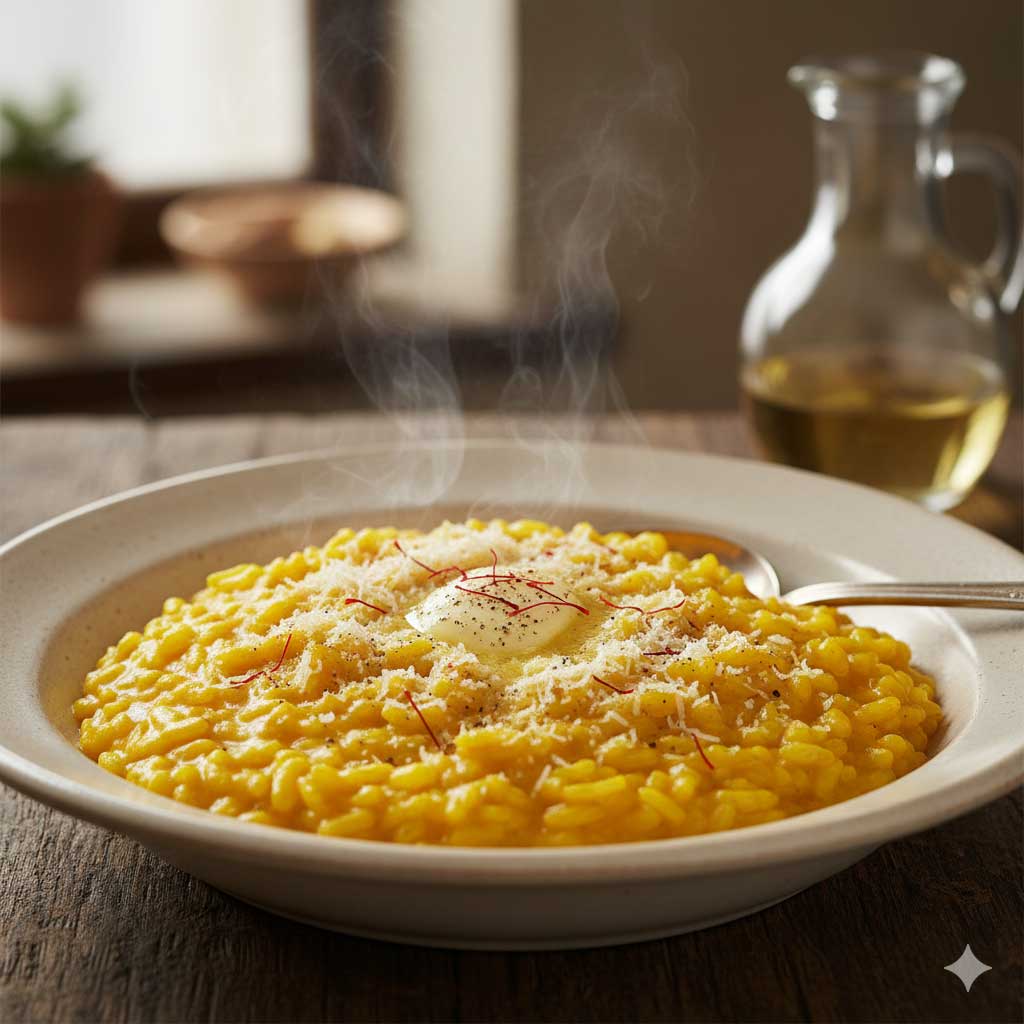
    4. Saffron Risotto

    Creamy, luxurious, and deeply comforting.

    Key Steps:

    1. Toast rice in butter.
    2. Add wine.
    3. Add broth gradually.
    4. Stir in bloomed saffron during the last 10 minutes.

    Try also this great recipe of Saffron and Butternut Squash Risotto with Crispy Sage.


    Why Saffron Endures

    Saffron isn’t just a spice—it’s craftsmanship, history, and culture distilled into tiny crimson threads. From ancient legends to modern kitchens, it continues to symbolize luxury, celebration, and the beauty of patience.

    Whether steeped in warm milk, folded into rice, or infused into a golden broth, saffron transforms dishes into something unforgettable.