Thai curry represents a completely different universe from its South Asian cousins. Where Indian curries rely heavily on powdered dry spices and a foundation of ghee or oil, and Japanese curries on a thick, dark roux, Thai curry are defined by their freshness, vibrancy, and the use of coconut milk. They are essentially soupy, fragrant stews built upon a base of wet, highly concentrated aromatic pastes, providing an unparalleled balance of salty, sweet, sour, and spicy notes—the four cornerstones of Thai cuisine.
The true artistry of Thai curry lies not in the cooking process, but in the meticulous creation of the paste itself, traditionally pounded by hand in a mortar and pestle.
The Triad of Thai Curry: Colour and Flavour
Thai curry is primarily categorized by the colour of the paste used, which, in turn, dictates the heat level and main flavour profile. The three most common and distinctive types are Green, Red, and Yellow.
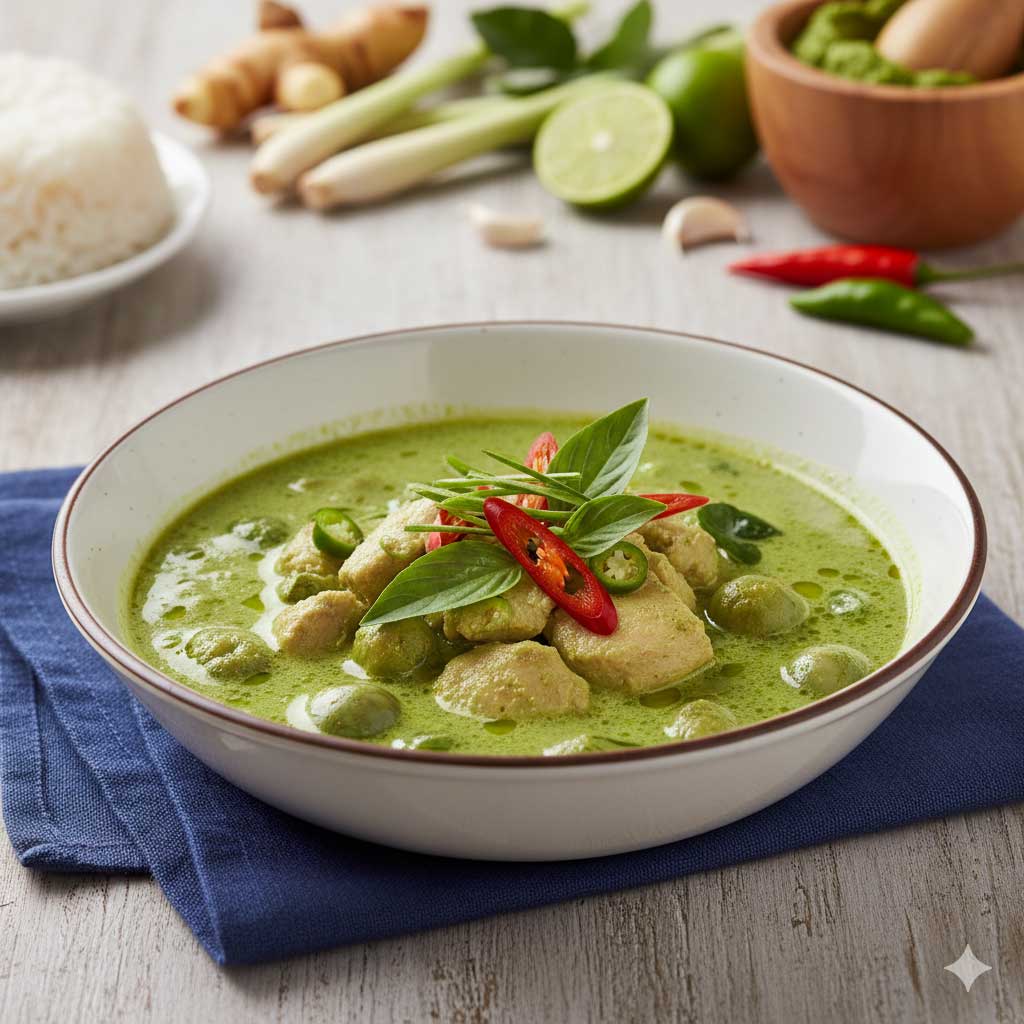
1. Green Curry (Gaeng Keow Wan)
- The Look: Named for the vibrant green of the fresh ingredients used.
- The Paste: Generally the hottest of the three. Its characteristic colour comes from copious amounts of fresh green bird’s eye chilies, combined with lemongrass, galangal, kaffir lime zest and leaves, cilantro roots, and shallots.
- The Flavour: Fresh, herbaceous, and intensely fragrant. The heat from the chilies is moderated by the sweetness of the coconut milk and sometimes a touch of palm sugar, creating a complex, well-rounded flavour. It is often served with chicken or fish and bamboo shoots.
2. Red Curry (Gaeng Phet)
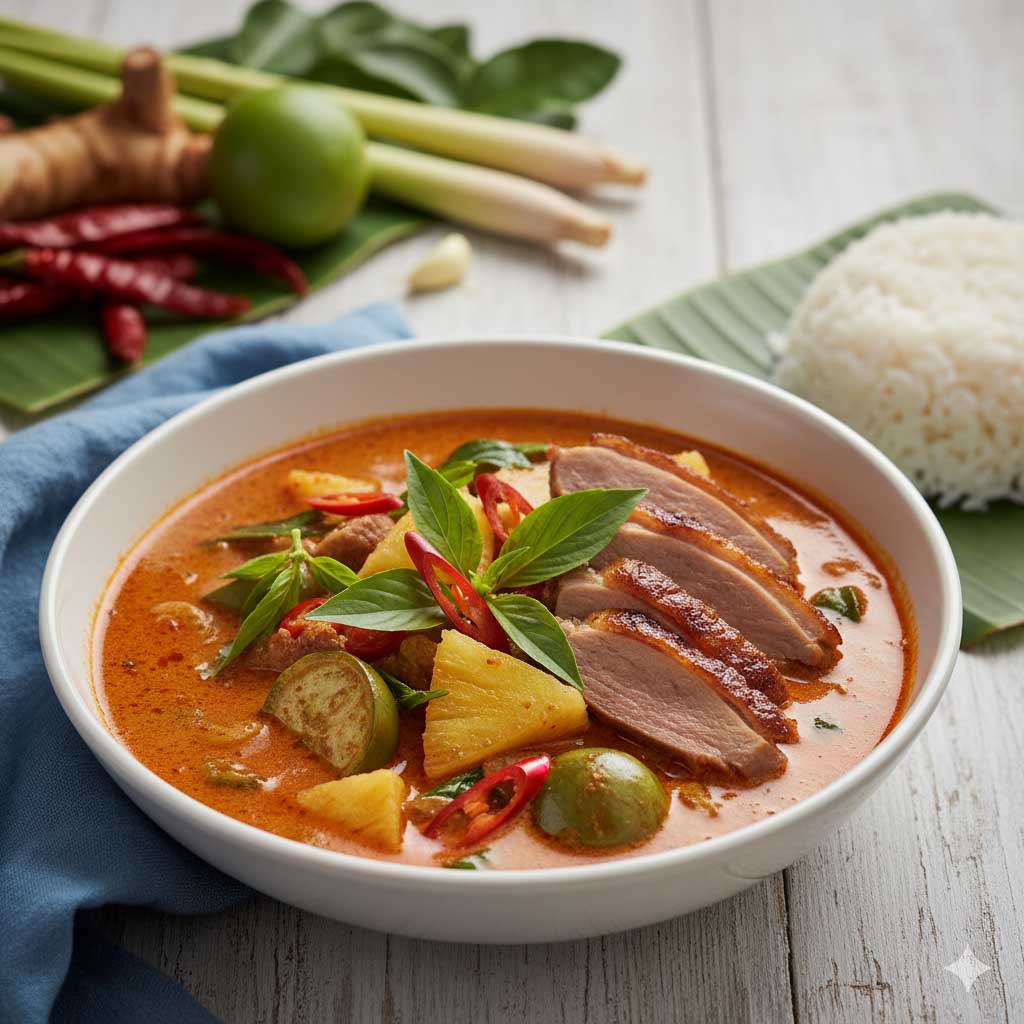
- The Look: A fiery, reddish-orange colour.
- The Paste: The red comes from dried red spur chilies (which are less pungent than the fresh green ones, making the Red Curry often milder than the Green). The paste also features similar ingredients to the green curry, but the substitution of dried chilies for fresh ones changes the taste from herbaceous to earthy and robust.
- The Flavour: Rich, slightly sweet, and earthy. It is extremely versatile and often used with duck, pork, or beef, and frequently includes vegetables like eggplant or pineapple.
3. Yellow Curry (Gaeng Lueang or Gaeng Kari)
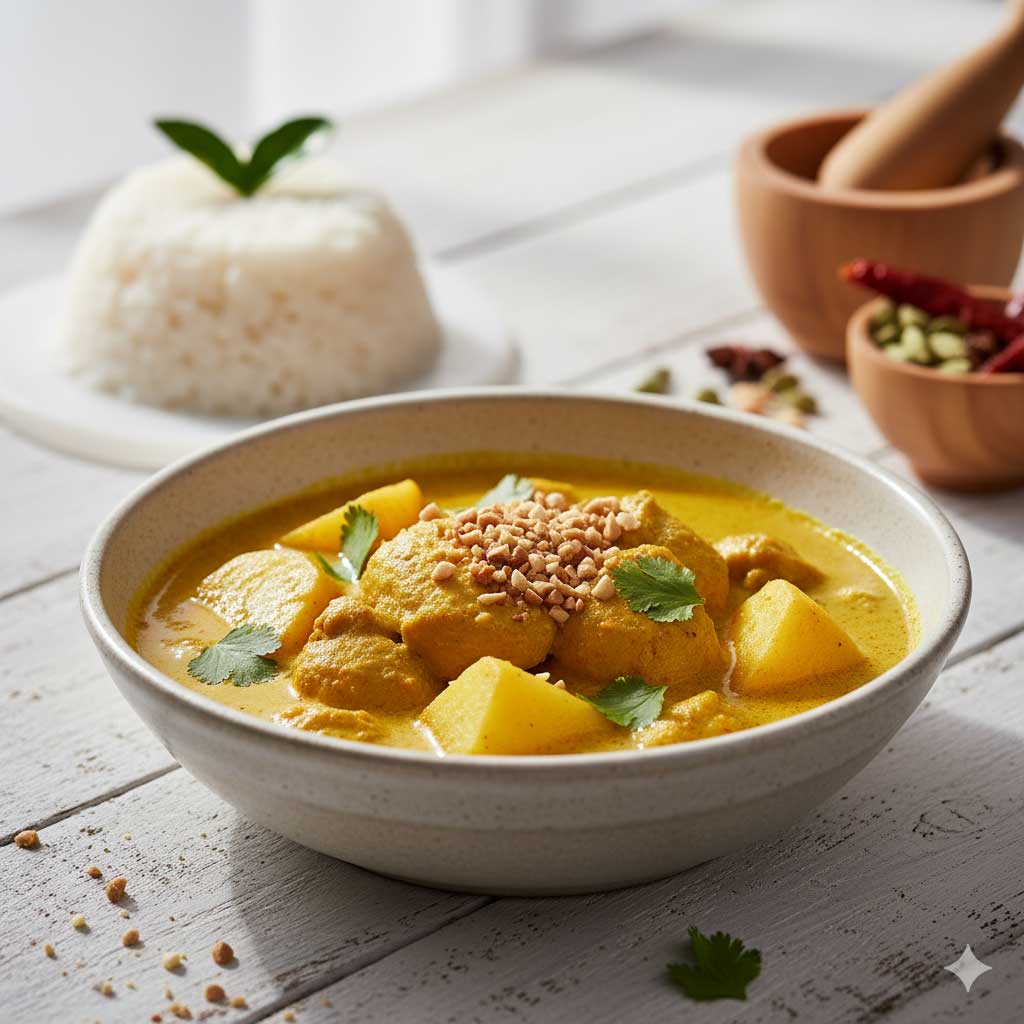
- The Look: A mellow, golden-yellow hue.
- The Paste: Yellow curry is the closest in flavour to Indian curry, as it heavily features turmeric (giving it the yellow colour) and often includes a higher proportion of dry spices like cardamom, cinnamon, and sometimes Indian curry powder, reflecting its proximity to India and its trading history.
- The Flavour: Mildest in heat and sweetest in taste. It is often served with potatoes and chicken and is particularly popular in the South of Thailand, where it is sometimes thickened further with peanuts.
The Essential Role of Coconut Milk
The ingredient that truly defines Thai curry is coconut milk. Unlike Indian curries, which often rely on water, stock, or yogurt, Thai curries use coconut milk as both the liquid base and the primary source of richness.
The cooking method exploits the unique property of coconut milk:
- A small amount of coconut cream (the thick top layer) is simmered until the oil separates (a process called breaking the milk). This oil forms the base of the dish, toasting the curry paste and releasing its essential oils and fragrances.
- The paste is fried in this coconut oil, intensifying its flavour.
- The remaining coconut milk is added, creating the final, creamy, thin soup-like consistency.
This process ensures that the spices are fully bloomed and the curry achieves a smooth, velvety texture that coats the rice perfectly.
Regional Variations: Massaman and Panang
Beyond the main triad, two other popular Thai curries demonstrate the diversity of the region:
- Massaman Curry (Gaeng Massaman): This is a distinctly regional curry with Muslim and Indian influences. Its paste features dry spices not common in other Thai curries, such as cardamom, cloves, and cinnamon. It is sweet, tangy, and rich, often made with beef, potatoes, and peanuts, making it feel more like a rich, South Indian-style stew than a typical Thai curry.
- Panang Curry (Gaeng Panang): Similar to red curry but significantly richer and thicker, often containing crushed peanuts. It’s drier and less soupy than other Thai curries and is renowned for its intense, savory-sweet flavour profile and the customary garnish of thinly sliced kaffir lime leaves.
Thai curry’s philosophy is about contrast and harmony. The coolness of the coconut milk battles the heat of the chilies; the salinity of the fish sauce balances the sweetness of the palm sugar; and the sharpness of the kaffir lime cuts through the richness of the oil. This emphasis on fresh, pungent herbs and aromatics, rather than dried powders, places Thai cuisine in a distinct category, highlighting its connection to the region’s lush tropical environment. It is this masterful balancing act that has made Thai curry a global phenomenon, appealing to palates seeking a lighter, more aromatic, and ultimately, a more complex taste experience than its heavier, dry-spice-focused cousins.

Leave a Reply