Sumac. You might have seen it sprinkled over a fattoush salad or tucked into a jar labeled za’atar, but do you really know what it is? To most, it’s just a tangy, ruby-red powder. But to food adventurers and spice enthusiasts, sumac is a little burst of magic—ancient, versatile, and full of surprises. To get the real scoop, we sat down for an exclusive interview with sumac itself.
Interview with Sumac
Journalist: Hello Sumac! People say you’re a bit… forgotten. How do you feel about that?
Sumac: Forgotten? Never! I may sit quietly in your pantry, but the moment I touch your salad or grilled chicken… boom! I transform everything. Tangy, slightly lemony, with an earthy undertone—that’s me. I make people go, “What is this amazing flavor?” And yes, I know I’m a little underrated, but those who discover me never go back.
Journalist: That tangy taste is incredible. Can you tell us about where you come from?
Sumac: Origins… ah, I’m ancient. My berries have been used for thousands of years across the Middle East and the Mediterranean. The Romans used me to sour their sauces, and in the Ottoman Empire, I was the jewel of rich households. My vibrant red powder was sprinkled generously over meats and vegetables, signaling sophistication, flair, and taste. People even planted me near their homes to ward off evil spirits. Delicious and protective—what more could you want?
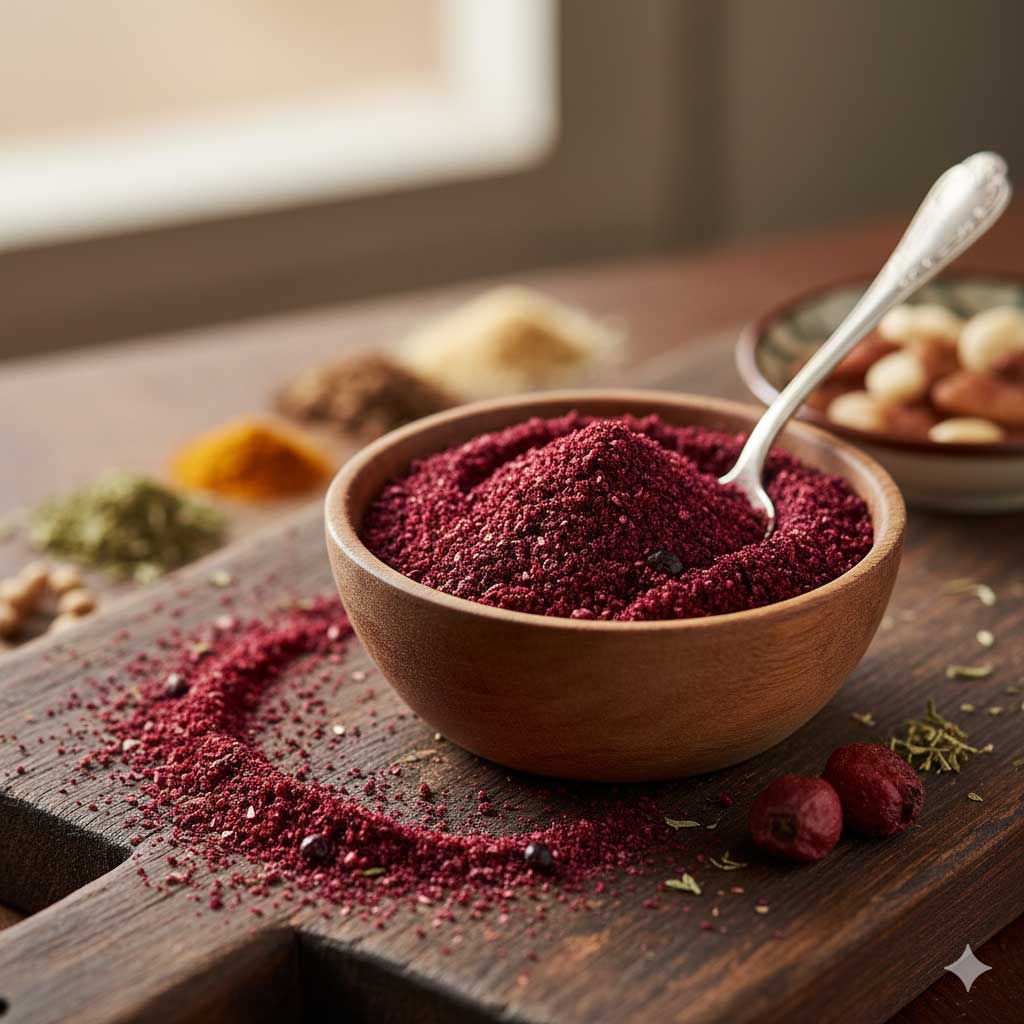
Sumac grows on shrubs or small trees in arid climates, producing clusters of dark red berries. Once harvested, they’re dried and ground into a coarse powder, vibrant in color and packed with flavor. Unlike chili peppers, sumac doesn’t burn; it awakens your taste buds with a zesty, slightly astringent tang that enhances food rather than overwhelming it. And, believe it or not, each berry is like a tiny treasure chest of aroma and color.
Journalist: And what about your culinary surprises?
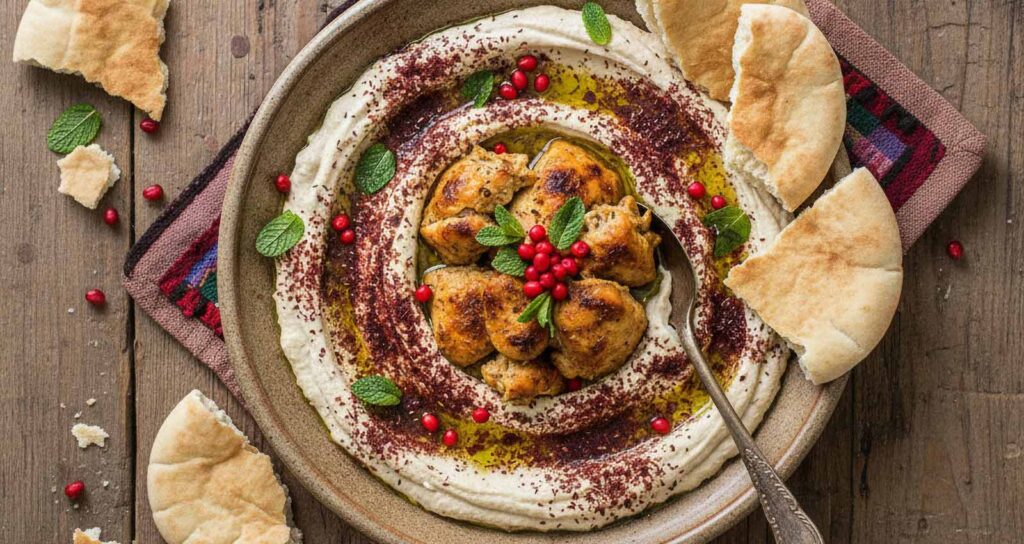
Sumac: Everything! Roasted vegetables, yogurt, grilled meats… And don’t forget hummus—just a sprinkle of me brightens the dip instantly, adding a tangy lift that turns a simple bowl into a vibrant, irresistible bite. I’m a chameleon! Chocolate, strawberries, avocado… I can sneak in anywhere. I even make dishes Instagram-worthy in a pinch.
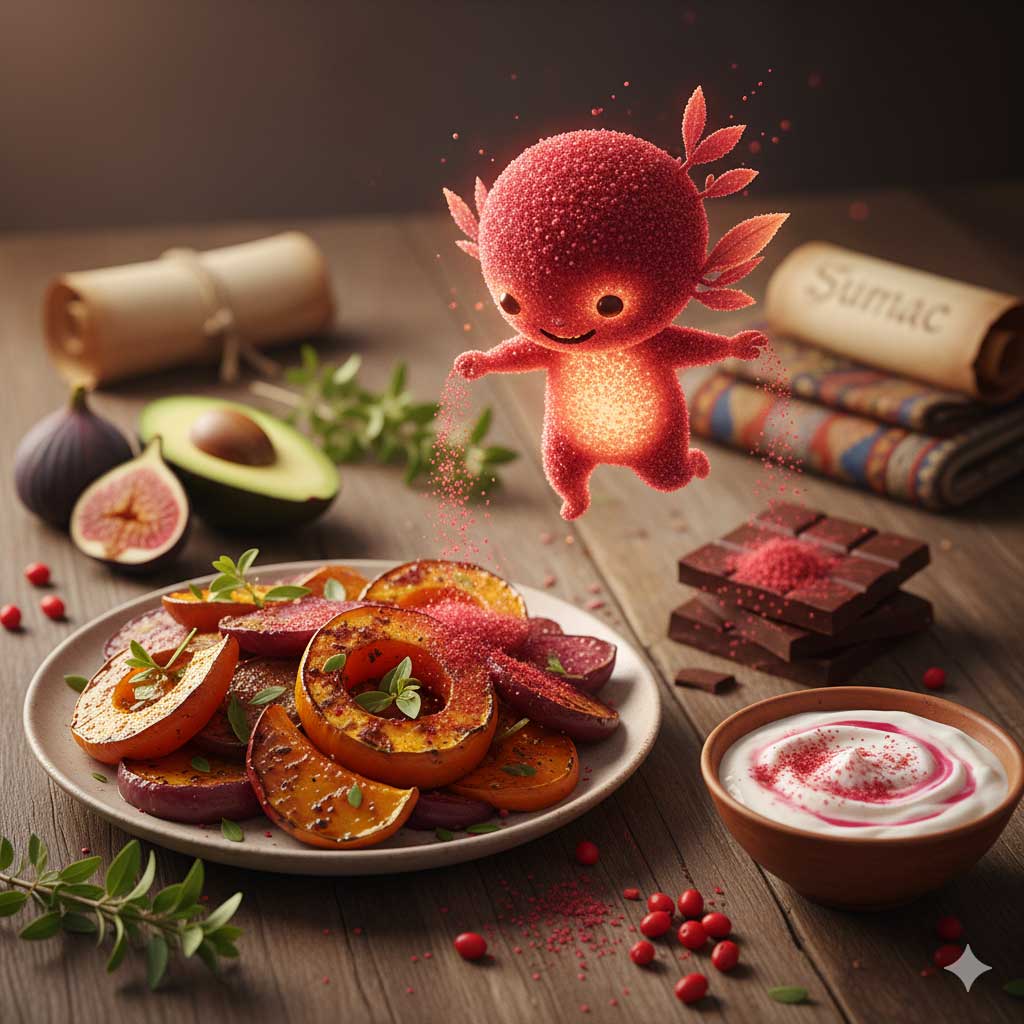
Beyond the traditional Middle Eastern dishes, chefs today are experimenting with sumac in unexpected ways. Imagine sumac sugar on figs or dusted over dark chocolate—its citrusy tang balances sweetness beautifully. Some mixologists even craft tart cocktails with sumac syrup. I’m the spice equivalent of a wildcard: creative, bold, and a little rebellious. And don’t forget: a sprinkle of me on avocado toast or a poached egg can turn breakfast into a gourmet adventure.
Journalist: Sounds like you’re everywhere! Do you have any health benefits too?
Sumac: Oh yes. Packed with antioxidants, I may help reduce inflammation, support heart health, and even boost digestion. Think of me as flavor and wellness in one little ruby-red pinch. And here’s a secret: I am NOT poison sumac. Don’t let my scary-sounding name fool you! Poison sumac is an entirely different plant—you won’t find me causing rashes. I’m safe, edible, and honestly, a little addictive once you discover what I can do.
Journalist: Do you have a few fun anecdotes or cultural stories?
Sumac: Absolutely! In the Levant, I’m more than a seasoning; I’m part of life’s rituals. Brides sometimes have a little of me on their wedding feasts to attract happiness and protection. Farmers sprinkle me on celebratory dishes to invite good luck. And of course, I’m the star of za’atar, a spice blend that’s basically edible folklore: sesame, thyme, and me, together in perfect harmony. Sharing za’atar is like sharing history on a plate.
Another quirky fact: while I’m now celebrated in kitchens worldwide, there was a time when European traders overlooked me, chasing only the hot peppers and exotic black peppercorns. Meanwhile, I quietly traveled from Arabia to Anatolia, Persia, and eventually the globe, bringing tangy joy wherever I landed. And fun fact: the word sumac comes from the Arabic summāq, meaning “dark red,” which is exactly what you see when you open a jar of me—like tiny sunsets waiting to be sprinkled.
Journalist: That’s impressive for such a humble spice. Any modern twists we should know about?
Sumac: Definitely! I’ve been sneaking into modern gastronomy in ways you’d never expect. Pastry chefs sprinkle me over ice cream for a citrusy kick. Cocktail bars craft tart drinks with my syrup. Vegan chefs use me to mimic lemon in creamy sauces. And yes, food photographers love my ruby hue—it makes dishes pop on Instagram and TikTok.
Even more, mixologists are experimenting with sumac-rimmed glasses for cocktails, bringing my tang to drinks for a full sensory experience. I’m tiny, but I’m a flavor explosion waiting to happen. And honestly, once you try me, you’ll start spotting me everywhere—because I make everything taste brighter, fresher, and a little more magical.
Journalist: Any final words for our readers?
Sumac: Remember this: I’m not just a spice. I’m a storyteller, a tiny jewel of history, flavor, and culture. A pinch of me can transform your dish, your mood, even your day. So don’t be shy—sprinkle me on vegetables, meat, fruits, or even desserts. Explore, experiment, and let me surprise you. I promise you’ll never look at your spice rack the same way again. I’m waiting to shine in your kitchen!
Sumac may seem like a minor player, but in reality, it’s a spice with personality, history, and a touch of magic. Tangy, versatile, and surprisingly healthy, it bridges centuries of culinary traditions while still feeling modern and fresh. Next time you reach for a spice, think beyond salt and pepper, let sumac take your taste buds on a tangy, ruby-red adventure.

