We’ve explored the rich histories and subtle nuances of salt, pepper, and cinnamon. We’ve seen how they shaped civilizations, fueled exploration, and carved out their unique identities in the culinary world. But where do these humble heroes truly shine? Where do they stop being mere ingredients and become the very soul of a dish?
In this article, we’ll embark on a flavorful journey, celebrating the iconic dishes that simply wouldn’t exist, or at least wouldn’t taste the same, without the indispensable contributions of our beloved spices. From comforting classics to exotic delights, these culinary masterpieces are a testament to the transformative power of a pinch, a grind, or a fragrant stick.
Salt: The Universal Dish Harmonizer
While salt’s role is often one of subtle enhancement rather than overt flavor, its absence is immediately and painfully felt. Salt doesn’t just make food “salty”; it balances, brightens, and brings out the latent flavors in everything it touches.
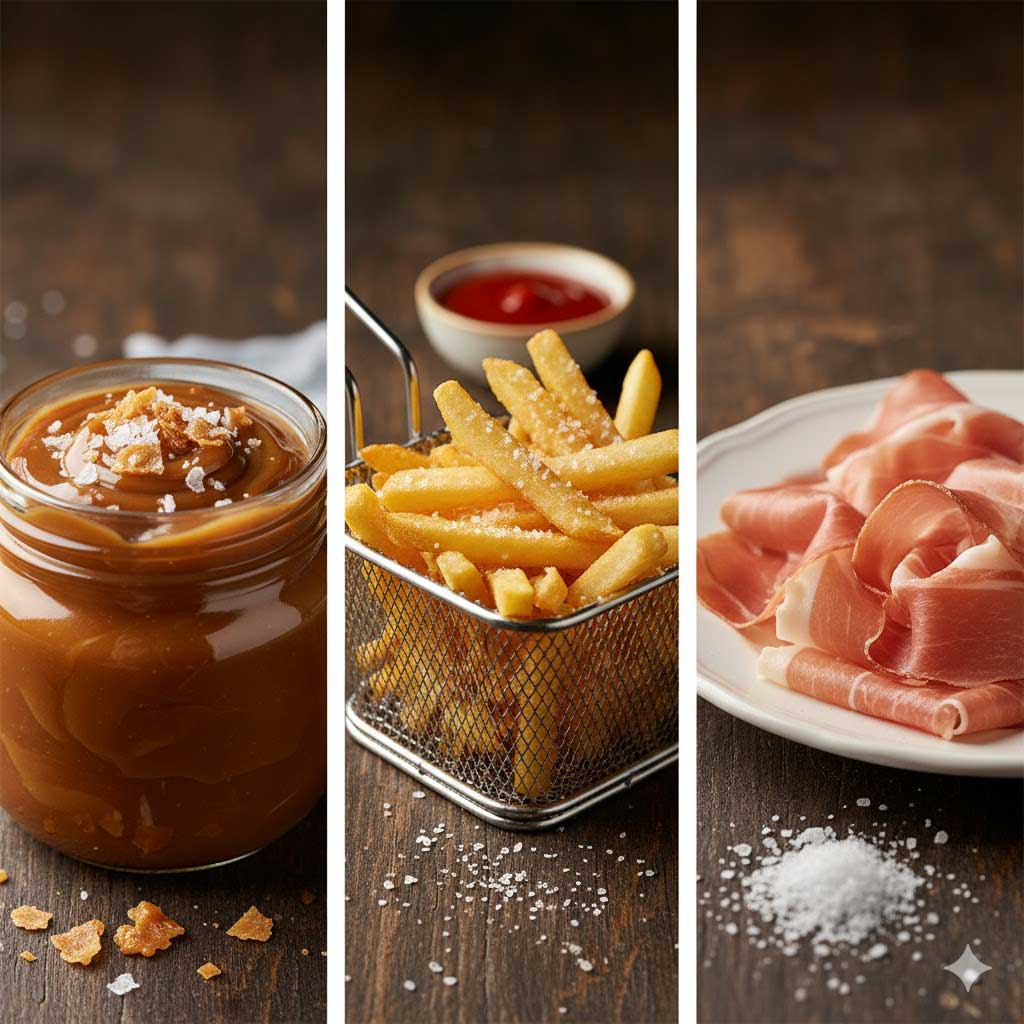
Salted Caramel: This might seem obvious, but think about it: the magic of salted caramel lies precisely in the salt. Without it, you have mere sweetness, cloying and one-dimensional. A touch of sea salt cuts through the richness, preventing it from being overly saccharine and introducing a tantalizing dance of sweet and savory on the palate. It’s the perfect example of salt elevating and transforming a flavor profile rather than simply adding its own. The crunchy flakes of a finishing salt on a gooey caramel treat are pure textural and taste bud bliss.
French Fries (and nearly all savory snacks): Imagine a plate of perfectly crispy, golden-brown French fries. Now imagine eating them without a single grain of salt. Bland, right? Salt is crucial for enhancing the potato’s natural flavor, providing that essential savory counterpoint, and, especially with coarse salt, adding a satisfying textural crunch. This principle extends to virtually every savory snack, from popcorn to potato chips, proving that salt is the undisputed king of snack-time satisfaction.
Cured Meats (e.g., Prosciutto, Bacon): Here, salt isn’t just a flavor enhancer; it’s the very core of the product. Curing meats with salt is one of the oldest preservation techniques known to humankind. The salt draws out moisture, inhibiting bacterial growth, and transforms the texture and flavor of the meat, creating complex, umami-rich delicacies like prosciutto, salami, and bacon. These foods are a direct embodiment of salt’s ancient power and culinary artistry.
Black Pepper: The Pungent Dish Perfectionist
Black pepper brings a different kind of magic to the table: a warm, pungent heat that awakens the senses and adds a vital spark. It’s the perfect partner to richness and a brilliant counterpoint to sweetness.
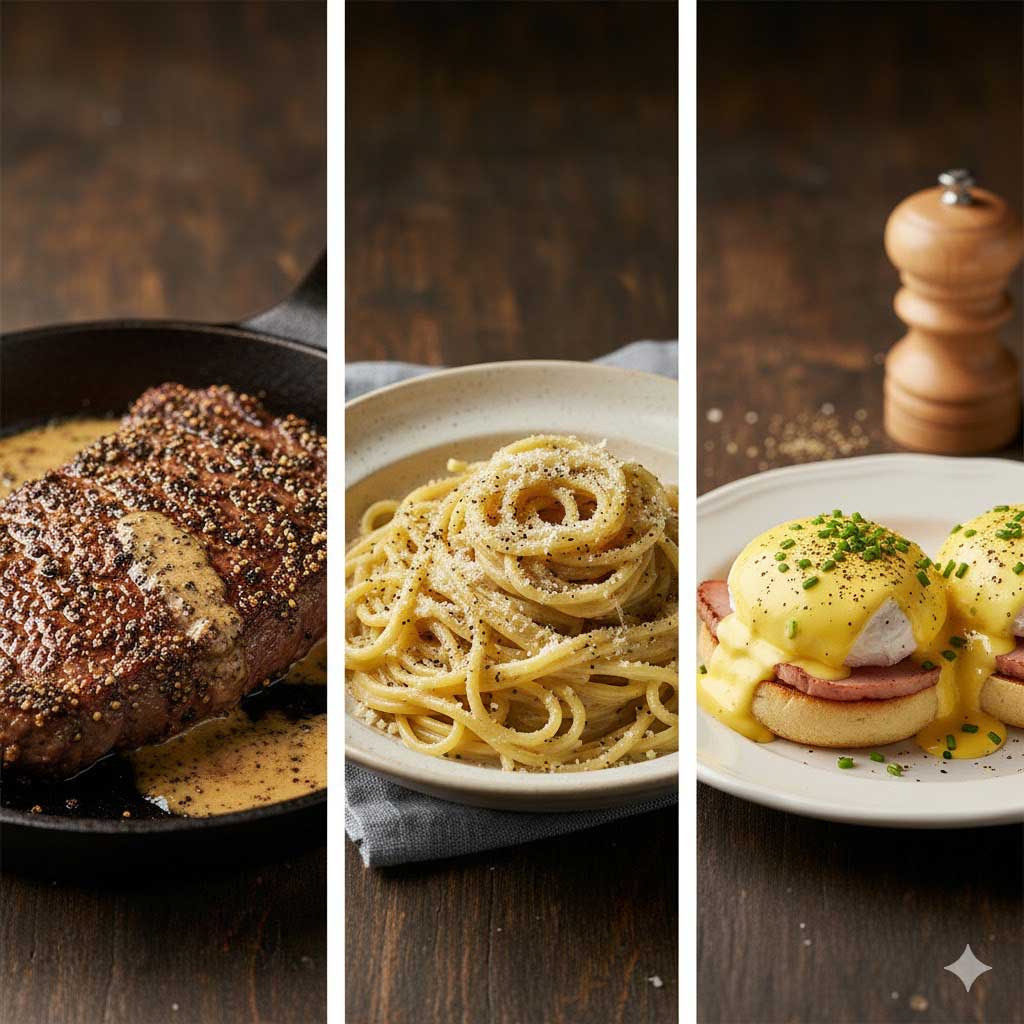
Steak au Poivre: This classic French dish literally translates to “steak with pepper.” It features a juicy steak, often a tenderloin or sirloin, coated generously in coarsely crushed black peppercorns before being seared. The pepper forms a crust that, when cooked, delivers an intense burst of aromatic heat and a delightful textural crunch with every bite. It’s usually finished with a creamy, cognac-flambéed sauce that beautifully balances the pepper’s assertive kick, making it a quintessential showcase for black pepper’s prowess.
Cacio e Pepe: Hailing from Rome, this deceptively simple pasta dish is a masterclass in minimalism and flavor. “Cacio e pepe” means “cheese and pepper,” and those are its two main flavor components, alongside pasta water. The magic happens when freshly ground black pepper is toasted in a pan to release its volatile oils, then emulsified with Pecorino Romano cheese and starchy pasta water to create a luscious, creamy sauce. The pepper isn’t just an afterthought; it’s the aromatic, spicy heart of the dish.
Eggs Benedict (or any egg dish): While not as dramatic as the first two, consider your morning eggs. A generous grind of fresh black pepper over scrambled, fried, or poached eggs, or even a decadent Eggs Benedict, is almost non-negotiable for many. The pepper cuts through the richness of the yolk and hollandaise, adding a crucial layer of flavor and a gentle warmth that elevates a simple breakfast into a satisfying meal.
Cinnamon: The Aromatic Dish All-Rounder
Cinnamon’s versatility is truly astounding, effortlessly leaping from sweet to savory and bridging culinary traditions across continents. Its warm, sweet, and spicy notes are irreplaceable in many beloved dishes.
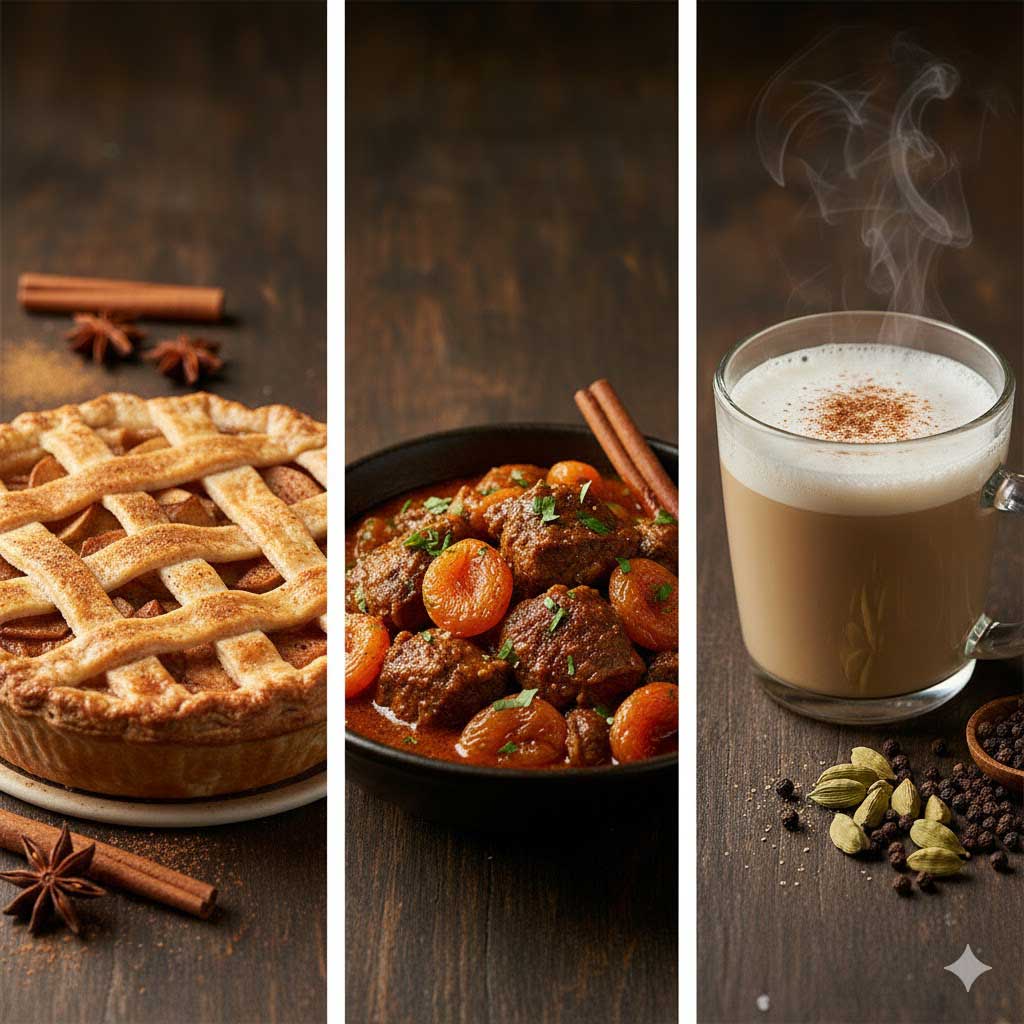
Apple Pie (and most fruit desserts): This is perhaps cinnamon’s most iconic role in Western dishes. The warm, comforting aroma of cinnamon baked into an apple pie is synonymous with home and happiness. The spice doesn’t just add flavor; it enhances the apples’ natural sweetness, adds depth, and provides that characteristic “spiced” profile that transforms simple fruit into a beloved dessert. From crumbles to tarts, cinnamon is the fruit’s best friend.
Moroccan Tagines (e.g., Lamb Tagine with Prunes): In Moroccan and North African cuisine, cinnamon takes a starring, often savory, role. In slow-cooked tagines, particularly those featuring lamb or chicken with dried fruits like prunes or apricots, cinnamon provides a foundational warmth and a delicate sweetness that perfectly complements the rich meat and savory spices like cumin and ginger. It’s this beautiful balance between sweet, savory, and aromatic that makes these tagines so uniquely delicious.
Chai Tea: A quintessential beverage from the Indian subcontinent, “chai” simply means “tea,” but in the West, it refers to masala chai—spiced tea. Cinnamon is a crucial component of the masala (spice blend), usually alongside cardamom, ginger, cloves, and black peppercorns. It infuses the strong black tea with its comforting warmth and sweetness, creating a deeply aromatic and invigorating drink that has become popular worldwide. Without cinnamon, chai would lose much of its characteristic charm.
From the essential pinch of salt that makes food sing, to the fiery kick of pepper that awakens the palate, and the sweet embrace of cinnamon that transports us to distant lands, these spices are true culinary superstars. Their stories are woven into the fabric of our meals, reminding us that sometimes, the simplest ingredients have the most profound impact.
My other articles are listed here.