Category: Cinnamon

  • Cinnamon History, Benefits, and Delicious Recipes

    What Is Cinnamon? A Warm and Ancient Spice

    Discover Cinnamon history : Cinnamon is one of the world’s most cherished spices, known for its unmistakable warmth and sweet aroma. Made from the inner bark of Cinnamomum trees, it has been used for thousands of years in cooking, medicine, and ritual practices.

    Cinnamon remains a staple in cuisines across the globe thanks to its versatility—equally at home in baked goods, drinks, stews, and spice blends.

    A Brief Cinnamon History

    Cinnamon History : Ancient Civilizations

    Cinnamon history stretches back over 4,000 years. Ancient Egyptians valued it as highly as gold, using it in:

    • Perfumes
    • Religious rituals
    • Embalming practices

    Its rarity made it a luxury commodity throughout the ancient Mediterranean.

    Cinnamon History

    The Mystery of the Cinnamon Bird

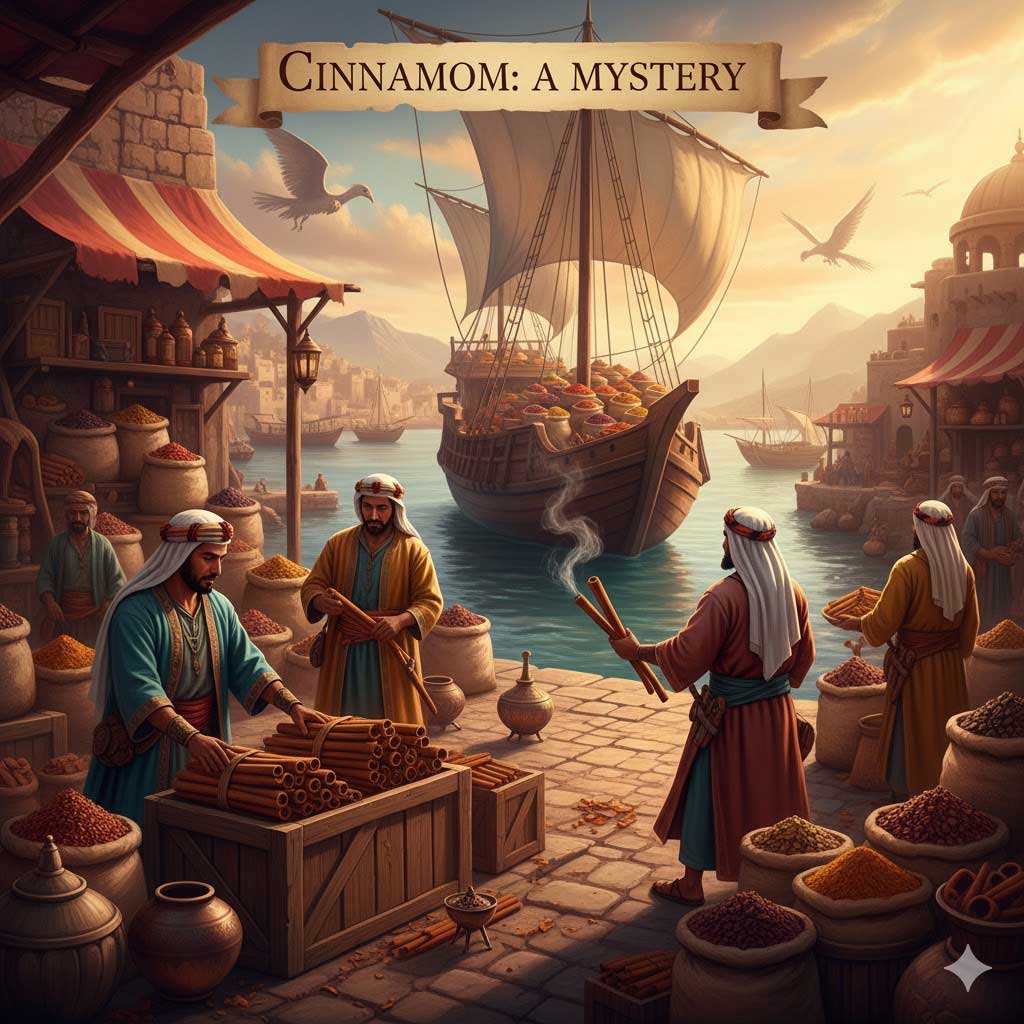
    Arab spice traders once controlled cinnamon’s supply and crafted fantastic legends to protect their monopoly.

    One famous tale claimed cinnamon was harvested from the nests of giant mythical birds perched on high cliffs. Merchants supposedly used heavy meat to break the nests, allowing cinnamon sticks to fall. This myth helped maintain cinnamon’s status as a precious, nearly unreachable spice.

    Cinnamon Bird

    Cinnamon in Greek and Roman Culture

    The Greeks and Romans adored cinnamon for flavoring wine, medicinal infusions, and ceremonial uses. In one dramatic anecdote, Emperor Nero reportedly burned a year’s supply of cinnamon at his wife’s funeral.

    Cinnamon and the Age of Exploration

    During the 15th–17th centuries, European empires battled for control of Sri Lanka (Ceylon), the top cinnamon-producing region. Cinnamon fueled major trade routes and colonial expansion—demonstrating how impactful this humble spice has been in shaping world history.

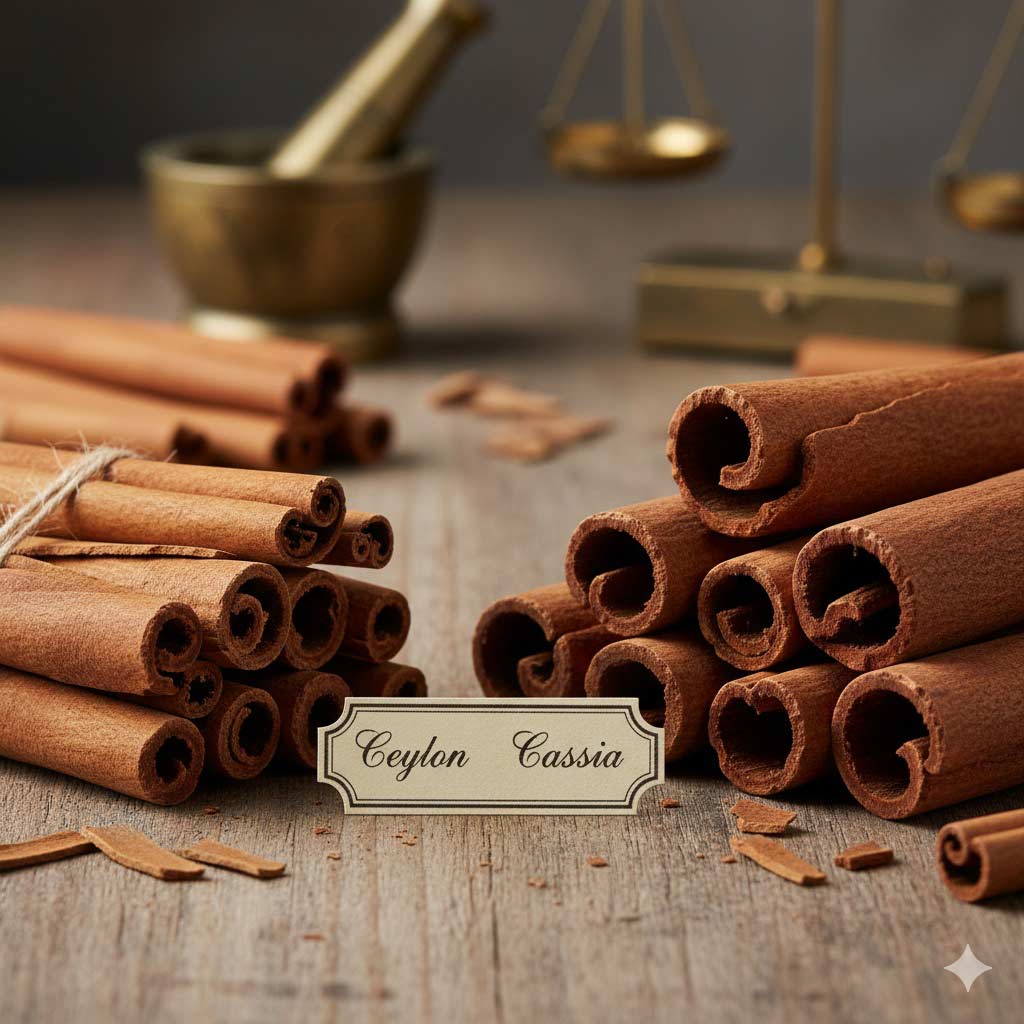
    Ceylon vs. Cassia: Types of Cinnamon

    1. Ceylon Cinnamon (“True Cinnamon”)

    • Grown mainly in Sri Lanka
    • Light, sweet, delicate flavor
    • Thin, layered, flaky sticks
    • Preferred for desserts, teas, and subtle dishes

    2. Cassia Cinnamon

    • Common in supermarkets
    • Bold, strong flavor
    • Thick, hard sticks
    • Ideal for savory dishes, stews, and spice rubs

    See also this post.

    Ceylon vs. Cassia: Types of Cinnamon

    Cultural Anecdotes and Symbolism of Cinnamon

    Cinnamon’s symbolism varies across cultures:

    • Middle Eastern traditions: Cinnamon tea signals welcome and hospitality.
    • Ancient rituals: It appears in biblical anointing oils and sacred blends.
    • Modern aromatherapy: Cinnamon is associated with warmth, comfort, and stress relief.

    Its enduring presence in folklore and medicine gives cinnamon a magical, almost nostalgic appeal.

    How to Use Cinnamon: Recipes and Ideas

    1. Easy Cinnamon Honey Butter

    Perfect for breakfast or holiday spreads.

    Ingredients:
    ½ cup unsalted butter, 2 tbsp honey, 1 tsp cinnamon
    Instructions:
    Mix until smooth. Add a pinch of salt for balance.

    2. Cinnamon Chickpea Stew

    A cozy, aromatic dish with Middle Eastern spices.

    Ingredients:
    Onion, garlic, cinnamon, cumin, paprika, tomatoes, chickpeas, broth
    Instructions:
    Sauté aromatics → add spices → simmer 20 minutes.

    3. Classic Cinnamon Swirl Bread

    A cozy weekend baking project.

    Key Steps:

    1. Make a simple enriched dough using flour, yeast, milk, butter, and sugar.
    2. Roll out the dough and spread a mixture of cinnamon and sugar across the surface.
    3. Roll tightly, place in a loaf pan, and let rise again.
    4. Bake until golden and fragrant.

    The result is a soft, sweet loaf perfect for toast or French toast.

    4. Cinnamon-Steeped Hot Chocolate

    Add depth to your winter beverage by warming milk with a cinnamon stick before mixing in cocoa and sugar. The infusion turns a simple hot chocolate into something special.

    A Spice That Endures

    Cinnamon’s enduring popularity isn’t simply due to its flavor. It’s a spice with stories—of ancient rituals, mythical birds, global trade, and shared meals across cultures. Its aroma evokes warmth and familiarity, while its history reminds us how deeply connected the world has always been through food.

    Whether you swirl it into a dessert, brew it into a drink, or sprinkle it onto something savory, cinnamon continues to weave itself into our kitchens and our lives, just as it has for thousands of years.


  • Spice Superstars: Dishes That Wouldn’t Be the Same

    We’ve explored the rich histories and subtle nuances of salt, pepper, and cinnamon. We’ve seen how they shaped civilizations, fueled exploration, and carved out their unique identities in the culinary world. But where do these humble heroes truly shine? Where do they stop being mere ingredients and become the very soul of a dish?

    In this article, we’ll embark on a flavorful journey, celebrating the iconic dishes that simply wouldn’t exist, or at least wouldn’t taste the same, without the indispensable contributions of our beloved spices. From comforting classics to exotic delights, these culinary masterpieces are a testament to the transformative power of a pinch, a grind, or a fragrant stick.

    Salt: The Universal Dish Harmonizer

    While salt’s role is often one of subtle enhancement rather than overt flavor, its absence is immediately and painfully felt. Salt doesn’t just make food “salty”; it balances, brightens, and brings out the latent flavors in everything it touches.

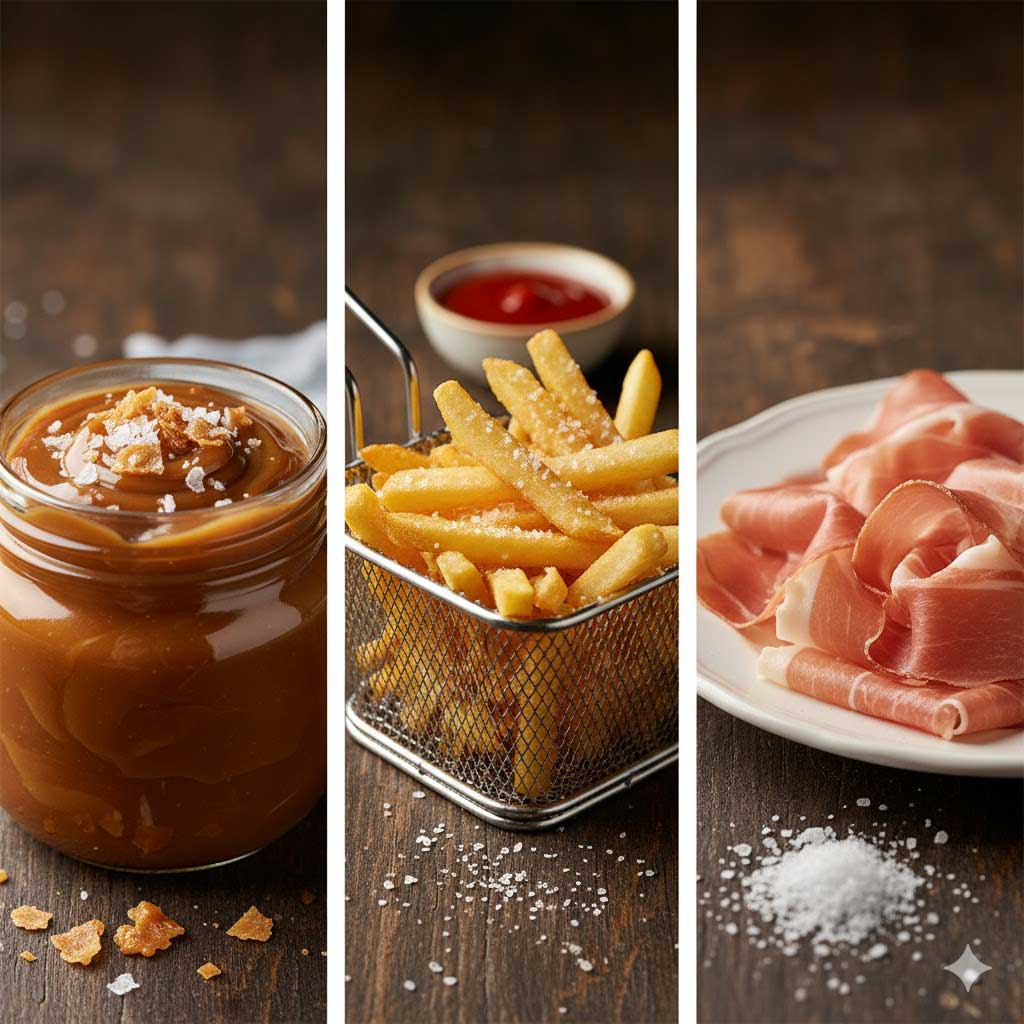
    Salted Caramel: This might seem obvious, but think about it: the magic of salted caramel lies precisely in the salt. Without it, you have mere sweetness, cloying and one-dimensional. A touch of sea salt cuts through the richness, preventing it from being overly saccharine and introducing a tantalizing dance of sweet and savory on the palate. It’s the perfect example of salt elevating and transforming a flavor profile rather than simply adding its own. The crunchy flakes of a finishing salt on a gooey caramel treat are pure textural and taste bud bliss.

    French Fries (and nearly all savory snacks): Imagine a plate of perfectly crispy, golden-brown French fries. Now imagine eating them without a single grain of salt. Bland, right? Salt is crucial for enhancing the potato’s natural flavor, providing that essential savory counterpoint, and, especially with coarse salt, adding a satisfying textural crunch. This principle extends to virtually every savory snack, from popcorn to potato chips, proving that salt is the undisputed king of snack-time satisfaction.

    Cured Meats (e.g., Prosciutto, Bacon): Here, salt isn’t just a flavor enhancer; it’s the very core of the product. Curing meats with salt is one of the oldest preservation techniques known to humankind. The salt draws out moisture, inhibiting bacterial growth, and transforms the texture and flavor of the meat, creating complex, umami-rich delicacies like prosciutto, salami, and bacon. These foods are a direct embodiment of salt’s ancient power and culinary artistry.

    A three-panel vertical collage on a dark wooden background highlights the use of salt in various dishes. The left panel shows a jar of smooth salted caramel topped with flaky sea salt and brittle. The middle panel features crispy golden French fries in a metal basket, heavily seasoned with salt, with a small bowl of ketchup in the background. The right panel displays thinly sliced cured ham (prosciutto) on a white plate, with a pile of coarse salt next to it.

    Black Pepper: The Pungent Dish Perfectionist

    Black pepper brings a different kind of magic to the table: a warm, pungent heat that awakens the senses and adds a vital spark. It’s the perfect partner to richness and a brilliant counterpoint to sweetness.

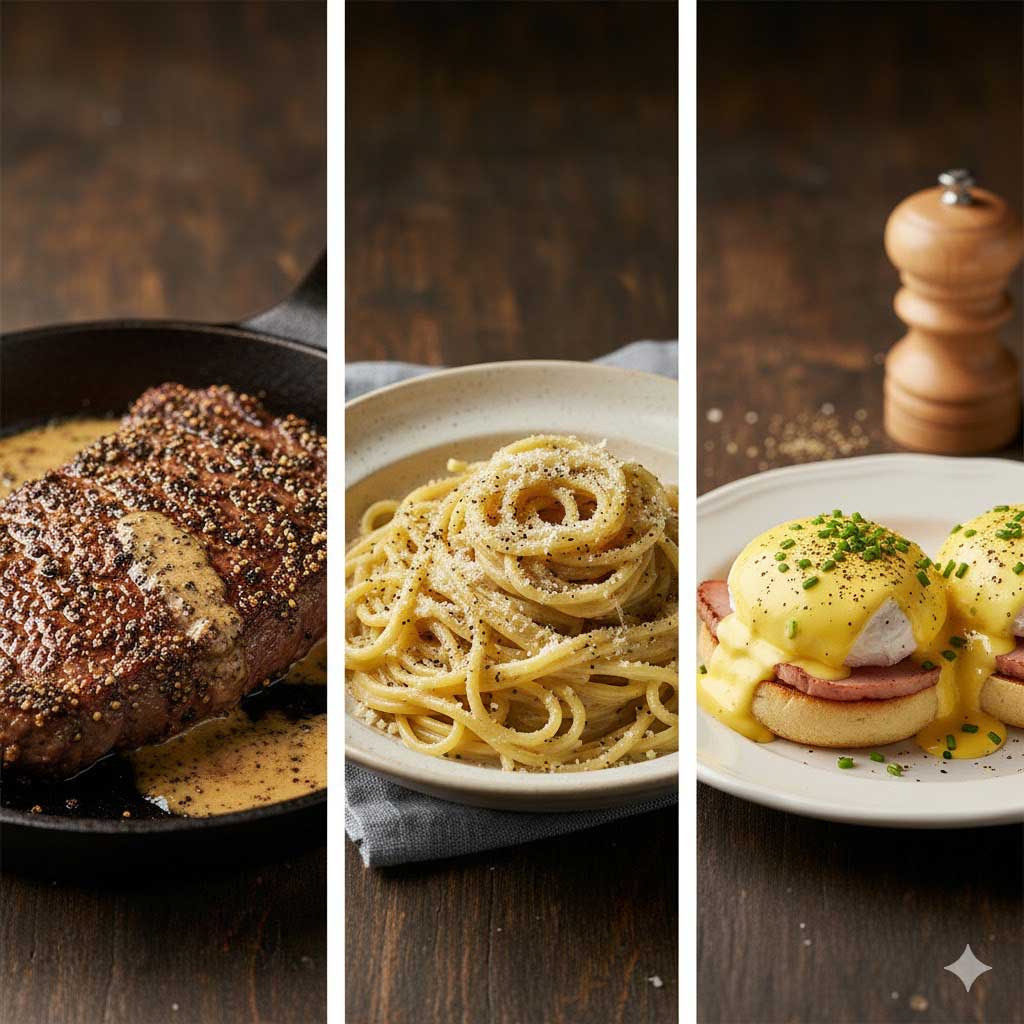
    Steak au Poivre: This classic French dish literally translates to “steak with pepper.” It features a juicy steak, often a tenderloin or sirloin, coated generously in coarsely crushed black peppercorns before being seared. The pepper forms a crust that, when cooked, delivers an intense burst of aromatic heat and a delightful textural crunch with every bite. It’s usually finished with a creamy, cognac-flambéed sauce that beautifully balances the pepper’s assertive kick, making it a quintessential showcase for black pepper’s prowess.

    Cacio e Pepe: Hailing from Rome, this deceptively simple pasta dish is a masterclass in minimalism and flavor. “Cacio e pepe” means “cheese and pepper,” and those are its two main flavor components, alongside pasta water. The magic happens when freshly ground black pepper is toasted in a pan to release its volatile oils, then emulsified with Pecorino Romano cheese and starchy pasta water to create a luscious, creamy sauce. The pepper isn’t just an afterthought; it’s the aromatic, spicy heart of the dish.

    Eggs Benedict (or any egg dish): While not as dramatic as the first two, consider your morning eggs. A generous grind of fresh black pepper over scrambled, fried, or poached eggs, or even a decadent Eggs Benedict, is almost non-negotiable for many. The pepper cuts through the richness of the yolk and hollandaise, adding a crucial layer of flavor and a gentle warmth that elevates a simple breakfast into a satisfying meal.

    Cinnamon: The Aromatic Dish All-Rounder

    Cinnamon’s versatility is truly astounding, effortlessly leaping from sweet to savory and bridging culinary traditions across continents. Its warm, sweet, and spicy notes are irreplaceable in many beloved dishes.

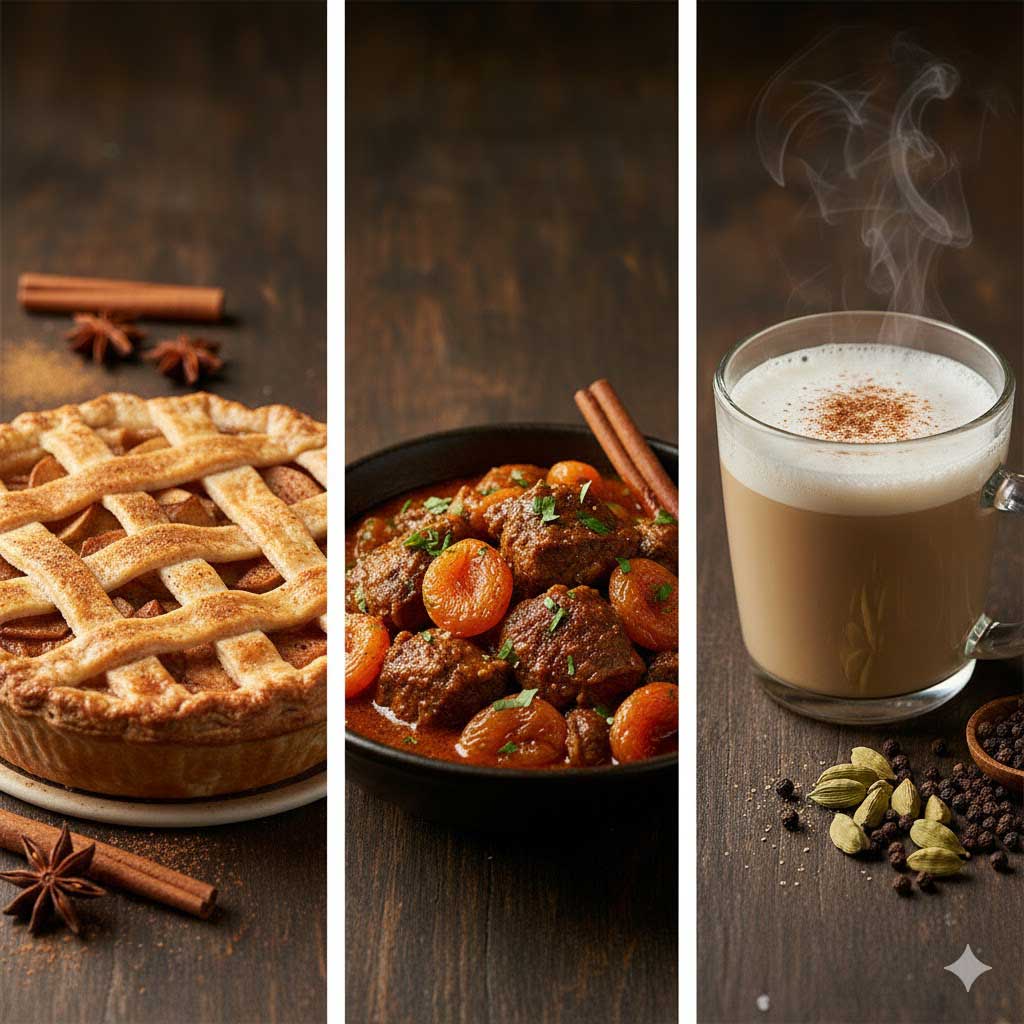
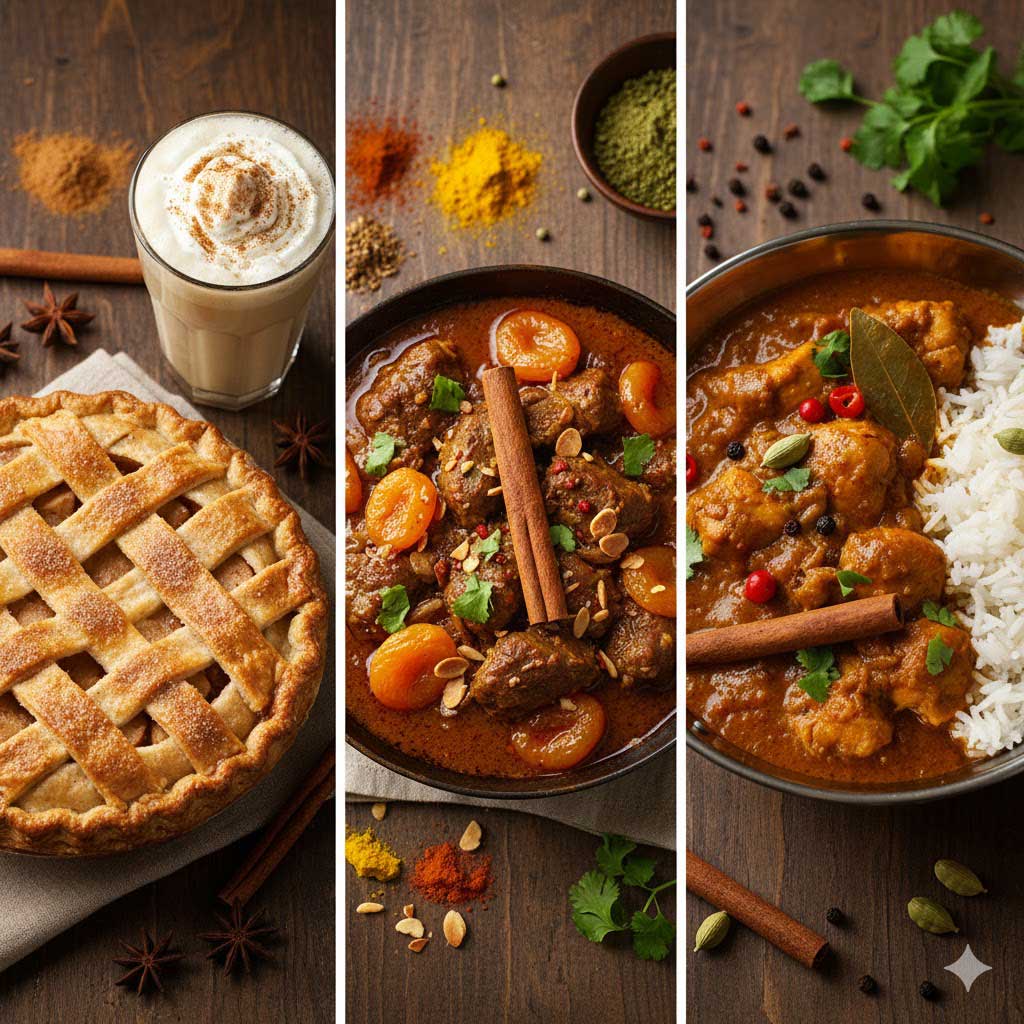
    Apple Pie (and most fruit desserts): This is perhaps cinnamon’s most iconic role in Western dishes. The warm, comforting aroma of cinnamon baked into an apple pie is synonymous with home and happiness. The spice doesn’t just add flavor; it enhances the apples’ natural sweetness, adds depth, and provides that characteristic “spiced” profile that transforms simple fruit into a beloved dessert. From crumbles to tarts, cinnamon is the fruit’s best friend.

    Moroccan Tagines (e.g., Lamb Tagine with Prunes): In Moroccan and North African cuisine, cinnamon takes a starring, often savory, role. In slow-cooked tagines, particularly those featuring lamb or chicken with dried fruits like prunes or apricots, cinnamon provides a foundational warmth and a delicate sweetness that perfectly complements the rich meat and savory spices like cumin and ginger. It’s this beautiful balance between sweet, savory, and aromatic that makes these tagines so uniquely delicious.

    Chai Tea: A quintessential beverage from the Indian subcontinent, “chai” simply means “tea,” but in the West, it refers to masala chai—spiced tea. Cinnamon is a crucial component of the masala (spice blend), usually alongside cardamom, ginger, cloves, and black peppercorns. It infuses the strong black tea with its comforting warmth and sweetness, creating a deeply aromatic and invigorating drink that has become popular worldwide. Without cinnamon, chai would lose much of its characteristic charm.

    From the essential pinch of salt that makes food sing, to the fiery kick of pepper that awakens the palate, and the sweet embrace of cinnamon that transports us to distant lands, these spices are true culinary superstars. Their stories are woven into the fabric of our meals, reminding us that sometimes, the simplest ingredients have the most profound impact.

    My other articles are listed here.

  • Cinnamons: The Sweet Embrace of History

    Close your eyes for a moment and take a deep breath. What do you smell? Perhaps a warm apple pie, a spiced latte on a chilly morning, or the comforting aroma of a festive holiday treat. That unmistakable scent, both sweet and subtly fiery, belongs to cinnamons, one of the oldest and most cherished spices in human history.

    Far from being just a sprinkle on your oatmeal, cinnamon is a spice steeped in myth, medicine, and mercantile might. Its fragrant bark has influenced empires, inspired daring voyages, and continues to enchant palates across the globe, proving that some of the greatest treasures come wrapped not in gold, but in a delicate, curled stick.

    A Bark of Legends and Lore

    Cinnamon’s story begins not in the kitchen, but in ancient lands shrouded in mystery. For centuries, its true origin was a closely guarded secret, allowing Arab traders to maintain a lucrative monopoly. They spun elaborate tales of giant birds guarding cinnamons nests in unknown lands, or mythical beasts defending precious groves, all to deter competitors and justify its exorbitant price. This air of exoticism only enhanced its value.

    Ancient Egyptians used cinnamons not for culinary delight, but as a crucial ingredient in embalming rituals, a testament to its preservative qualities and revered status. In biblical times, it was mentioned as an anointing oil and a fragrant perfume. The Romans, despite its high cost, burned cinnamons at funerals, believing its sweet smoke would ward off evil spirits and offer a fitting tribute to the gods.

    Its journey to the Western world was long and perilous, traversing the ancient spice routes from Ceylon (modern-day Sri Lanka) and other parts of Southeast Asia, through India, the Middle East, and eventually to Europe. By the Middle Ages, cinnamons was a highly prized luxury item, alongside pepper and cloves, often reserved for royalty and the very wealthy, who used it to flavor wines, meats, and confections, as well as for its perceived medicinal properties. The quest for direct access to these spice-rich lands, bypassing expensive intermediaries, became another driving force behind European exploration, echoing pepper’s narrative but with a sweeter, more aromatic ambition.

    An ancient bustling harbor scene under a warm, hazy sky. In the foreground, men in traditional attire sort and trade cinnamons sticks in crates, surrounded by sacks overflowing with colorful spices. A large wooden sailing ship, its deck also laden with spices, is docked in the background, with other smaller boats and distant buildings completing the vibrant market setting. A banner at the top reads "CINNAMOM: A MYSTERY."

    Ceylon vs. Cassia: Cinnamons Showdown

    While many of us grab a jar simply labeled “cinnamons,” there are primarily two main types that dominate the market, each with its distinct characteristics and culinary applications: Ceylon cinnamon and Cassia cinnamon.

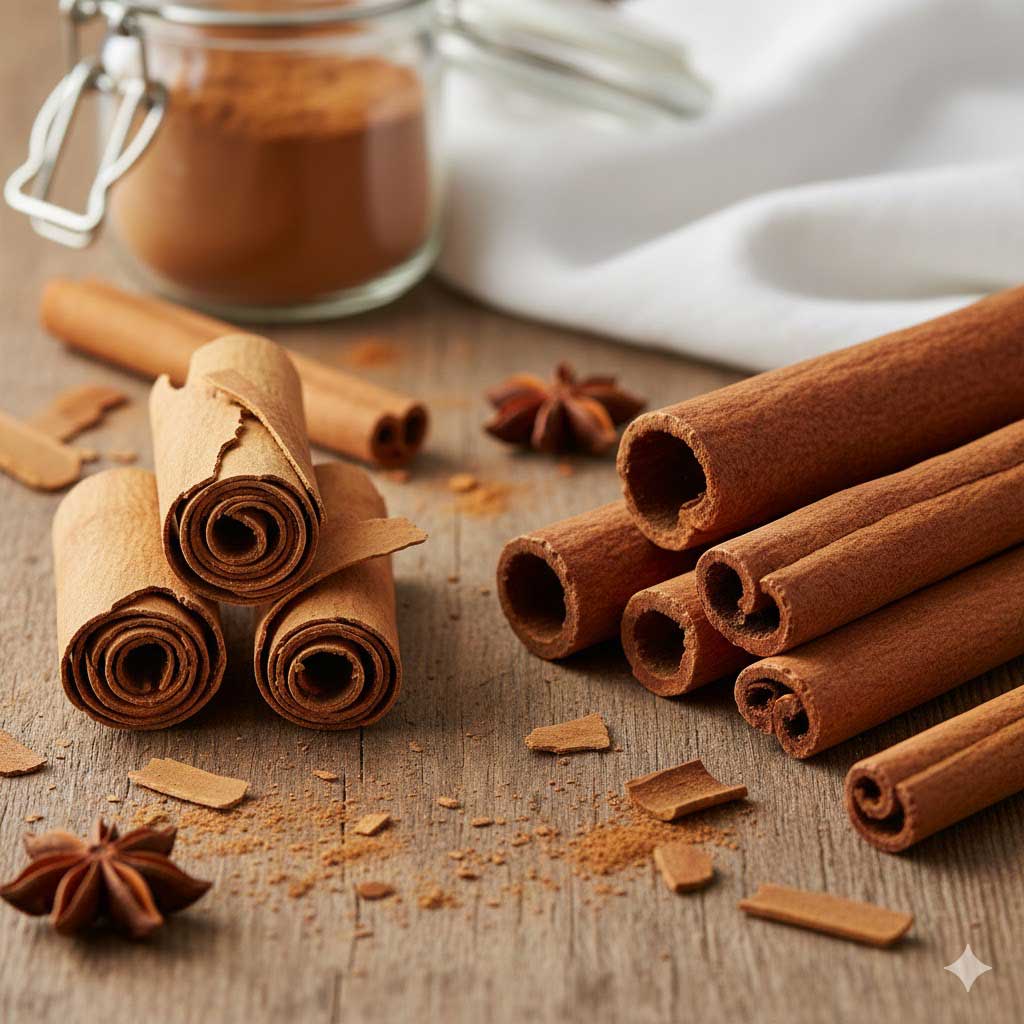
    Ceylon Cinnamon (Cinnamomum verum or “true cinnamon”): Often referred to as “true cinnamon,” Ceylon cinnamon originates primarily from Sri Lanka. It is characterized by its delicate, almost papery thin layers that roll into a soft, easily crumbled quill. Its flavor is subtle, sweet, and highly aromatic, with complex notes that are less spicy and more nuanced. It’s the preferred choice for desserts, baked goods, and dishes where a refined cinnamon flavor is desired. Because it’s less commonly available and more labor-intensive to produce, it often commands a higher price.

    Cassia Cinnamon (Cinnamomum cassia): This is the more common variety found in most grocery stores, originating from China, Vietnam (Saigon cinnamon), and Indonesia. Cassia bark is thicker, harder, and coarser, forming a single, sturdy scroll rather than delicate layers. Its flavor is much stronger, spicier, and more pungent, with a noticeable bite. It contains higher levels of coumarin, a natural chemical that can be harmful in very large doses, though typical culinary use is generally considered safe. Cassia is the “cinnamon” flavor most people are familiar with, often used in savory dishes, robust baked goods, and in blends like Chinese five-spice powder.

    Understanding the difference can truly elevate your cooking, allowing you to choose the right cinnamon for the right dish—the delicate sweetness of Ceylon for a crème brûlée, or the bold warmth of Cassia for a hearty beef stew.

    A close-up shot on a rustic wooden surface showcases two distinct types of cinnamon sticks. On the left, delicate, multi-layered Ceylon cinnamon quills are visible, with some broken flakes and powder. On the right, thicker, robust Cassia cinnamon sticks are grouped. In the background, a jar of ground cinnamon and a white cloth are softly blurred. Star anise pods and scattered cinnamon powder complete the aromatic scene.

    The Warmth of Wellness and Flavor

    Beyond its captivating aroma, this condiment has long been revered for its potential health benefits. In ancient herbal medicine, it was used to aid digestion, reduce inflammation, and even as a remedy for colds and flu. Modern science is beginning to catch up, with studies exploring its antioxidant properties and potential role in blood sugar regulation. It’s thought to improve insulin sensitivity and lower blood glucose levels, making it a subject of interest for those managing diabetes.

    In the culinary realm, the holiday spice is a chameleon. It effortlessly bridges the gap between sweet and savory. In sweet applications, it’s the star of apple pies, cinnamons rolls, rice puddings, and pumpkin spice lattes. Its warmth enhances fruit, balances sweetness, and adds a comforting depth.

    On the savory side, cinnamon shines in cuisines across the globe. It’s a foundational spice in many Indian curries and masalas, often toasted to release its deep, earthy notes. In Middle Eastern and North African tagines and stews, it contributes a subtle sweetness and aromatic complexity to lamb, chicken, and vegetable dishes. Even in Mexican mole sauces, cinnamons plays a crucial, balancing role, demonstrating its incredible versatility. It proves that a “sweet” spice can be a powerful secret weapon in the savory kitchen.

    More Than Just a Twist

    This seasoning’s allure extends beyond the plate. Its essential oil is a popular component in aromatherapy, believed to be stimulating, uplifting, and even an aphrodisiac. It’s widely used in perfumes, potpourris, and candles, filling homes with its inviting fragrance.

    Historically, its antimicrobial properties were used to preserve food, even before its active compounds were fully understood. Today, it’s explored as a natural pest deterrent in gardening, with its strong scent believed to repel certain insects and fungi. From its origins as a mysterious bark guarded by mythical beasts to its role as a global flavor enhancer and potential wellness aid, cinnamons continue to weave its enchanting spell. It reminds us that some of the most profound impacts on our lives come from the simplest, most aromatic gifts of nature.

    My other articles are listed here.