Author: Camille Gathem

  • The Great Worlds of Curry: Thai Curry

    Thai curry represents a completely different universe from its South Asian cousins. Where Indian curries rely heavily on powdered dry spices and a foundation of ghee or oil, and Japanese curries on a thick, dark roux, Thai curry are defined by their freshness, vibrancy, and the use of coconut milk. They are essentially soupy, fragrant stews built upon a base of wet, highly concentrated aromatic pastes, providing an unparalleled balance of salty, sweet, sour, and spicy notes—the four cornerstones of Thai cuisine.

    The true artistry of Thai curry lies not in the cooking process, but in the meticulous creation of the paste itself, traditionally pounded by hand in a mortar and pestle.

    The Triad of Thai Curry: Colour and Flavour

    Thai curry is primarily categorized by the colour of the paste used, which, in turn, dictates the heat level and main flavour profile. The three most common and distinctive types are Green, Red, and Yellow.

    1. Green Curry (Gaeng Keow Wan)

    • The Look: Named for the vibrant green of the fresh ingredients used.
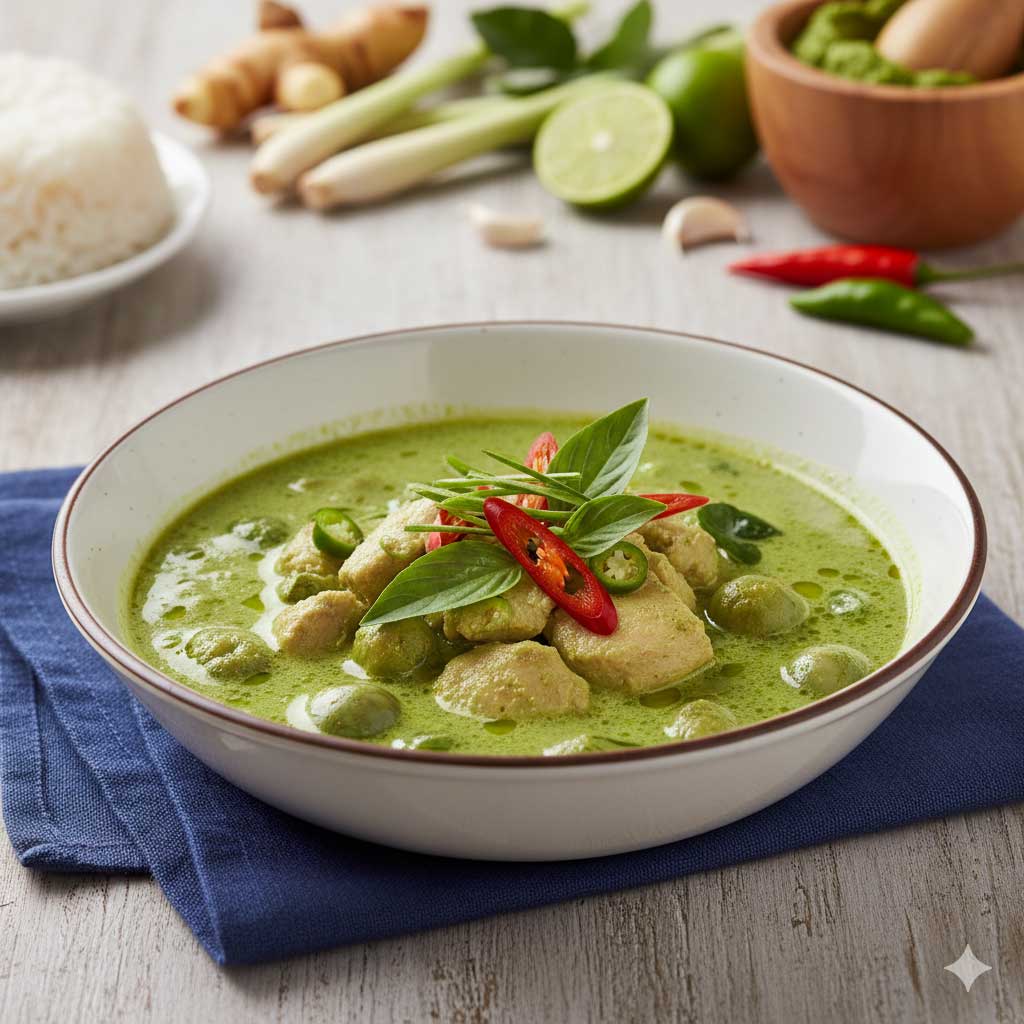
    • The Paste: Generally the hottest of the three. Its characteristic colour comes from copious amounts of fresh green bird’s eye chilies, combined with lemongrass, galangal, kaffir lime zest and leaves, cilantro roots, and shallots.
    • The Flavour: Fresh, herbaceous, and intensely fragrant. The heat from the chilies is moderated by the sweetness of the coconut milk and sometimes a touch of palm sugar, creating a complex, well-rounded flavour. It is often served with chicken or fish and bamboo shoots.
    2. Red Curry (Gaeng Phet)

    • The Look: A fiery, reddish-orange colour.
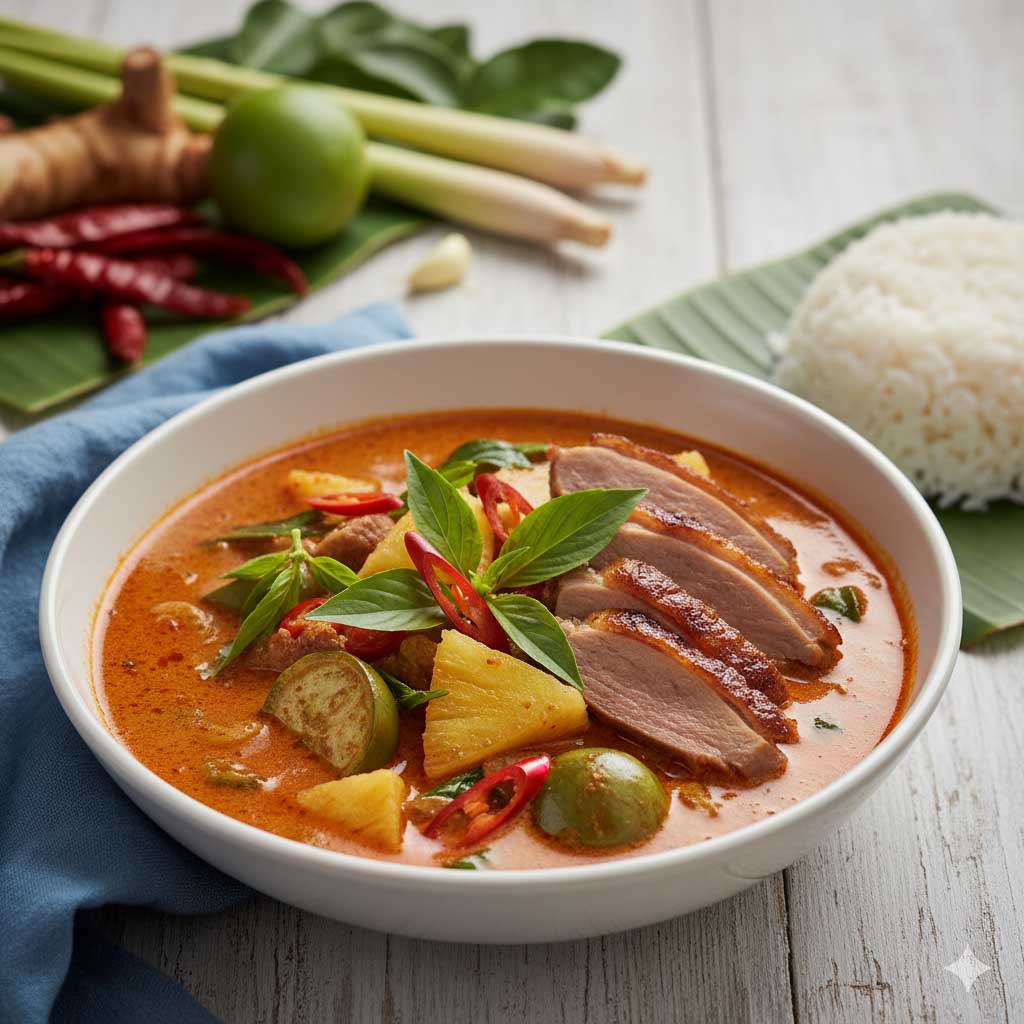
    • The Paste: The red comes from dried red spur chilies (which are less pungent than the fresh green ones, making the Red Curry often milder than the Green). The paste also features similar ingredients to the green curry, but the substitution of dried chilies for fresh ones changes the taste from herbaceous to earthy and robust.
    • The Flavour: Rich, slightly sweet, and earthy. It is extremely versatile and often used with duck, pork, or beef, and frequently includes vegetables like eggplant or pineapple.
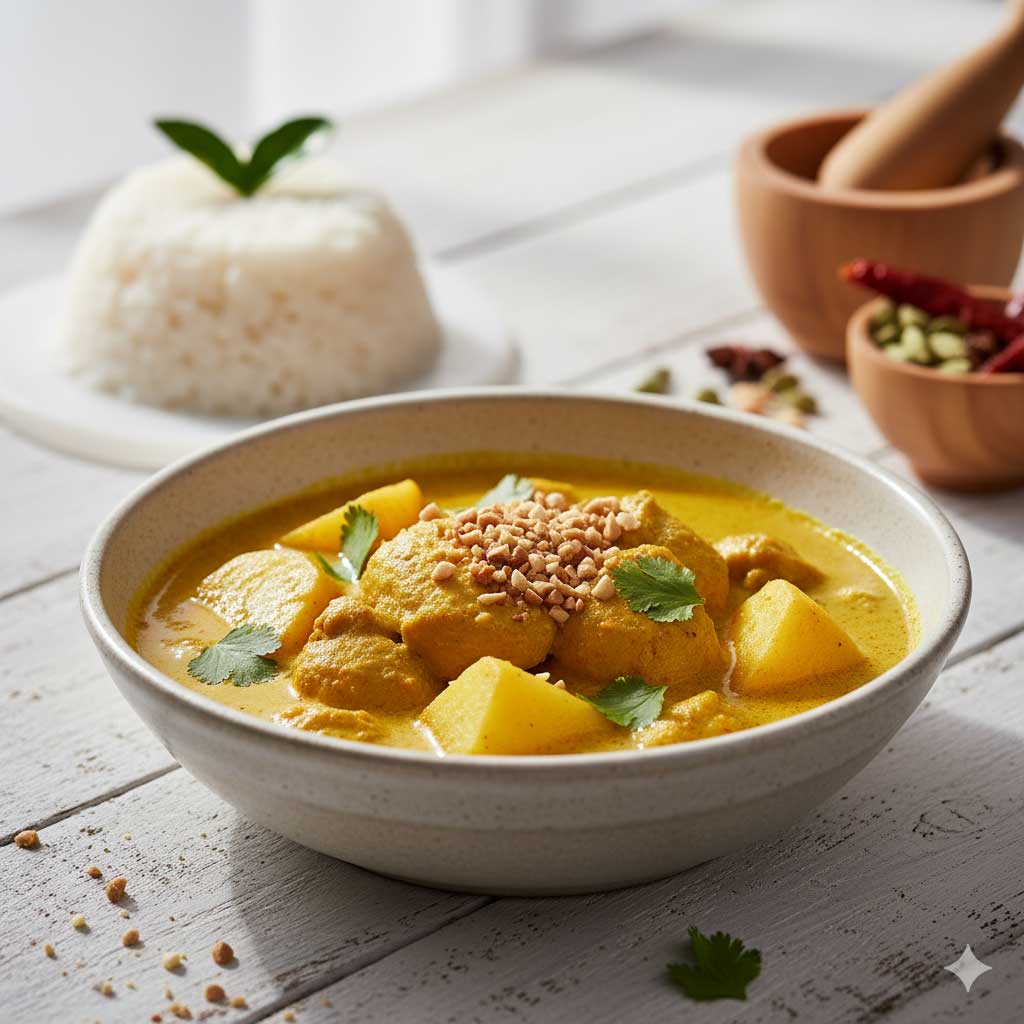
    3. Yellow Curry (Gaeng Lueang or Gaeng Kari)

    • The Look: A mellow, golden-yellow hue.
    • The Paste: Yellow curry is the closest in flavour to Indian curry, as it heavily features turmeric (giving it the yellow colour) and often includes a higher proportion of dry spices like cardamom, cinnamon, and sometimes Indian curry powder, reflecting its proximity to India and its trading history.
    • The Flavour: Mildest in heat and sweetest in taste. It is often served with potatoes and chicken and is particularly popular in the South of Thailand, where it is sometimes thickened further with peanuts.
    The Essential Role of Coconut Milk

    The ingredient that truly defines Thai curry is coconut milk. Unlike Indian curries, which often rely on water, stock, or yogurt, Thai curries use coconut milk as both the liquid base and the primary source of richness.

    The cooking method exploits the unique property of coconut milk:

    1. A small amount of coconut cream (the thick top layer) is simmered until the oil separates (a process called breaking the milk). This oil forms the base of the dish, toasting the curry paste and releasing its essential oils and fragrances.
    2. The paste is fried in this coconut oil, intensifying its flavour.
    3. The remaining coconut milk is added, creating the final, creamy, thin soup-like consistency.

    This process ensures that the spices are fully bloomed and the curry achieves a smooth, velvety texture that coats the rice perfectly.

    Regional Variations: Massaman and Panang

    Beyond the main triad, two other popular Thai curries demonstrate the diversity of the region:

    • Massaman Curry (Gaeng Massaman): This is a distinctly regional curry with Muslim and Indian influences. Its paste features dry spices not common in other Thai curries, such as cardamom, cloves, and cinnamon. It is sweet, tangy, and rich, often made with beef, potatoes, and peanuts, making it feel more like a rich, South Indian-style stew than a typical Thai curry.
    • Panang Curry (Gaeng Panang): Similar to red curry but significantly richer and thicker, often containing crushed peanuts. It’s drier and less soupy than other Thai curries and is renowned for its intense, savory-sweet flavour profile and the customary garnish of thinly sliced kaffir lime leaves.

    Thai curry’s philosophy is about contrast and harmony. The coolness of the coconut milk battles the heat of the chilies; the salinity of the fish sauce balances the sweetness of the palm sugar; and the sharpness of the kaffir lime cuts through the richness of the oil. This emphasis on fresh, pungent herbs and aromatics, rather than dried powders, places Thai cuisine in a distinct category, highlighting its connection to the region’s lush tropical environment. It is this masterful balancing act that has made Thai curry a global phenomenon, appealing to palates seeking a lighter, more aromatic, and ultimately, a more complex taste experience than its heavier, dry-spice-focused cousins.
  • The Great Worlds of Curry: French Curry

    When most people think of curry, their minds immediately travel to the vibrant street stalls of Delhi, the fragrant markets of Bangkok, or the comforting kitchens of Osaka. Yet, tucked away in the culinary history of Western Europe, a distinctive and often misunderstood variety exists: the French Curry. This is not a curry in the traditional sense, but a refined, colonial-era interpretation that showcases how French classical cuisine absorbed, translated, and ultimately elevated an exotic flavour profile for a European palate.

    The story of French curry is rooted in empire and trade. Long before the global movement of people brought authentic South Asian cuisine to Paris, spices like turmeric, ginger, and coriander found their way into French ports via maritime trade routes, particularly those connected to Pondicherry, a French colonial outpost in India, and the spice islands of the Caribbean and Indochina. Chefs in the 18th and 19th centuries, eager to introduce new, fashionable tastes to the aristocracy, began experimenting. However, lacking the deep culinary knowledge and specific ingredients of India, they developed a mild, elegant, and often creamy dish that bore only a passing resemblance to its origin.

    A Culinary Translation: From Spice Blend to Sauce

    The core difference between French curry and its South Asian counterparts lies in its structure and composition. Traditional Indian curries are built on a complex foundation of fried aromatics (onions, ginger, garlic) followed by a progression of powdered and whole spices, often culminating in a thin, broth-like consistency or a dry coating.

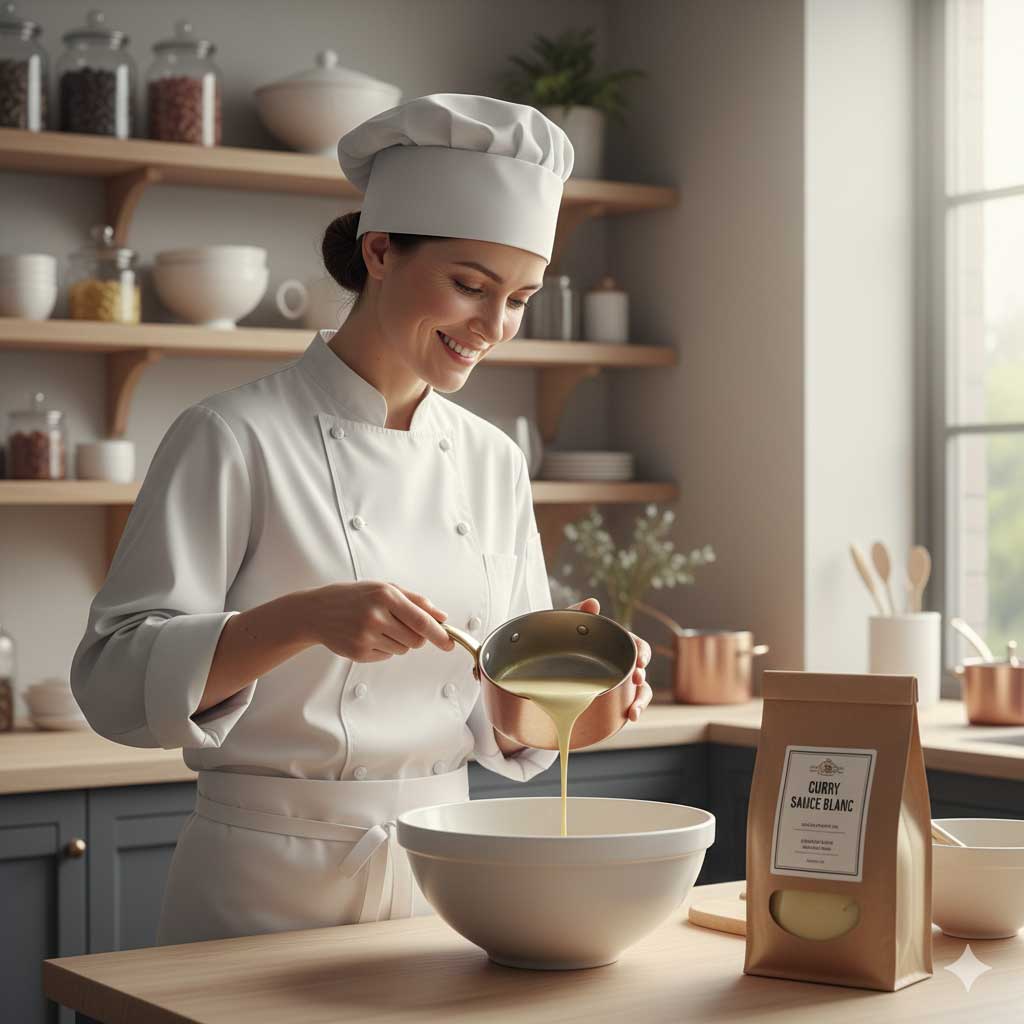
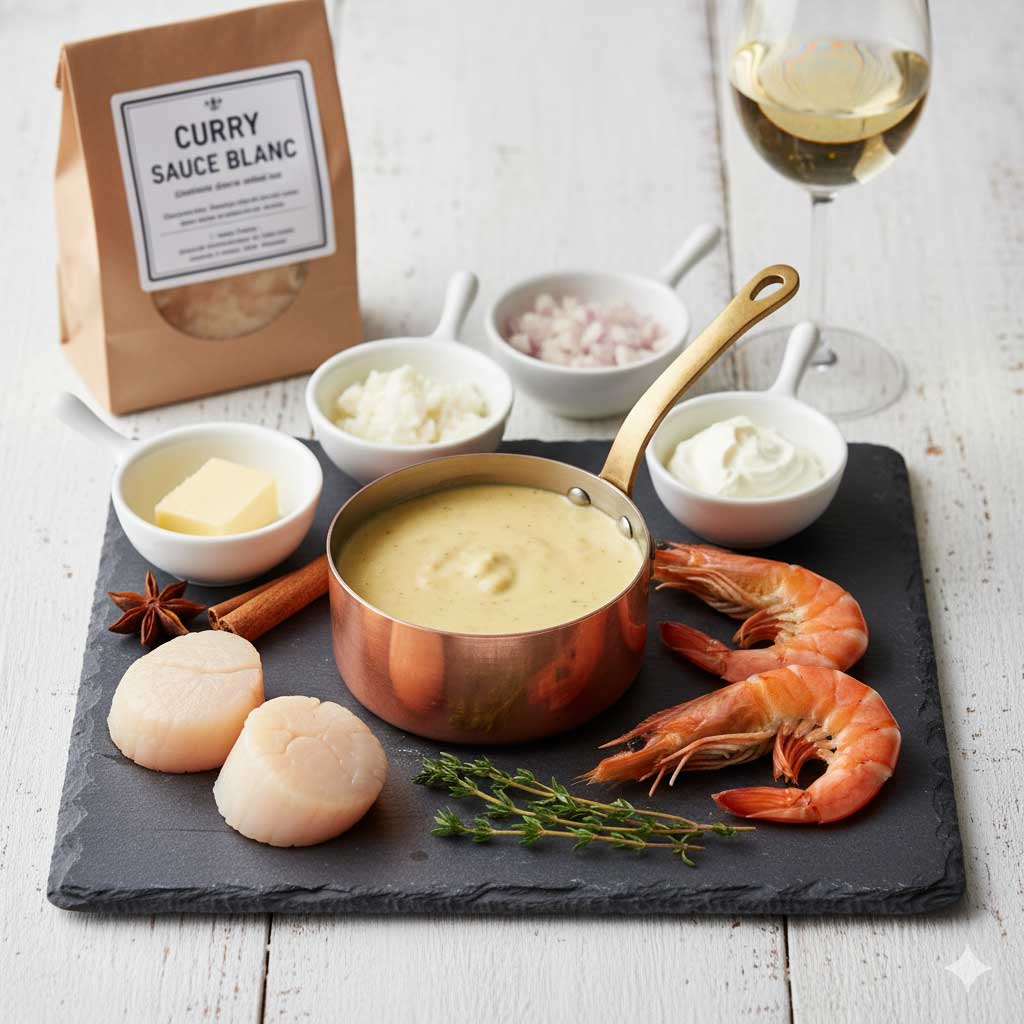
    The French curry is fundamentally different. It is primarily a sauce-based dish, derived from the foundational techniques of la haute cuisine. The typical French curry starts with a classic French roux—a mixture of butter and flour—to create a thick, stable base (either a Béchamel or a Velouté). To this white sauce, a pre-mixed, mild curry powder is added. This powder, often lighter in colour and lower in chili content than even mild Indian blends, provides the ‘curry’ flavour without the heat or the textural complexity of fried spices.

    This technique yields a sauce that is smooth, rich, and uniformly coloured—a far cry from the multi-layered, often oil-separated (called tarka or tadka) textures prized in Indian cooking. The French focus is on integration and refinement: every element must be homogenous and subtle.

    Key Ingredients and Execution

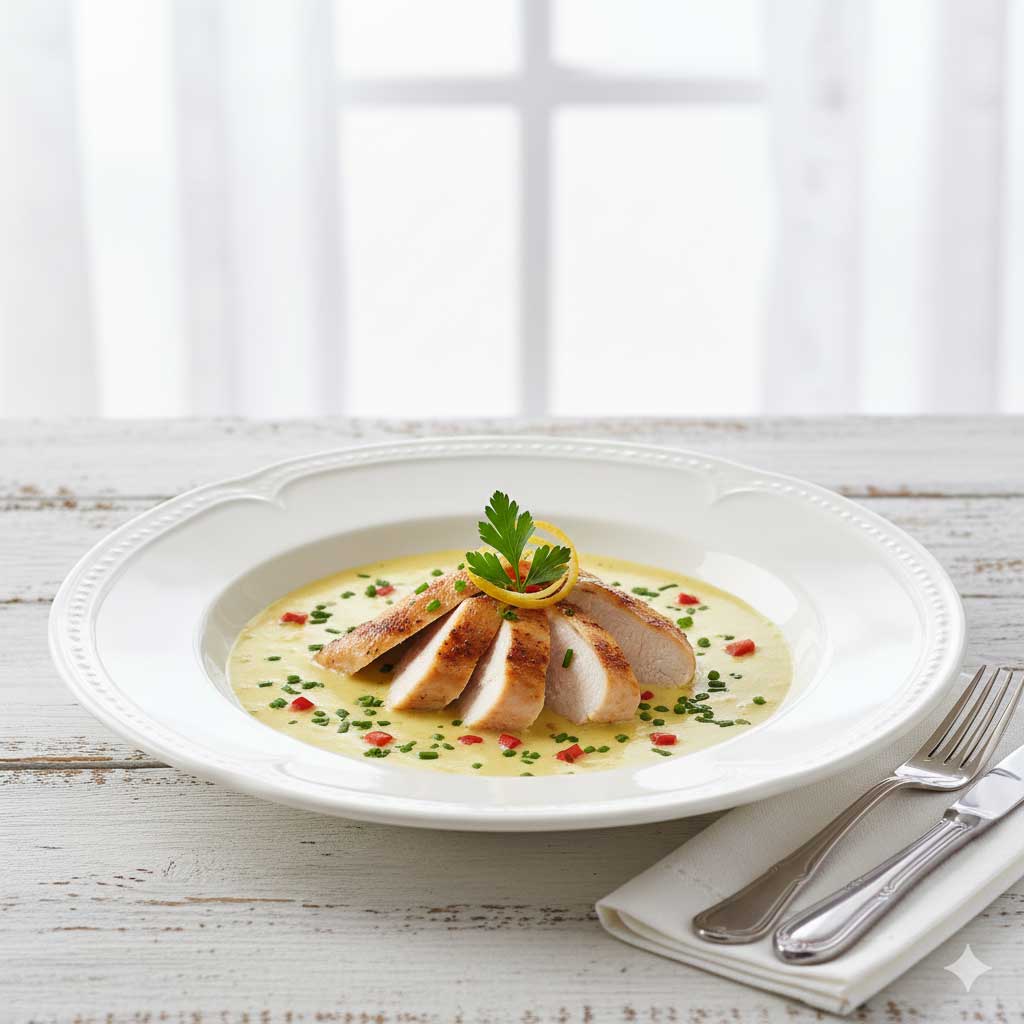
    A defining feature of the classic French curry is its pairing with seafood, particularly shellfish. The mild, creamy sauce is considered the perfect partner for delicate flavours like lobster (Homard au Curry), scallops (Coquilles Saint-Jacques au Curry), or prawns. The gentle, aromatic powder highlights the sweetness of the seafood without overpowering it.

    Essential components typically include:

    • The Base: A butter-rich roux and a dairy element (crème fraîche, cream, or milk) to create the Velouté or Béchamel.
    • The Flavouring: A mild, pre-packaged curry powder, which may include turmeric, coriander, and cumin, but often lacks fenugreek, mustard seed, or the aggressive heat of chili peppers.
    • Aromatics: Unlike Indian curries, the aromatics are often limited to shallots or white onions, sautéed gently (not browned) to maintain the sauce’s pale colour and delicate flavour.
    • Acid/Sweetener: A touch of acid, such as white wine or a squeeze of lemon juice, might be used to cut through the richness, while occasionally, a hint of apple or fruit chutney (again, a colonial import) is incorporated for sweetness.

    The result is a dish of culinary elegance: a beautiful white plate presenting perfectly cooked scallops nestled in a pale, lemon-yellow sauce. It is the epitome of French cuisine’s belief that flavour should be inferred and suggested, not shouted.

    A Legacy of Adaptation

    The French curry may seem antiquated today, especially given the accessibility of authentic global cuisine. However, its historical significance is undeniable. It serves as a perfect example of cultural translation in food—how one culture’s complex, traditional dish is reinterpreted through the technological and philosophical lens of another.

    This dish also highlights the role of colonialism in shaping Western flavour profiles. It wasn’t the vibrant, heat-forward food of the masses that made it to the French elite’s dinner tables, but a carefully curated, softened version suitable for their established gastronomic sensibilities.

    Contemporary French chefs rarely feature the traditional French curry in its purest form, but its legacy lives on in modern fusion cuisine. We see its influence when chefs use curry powder to season a sophisticated hollandaise, or when a touch of Madagascan vanilla is added to a mild curry sauce to accompany duck—blending the aromatic warmth of the Orient with the classical richness of the Occident.

    In conclusion, the French curry is a quiet counterpoint to its fiery global cousins. It’s a sauce first, a spice profile second, and a testament to the enduring French dedication to technique, elegance, and the art of the perfect, creamy consistency. It reminds us that “curry” is a concept as much as it is a specific dish, capable of speaking many culinary languages, even with a delicate French accent.

  • The Great Worlds of Curry: The Madras Curry Blend

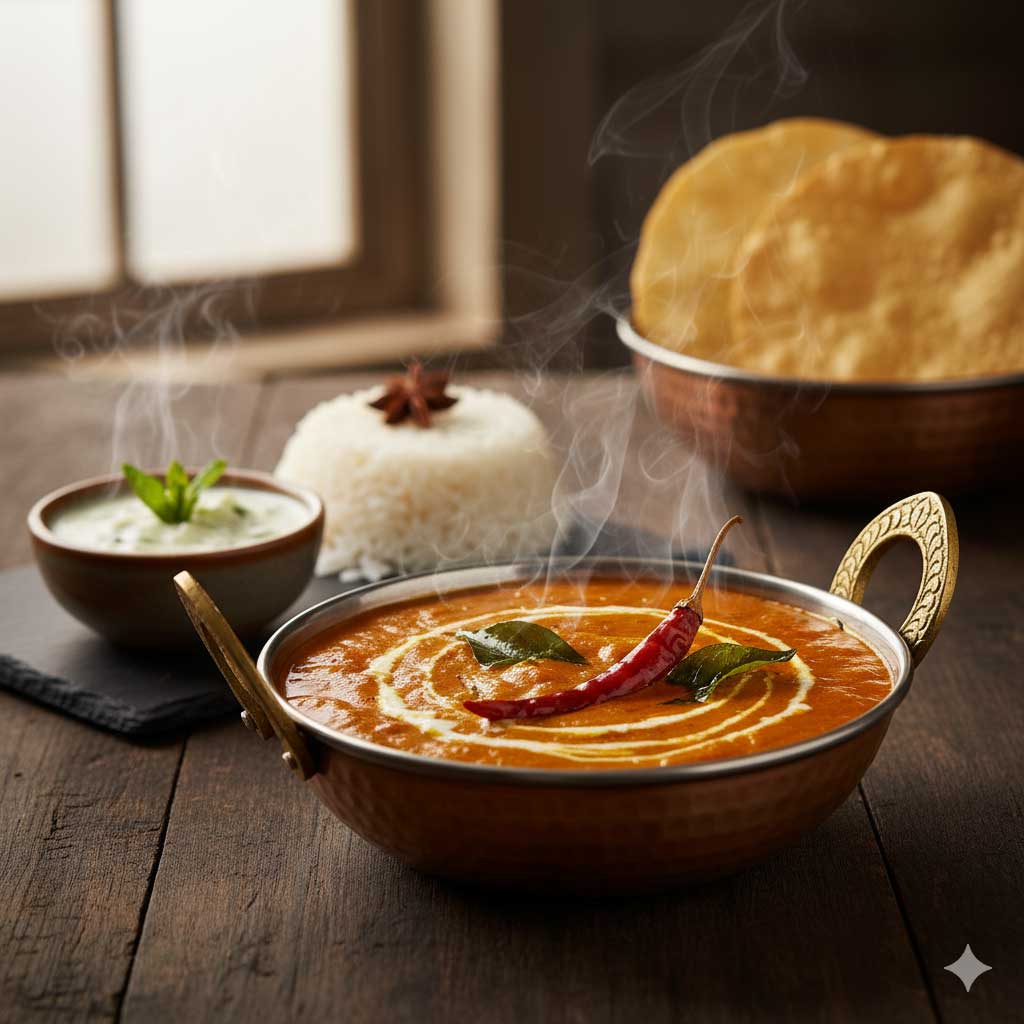
    Bowl of steaming Madras Curry, characterized by its intense, spicy red-orange color, garnished with dried red chili and curry leaves, served with basmati rice and cooling raita.

    The term Madras Curry is perhaps the most globally recognized name that represents a singular, standardized flavour profile within the vast category of Indian cuisine. However, the dish and the famous powder are an invention of the British Raj, a culinary export that has little to do with any single, authentic recipe found in Chennai (formerly Madras), the bustling port city in the state of Tamil Nadu. Instead, Madras Curry is an enduring legacy of the Anglo-Indian relationship, defining a bold, hot, and distinctly sour flavour profile popular in Western restaurants.

    The history of the Madras curry powder is closely linked to the early British occupation of India. As the East India Company set up trading posts, Westerners quickly fell in love with the complex, aromatic local dishes. Lacking the necessary time, knowledge, or specific ingredients to recreate authentic masalas in their home countries, they sought a simple, portable, and shelf-stable way to achieve a similar flavour. Thus, the commercially pre-mixed Madras Curry Powder was born, primarily manufactured for export to Britain.

    The Flavour Profile: Heat, Tang, and Turmeric

    The key characteristics that distinguish a Madras curry from a general Indian curry are:

    1. Intense Heat: A traditional Madras curry is defined by its significant use of dried red chilies. It is often positioned on restaurant menus as a “hot” or “fiery” option, making it far spicier than a creamy Korma or a mild Japanese Kare.
    2. Tanginess (Sourness): A crucial and defining element is the tanginess. This acidity is traditionally achieved through the liberal use of tamarind paste or, in many Western interpretations, lemon or lime juice. This sourness balances the rich spices and the heat, providing a complex, mouth-watering depth.
    3. Turmeric and Colour: Madras powder uses a high proportion of turmeric, giving the resulting dish a recognizable, deep orange-red hue.

    Unlike the complex, freshly ground masala that defines an authentic South Indian dish, the Madras powder relies on standardized quantities of dried spices, making it a reliable and easily replicated flavour across the globe.

    The Spice Blend Breakdown

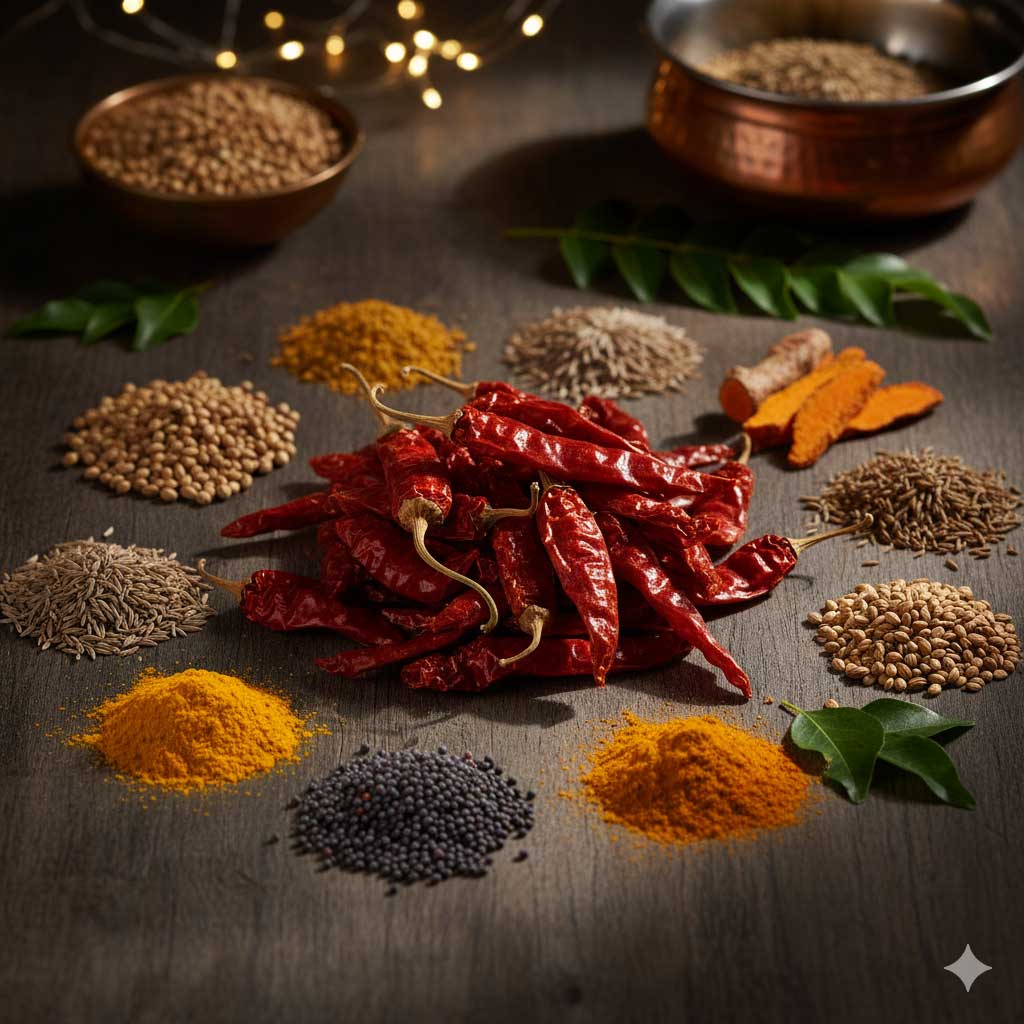
    A typical, commercially produced Madras Curry Powder blend will heavily feature:

    • Red Chilies: Providing the signature heat and red color.
    • Coriander Seeds: The bulk of the blend, offering a citrusy and warm note.
    • Cumin Seeds: Earthy and savory.
    • Fenugreek Seeds: Adds a distinct bitterness and characteristic aroma.
    • Turmeric: Provides the orange/yellow color and earthy flavour.
    • Mustard Seeds: A common ingredient in South Indian cuisine, adding a sharp, nutty bite, often used whole in the tempering (tadka).

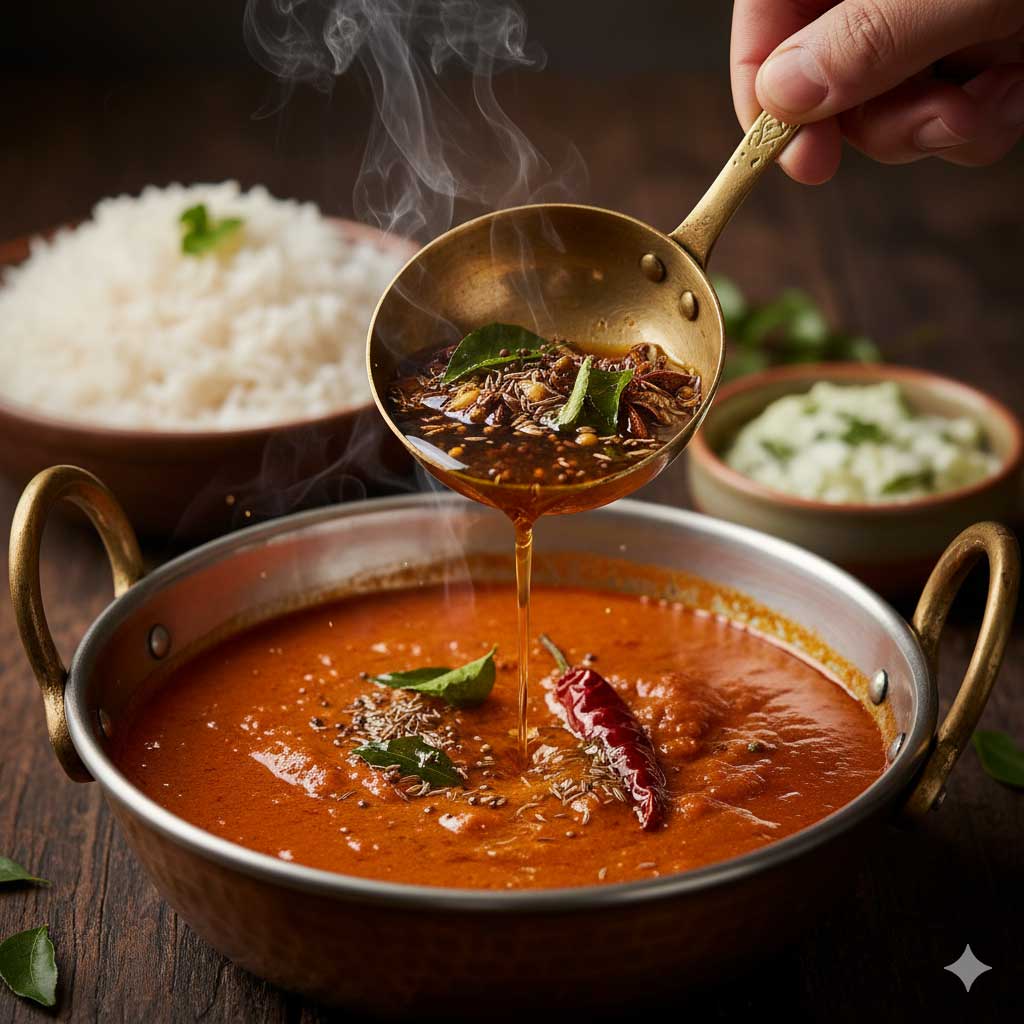
    In a prepared dish of Madras curry, the powder is typically bloomed in oil along with fresh aromatics like ginger, garlic, and sometimes curry leaves (another hallmark of Southern Indian cooking). The final gravy is often thinner than North Indian dishes, using water or coconut milk rather than heavy cream, although cream is sometimes added in Western kitchens to temper the heat.

    The actual Tamil cuisine from the region around Chennai often features intensely spiced, thinner broths known as kulambu or lentil-based dishes like sambar and rasam. These dishes are always built from scratch using fresh ingredients like roasted pulses, whole dried chiles, and coconut, traditionally ground into a wet paste on a grinding stone. The Madras curry powder simplifies this intricate daily process into a single, convenient item. Consequently, when preparing a ‘Madras curry’ dish, the best way to utilize the powder is still to follow the Indian technique: bloom it in hot oil or ghee with fresh garlic, ginger, and curry leaves to release its full aromatic potential before adding the liquid base, ensuring it never tastes simply like dried, dusty spices.

    South Indian Influence: The Myth vs. The Reality

    While the Madras curry is not a direct replication of a dish found in Chennai, it does draw inspiration from the culinary techniques of the Tamil region:

    • Curry Leaves: The use of fresh or dried curry leaves is indispensable in South Indian cooking, often fried first to infuse the oil with their pungent aroma. A good Madras curry will include these.
    • Lighter Gravy: Tamil curries are often made with a lighter gravy, allowing the rice to absorb the flavour easily. They are rarely as heavy or creamy as North Indian specialties like Korma.
    • Vegetable Focus: The Southern diet includes a greater variety of vegetables and legumes. While the global Madras curry is often served with meat (lamb or chicken), the principles echo a style more focused on lighter, tangier flavors.

    Modern Popularity and Legacy

    The Madras Curry remains a staple in curry houses from London to Sydney. Its straightforward, assertive flavor profile is deeply embedded in the Western perception of Indian food. For many, it is the classic, powerful, and deeply satisfying “hot curry.”

    Today, the popularity of authentic South Indian cuisine is growing internationally, showcasing dishes like the spicy Chettinad chicken or the tangy Goan fish curry, which are the true, complex culinary representatives of the region. However, the trusty Madras Curry powder continues its global journey, a reminder of how trade and cultural translation can simplify and popularize a complex flavour, leaving behind a culinary icon that is both a misnomer and a beloved, fiery tradition.

    It is a dish that embodies the colonial-era simplification of a deeply regional cuisine, but in doing so, it has defined a spicy, sour, and comforting corner of the global curry landscape.

    As with most Indian curries, the Madras variety is traditionally served with basmati rice, which provides a neutral foundation to soak up the intense, tangy gravy. Accompaniments often include a crisp, thin lentil wafer called pappadam, and cooling dairy sides like raita (yogurt mixed with cucumber and mint) to temper the dish’s signature heat. This balance of fiery flavour, cooling texture, and aromatic rice completes the experience, solidifying the Madras curry’s place not just as a blend, but as a complete, globally recognized meal.

  • The Great Worlds of Curry: Japanese Curry

    If you ask a Japanese person to name one of their favourite comfort foods, the answer will frequently be Kare (Japanese Curry). Far from being an authentic dish imported directly from India, Japanese curry is a prime example of culinary globalization and adaptation, having arrived via the British Empire and evolved into a dish so distinctly Japanese that it rivals ramen and sushi in its popular appeal. Its texture, flavour profile, and method of preparation set it apart entirely, making it one of the gentlest and most universally beloved curries in the world.

    A British Introduction

    The history of Japanese curry is surprising. Curry was introduced to Japan during the Meiji Era (1868–1912) by the British, who had, in turn, adapted Indian cuisine for their own military and naval needs. The Royal Navy, seeking nutritious and easy-to-prepare meals for long sea voyages, developed a recipe that combined curry powder with a thick, gravy-like sauce, often served over rice. When the Japanese Navy adopted the recipe from the British to combat beriberi (a disease linked to Vitamin B1 deficiency), the dish quickly entered the national consciousness.

    Crucially, the British version used flour to thicken the sauce, which aligned perfectly with traditional Japanese stew-making techniques, solidifying its place in the Japanese diet. It was easily replicable and highly adaptable to local ingredients, moving from a naval staple to a school lunch favourite and, eventually, a true national dish.

    The Texture and Taste of Comfort

    The most defining feature of Japanese curry is its viscosity and sweetness. Unlike the bright, complex, and sometimes sharp flavours of South Asian curries, Japanese curry is thick, dark brown, slightly sweet, and features a notably mellow, umami-rich flavour.

    Key differences in flavour profile:

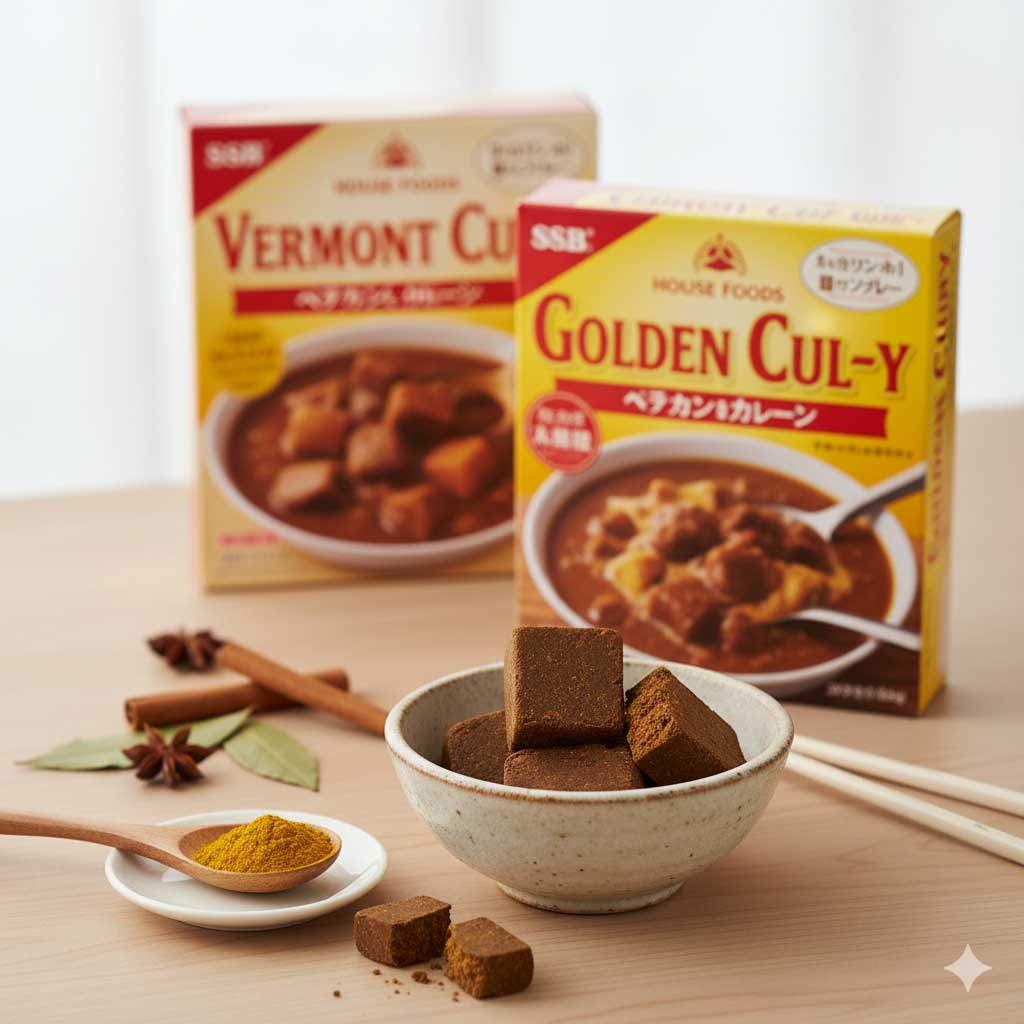
    1. Thickness: The sauce is significantly thicker than other curries, achieved through the use of a pre-made roux block called a “curry brick” or kare rū. These bricks contain flour, oil, spices, and often flavour enhancers like MSG or soy sauce, giving it a uniform, heavy consistency similar to a Western gravy.
    2. Sweetness and Umami: Instead of relying on heat, Japanese curry leans heavily into savouriness and subtle sweetness. Ingredients like grated apples, honey, or banana are often added, and the umami depth comes from ingredients like caramelized onions, soy sauce, and sometimes even miso paste.
    3. Spices: The spice blend is much milder and typically less dominant than in Indian or Thai curries. While it contains turmeric, coriander, and cumin, the overall flavour is a subdued, integrated warmth rather than a fiery punch.

    Anatomy of a Kare Dish

    Japanese Curry is almost always served in one of three ways, all based on a foundation of plain steamed white rice:

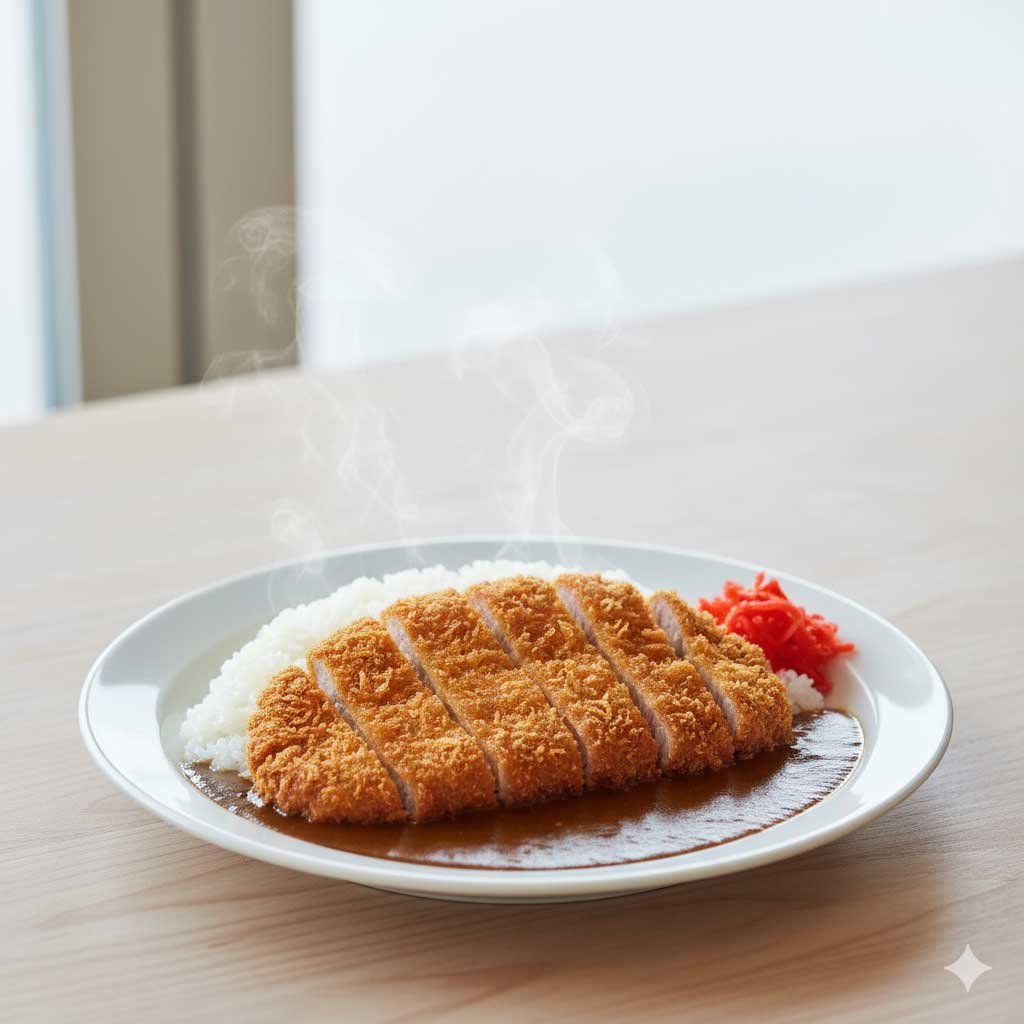
    • Curry Rice (Kare Raisu): The most popular format. A generous portion of thick curry sauce poured over rice, usually containing chunks of beef, pork, chicken, carrots, and potatoes, which maintain their shape and integrity even after long simmering.
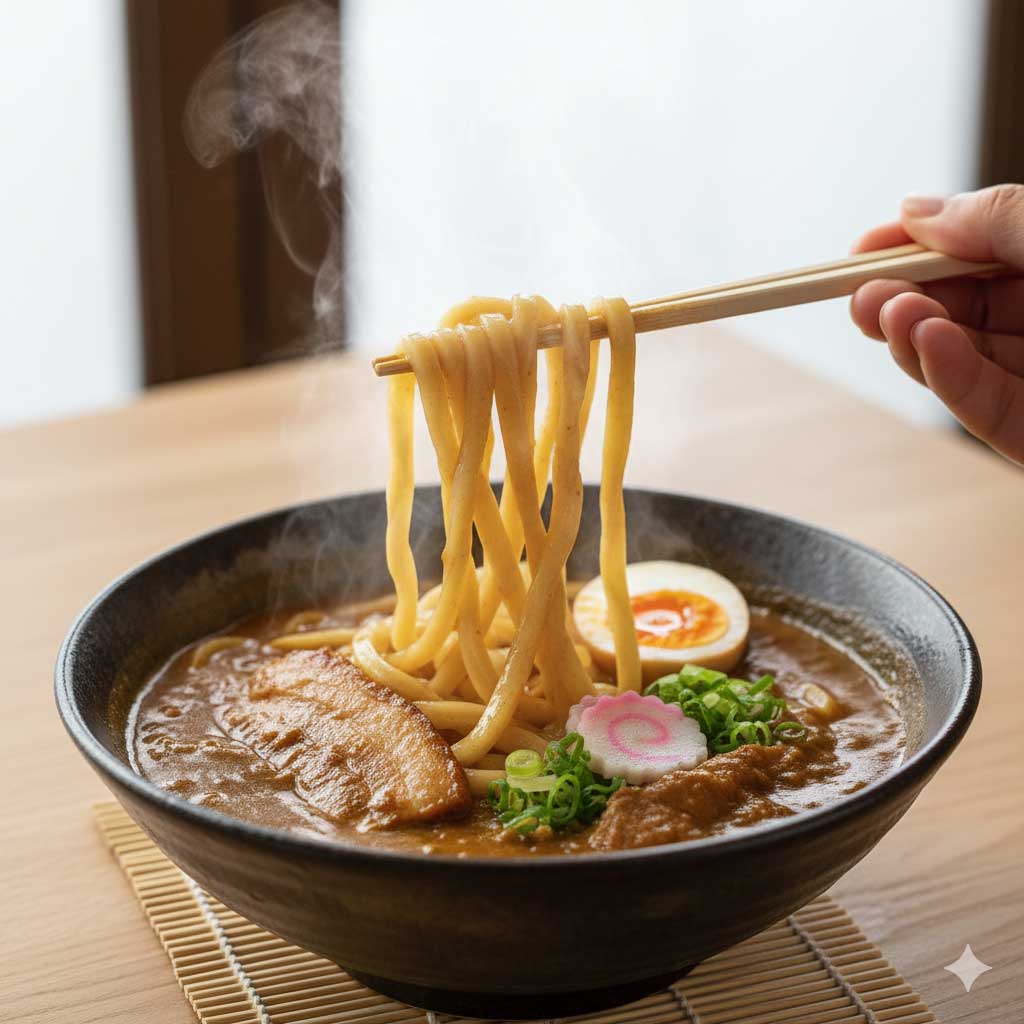
    • Curry Udon (Kare Udon): Thick, chewy wheat noodles served in a broth, over which the thick curry sauce is poured. This creates a very hearty, warming, and comforting dish.
    • Curry Bread (Kare Pan): A popular snack where the curry sauce is wrapped in a piece of dough, coated in breadcrumbs, and deep-fried until golden brown.

    For those seeking a bit of textural contrast, katsu (a deep-fried pork or chicken cutlet) is frequently added, transforming the dish into Katsu Kare. The crispy coating of the katsu provides a delightful counterpoint to the soft rice and thick sauce.

    Preparation: The Art of the Roux Brick

    The convenience of the kare rū is central to Japanese home cooking. It made the preparation of curry simple and foolproof, transforming a complex, multi-spice dish into a quick, one-pot family meal.

    A typical preparation involves:

    1. Sautéing the main ingredients (meat, onions, carrots, potatoes).
    2. Adding water or broth and simmering until the vegetables are tender.
    3. Stirring in the blocks of kare rū until they are fully dissolved, instantly thickening the sauce and adding the seasoned flavour.

    This reliance on a standardized, pre-mixed base ensures consistency, which is highly valued in Japanese commercial food preparation, from restaurants to vending machines.

    Kare in Modern Japan

    Japanese curry’s popularity is so pervasive that it is considered a national institution. It is celebrated as the ultimate yōshoku (Western-influenced Japanese food) dish. Restaurants specializing in curry, such as the massive chain Coco Ichibanya, allow customers to customize everything from the level of spice (typically a scale from 1 to 10) to the amount of rice and the huge array of toppings.

    Unlike the fiery complexity of Indian curry or the herbaceous brightness of Thai curry, the Japanese curry offers warmth, simplicity, and a familiar, reassuring flavour. It is the perfect embodiment of Japan’s ability to take a foreign concept, meticulously refine it, and make it entirely its own—a mild, sweet, and satisfyingly thick brown gravy that has become the definition of comfort food across the archipelago.

  • The Great Worlds of Curry: Indian Curry

    When the Western world uses the single term “curry,” they are unknowingly referring to a culinary tradition that spans an entire subcontinent, encompassing hundreds of distinct dishes that vary radically from state to state, village to village, and even house to house. To speak of “Indian Curry” is to speak of a culinary diaspora, but for the sake of establishing a global understanding, we often look to the rich, creamy, and tomato-based dishes of North India, particularly those popularized by the Mughlai and Punjabi traditions, which have become synonymous with the Indian restaurant experience worldwide.

    Unlike the coconut milk base of Thai curries or the roux base of French curries, the foundation of Indian curry is the precise layering and frying of dry spices and aromatics—a process known as bhuna or masala bhuna—in hot oil or ghee.

    The Masala: The Soul of Indian Curry

    The core difference is the masala, a Hindi term meaning “spice mix.” A great Indian curry is built not just on the presence of spices, but on their timing and technique.

    1. Whole Spices (Khada Masala): These are often the first elements to hit the hot fat—cumin seeds, cinnamon sticks, cardamom pods, cloves, or bay leaves. They infuse the oil with a deep, earthy aroma.
    2. Aromatics: Next comes the trifecta of Indian cooking: finely chopped or puréed onions, garlic, and ginger. These are patiently sautéed until they are soft, caramelized, and sometimes deep golden brown, forming the base texture and sweetness.
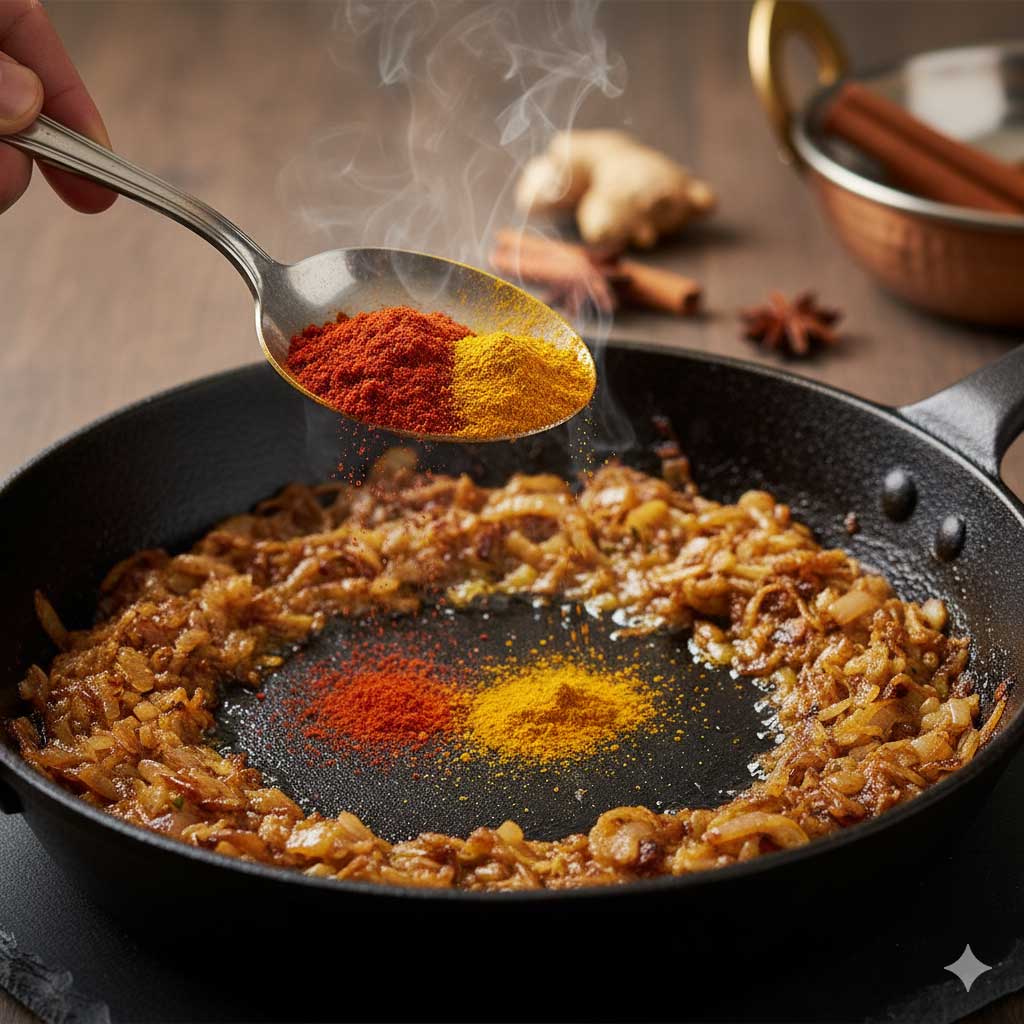
    3. Ground Spices (Pisa Masala): Finally, the ground spices—turmeric, coriander, chili powder, and often garam masala (a blend of warming spices like cinnamon, mace, and nutmeg)—are added. They are fried for mere moments with a splash of water to prevent burning, a crucial step known as blooming that awakens their full flavour potential.

    It is this sequential layering of ingredients that creates the incredible depth and complexity that defines authentic Indian cuisine.

    The North Indian Archetype: Creamy and Tomato-Rich

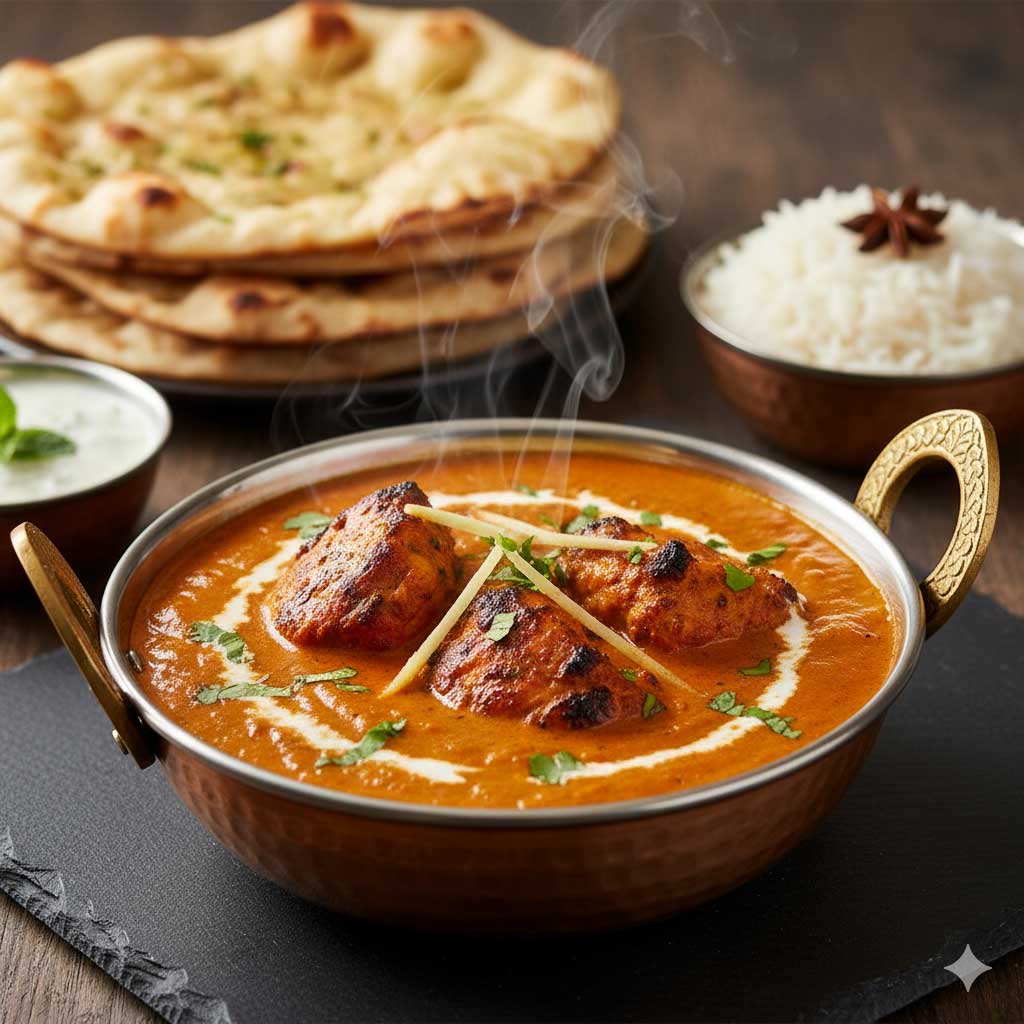
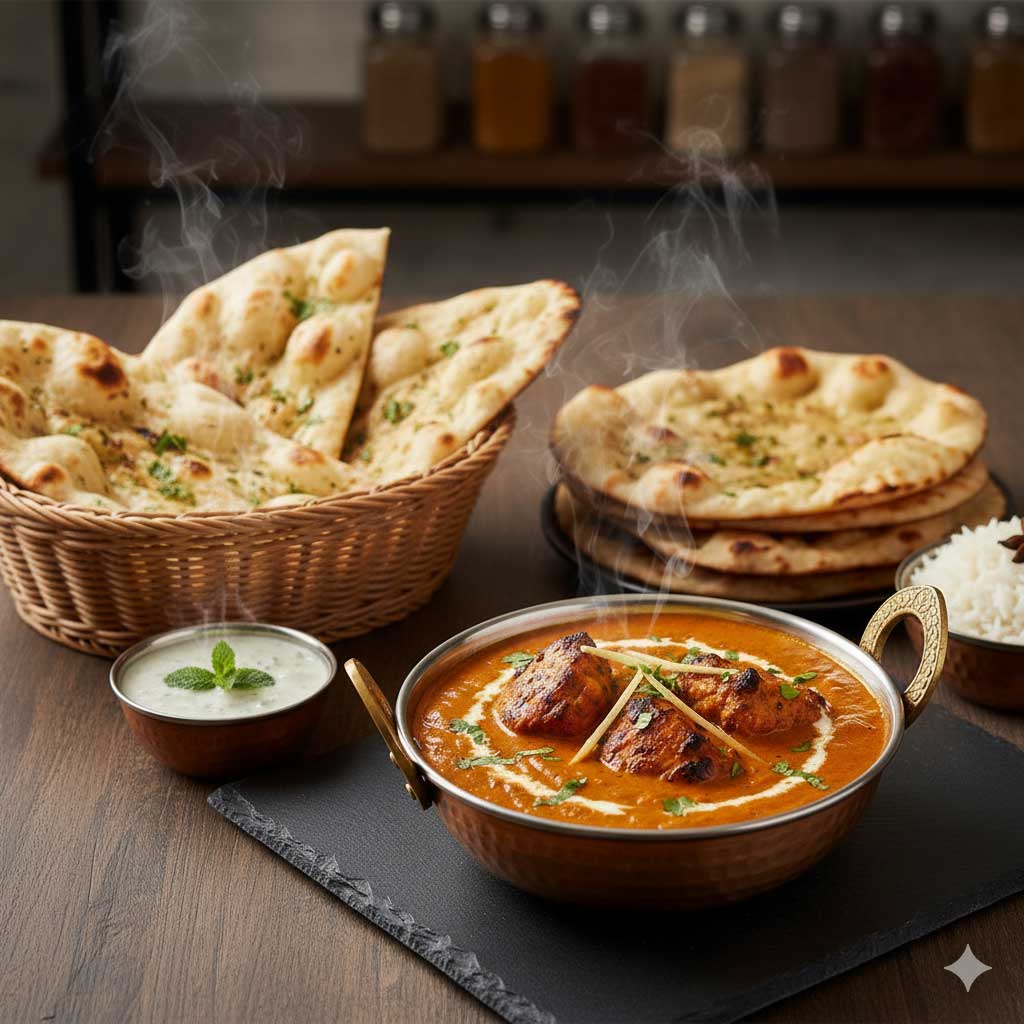
    The curries that dominate the international stage, such as Butter Chicken (Murgh Makhani) and Chicken Tikka Masala, hail from the rich, dairy-influenced traditions of North India, specifically Delhi and the Punjab region.

    • Dairy Influence: Due to the historical abundance of cattle in the North, these curries often incorporate yogurt (for marinades), cream, or ghee (clarified butter), resulting in a richer mouthfeel than the thinner, vegetable-oil-based curries of the South.
    • Tomato Base: The gravy (the tari or gravy) is typically thick, smooth, and vibrant red, achieved by simmering fresh or canned tomatoes and blending them to a velvety consistency.
    • Sweetness and Balance: To counter the acidity of the tomatoes and the heat of the chilies, a touch of sugar or honey is often added, along with a final, fragrant flourish of crushed dried fenugreek leaves (kasuri methi) and a generous dollop of cream.

    These dishes, while often debated in terms of authenticity (Chicken Tikka Masala is widely considered a British-Indian invention), exemplify the creamy, comforting profile that has captivated Western diners. They are the benchmark against which most global interpretations of “curry” are measured.

    Beyond the North: A Continent of Flavour

    It is essential to remember that this “North Indian Style” is just one facet of a vast tradition:

    • South Indian Curry: Typically use coconut oil and feature tamarind (for sourness) and curry leaves, often leading to thinner, tangier, and more pungent curries (e.g., Sambar and Rasam).
    • East Indian Curry: Often use mustard oil and focus on fish and vegetable dishes, with less reliance on dairy.
    • Goan Curry: Famous for their strong Portuguese influence, often featuring vinegar and pork (e.g., Vindaloo and Xacuti).

    The Essential Final Touch

    A key element in almost all Indian curry preparation is the tempering or tarka (tadka). This is the final step where whole spices, like mustard seeds, cumin, or curry leaves, are quickly fried in hot oil or ghee and poured, sizzling, over the finished dish just before serving. This not only adds a layer of flavour but also a burst of fresh aroma and an appealing visual texture, serving as a signature of authenticity and culinary care.

    The Indian curry, in all its forms, is a testament to the power of spices. It is a slow, methodical process where every ingredient, from the caramelized onion to the blooming coriander, plays a distinct role in building a gravy that is deep, satisfying, and infinitely varied. The final presentation, often featuring Basmati rice or naan bread, serves not merely as an accompaniment, but as the perfect vehicle for savoring the full spectrum of aromatic warmth and spice complexity embedded within the gravy of the Indian curry.

    The entire process, from the initial bloom of the khada masala to the final tarka flourish, reflects a deep commitment to balancing the essential six tastes (shad rasa), ensuring a meal that is both profoundly satisfying and gastronomically rich. It is not just food; it is a complex, fragrant narrative of trade, history, and regional identity.