You probably use it every day without a second thought. It sits beside its white companion, salt, a steadfast duo on nearly every dining table globally. But this unassuming little berry, crushed and scattered with a flick of the wrist, is no mere sidekick. Black pepper, the “King of Spices,” has a history as rich, complex, and sometimes brutal as any monarch’s reign.
From ancient trade wars to modern gastronomy, Piper nigrum has shaped economies, fueled exploration, and tantalized taste buds for millennia. Far more than just a seasoning, black pepper is a culinary cornerstone, a historical artifact, and a surprisingly versatile ingredient that continues to command respect.
A Kernel of Empires
Long before Marco Polo set sail or Columbus bumped into the Americas, black pepper was already a highly sought-after commodity. Originating from the Malabar Coast of Kerala in southwestern India, this climbing vine’s berries were a crucial component of ancient trade. Roman texts mention this seasoning frequently, and it was so valued that Alaric the Goth demanded 3,000 pounds of it as part of Rome’s ransom in 410 AD.
During the Middle Ages, pepper’s importance only grew. Along with other exotic spices, it was a luxury item, a status symbol for the wealthy, and a potent preservative. Control over the spice trade routes, particularly those bringing the condiment from the East to Europe, meant immense power and wealth. Venice and Genoa grew rich as intermediaries, while Arab traders maintained a tight grip on the source.
This quest for direct access to the pepper-producing lands was a primary driver for the Age of Exploration. Vasco da Gama’s historic voyage around Africa to Calicut, India, in 1498 wasn’t just about discovering new lands; it was fundamentally about breaking the Arab and Venetian monopoly on the spice trade. The Portuguese, Dutch, and later the British and French, fought fiercely over control of the pepper-rich regions, their navies clashing over what amounted to tiny dried berries. The history of pepper is truly a history of empires.

More Than Just “Black”: The Peppercorn Family
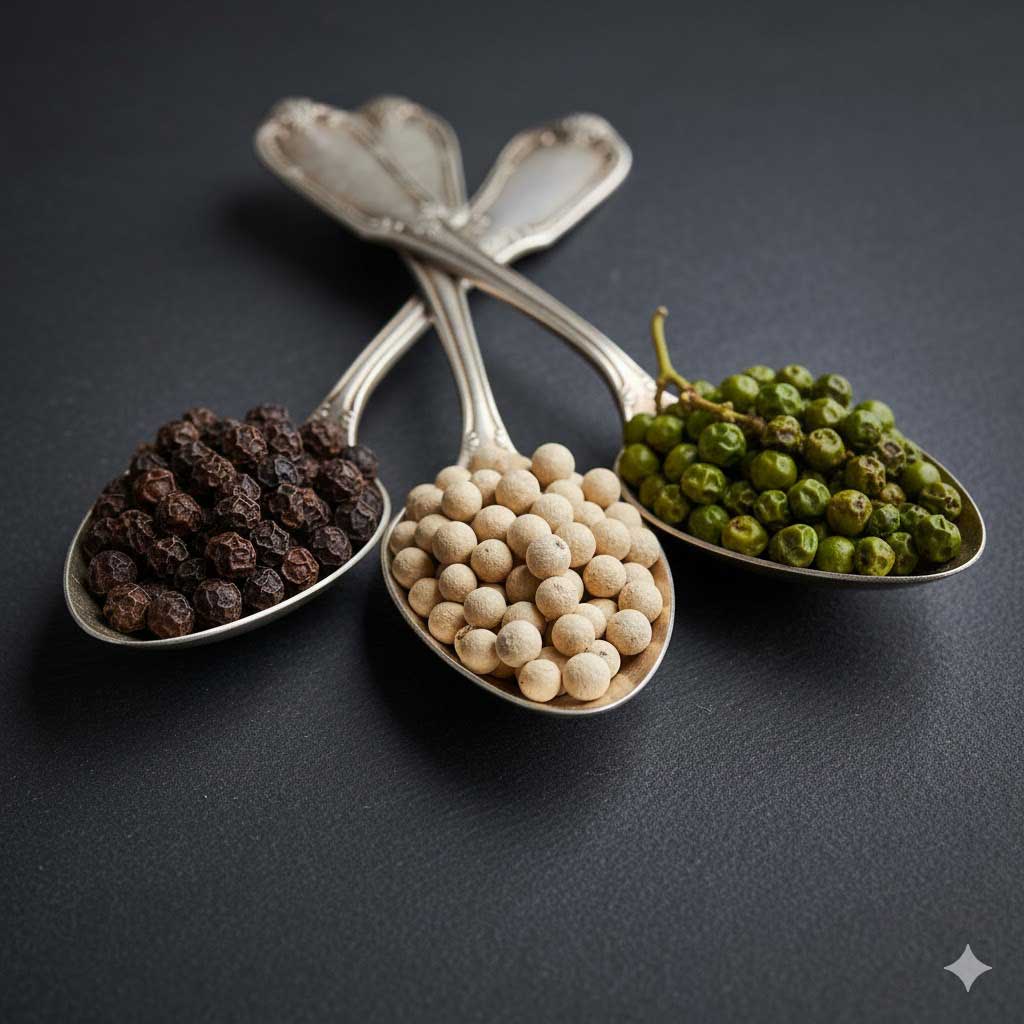
When we say “pepper,” most people immediately think of the familiar black variety. However, like many noble families, the peppercorn lineage is more diverse than it first appears. All true peppers—black, white, and green—come from the same Piper nigrum plant, but their differences arise from when and how they are harvested and processed.
Black Peppercorns: These are the unripe, green berries that are cooked briefly in hot water (which bursts their cell walls), then dried in the sun. The sun-drying process causes them to shrivel and blacken, developing their characteristic pungent, earthy, and slightly spicy flavor. The heat comes from piperine, a chemical compound found in the fruit and seed.
Green Peppercorns: These are also unripe berries, but they are either freeze-dried or preserved in brine or vinegar. This process retains their vibrant green color and a fresh, milder, more aromatic flavor compared to black pepper. They are often found in French cuisine, particularly in steak au poivre. To see more about the green variety, check this website.
White Peppercorns: These are the mature, ripe berries. After harvesting, they are soaked in water, which allows the outer layer of the fruit to ferment and soften. This outer layer is then rubbed off, revealing the lighter-colored inner seed. White pepper has a sharper, sometimes muskier aroma and a more direct heat, often preferred in lighter-colored dishes where black flecks would be visually unappealing (like mashed potatoes or cream sauces).
It’s important to distinguish these true peppers from “false peppers” like pink peppercorns (from the Brazilian pepper tree) or Sichuan peppercorns (from the prickly ash tree), which offer different flavor profiles and delightful tingling sensations but are not botanically related to Piper nigrum.
The Science of Spice
So, what makes the black pungent berry tick? Its signature heat and aroma come primarily from an alkaloid called piperine. Unlike capsaicin in chilies, which targets pain receptors and gives a fiery burn, piperine stimulates heat and pain receptors in a more subtle, complex way. It creates a warm, aromatic pungency that is distinct and invigorating.
Beyond its flavor, the aromatic berry also plays a fascinating role in health. It contains antioxidants and has anti-inflammatory properties. Most notably, piperine is known to enhance the bioavailability of certain nutrients and drugs, including curcumin (found in turmeric). This is why you often see this spice paired with turmeric in supplements and traditional medicine—this spice helps your body absorb more of the good stuff.
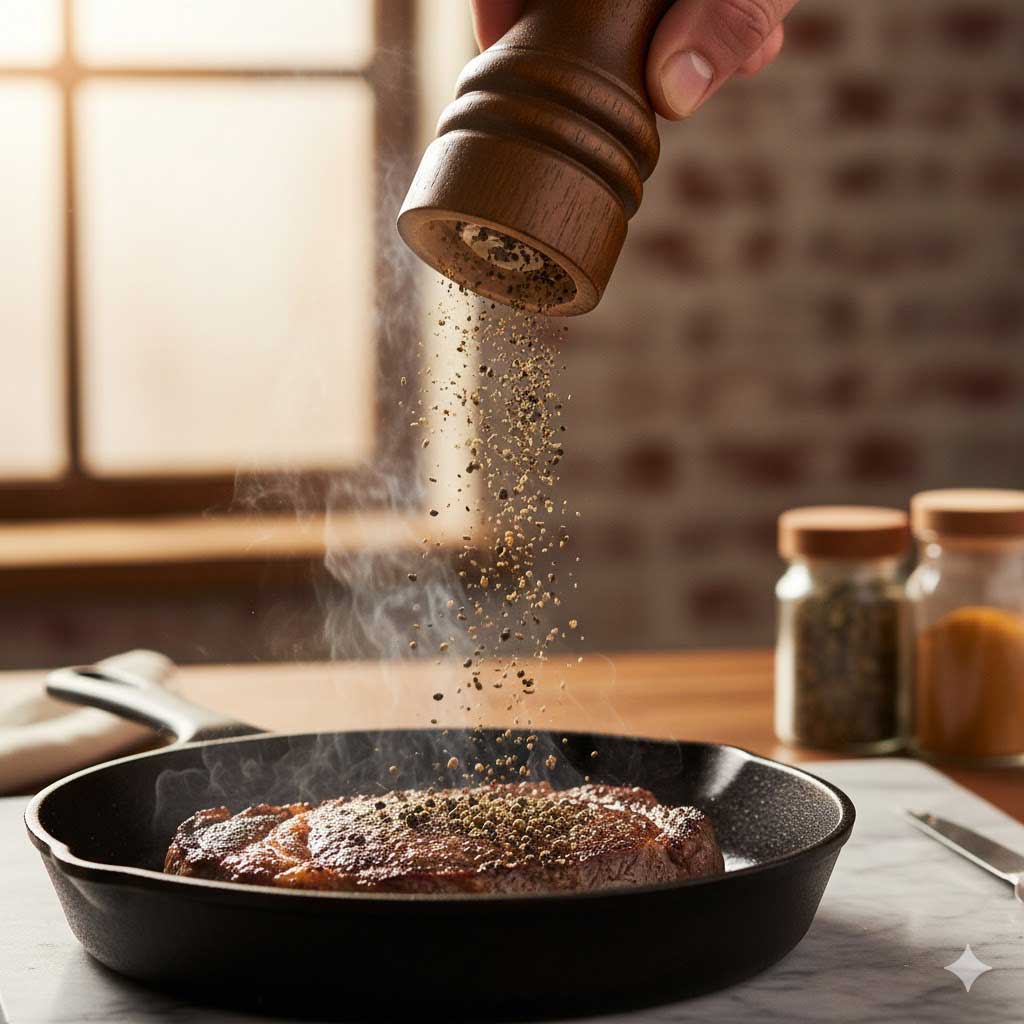
In the kitchen,the black condiment is a universal enhancer. It does more than just add “heat”; it brightens flavors, adds depth, and creates complexity. The freshly ground ones is almost always superior to pre-ground pepper, which quickly loses its volatile aromatic compounds. The act of grinding releases those oils, creating a burst of fresh aroma and flavor that can elevate almost any dish, from a simple omelet to a sophisticated sauce.
Beyond the Shaker
While it is a staple for seasoning almost anything, this one has some surprising roles outside the dinner table. In traditional medicine, it has been used to treat digestive issues, coughs, and colds. Its stimulating properties were even thought to aid concentration.
In more unexpected applications, some gardeners use a sprinkle of black pepper as a natural deterrent for pests like ants. Its strong aroma is believed to confuse and repel them, offering an organic alternative to chemical pesticides. And of course, its pungent scent is often a component in various aromatherapy blends, believed to be invigorating and stimulating.
From being a currency that defined empires to its place as a humble grinder on our tables, black pepper’s journey is a testament to the enduring power of a single, small spice. It reminds us that sometimes, the greatest influence comes in the smallest packages, igniting our taste buds and connecting us to a history far spicier than we often realize.
My other articles are listed here.


Leave a Reply